…Targets oil majors in Port Harcourt
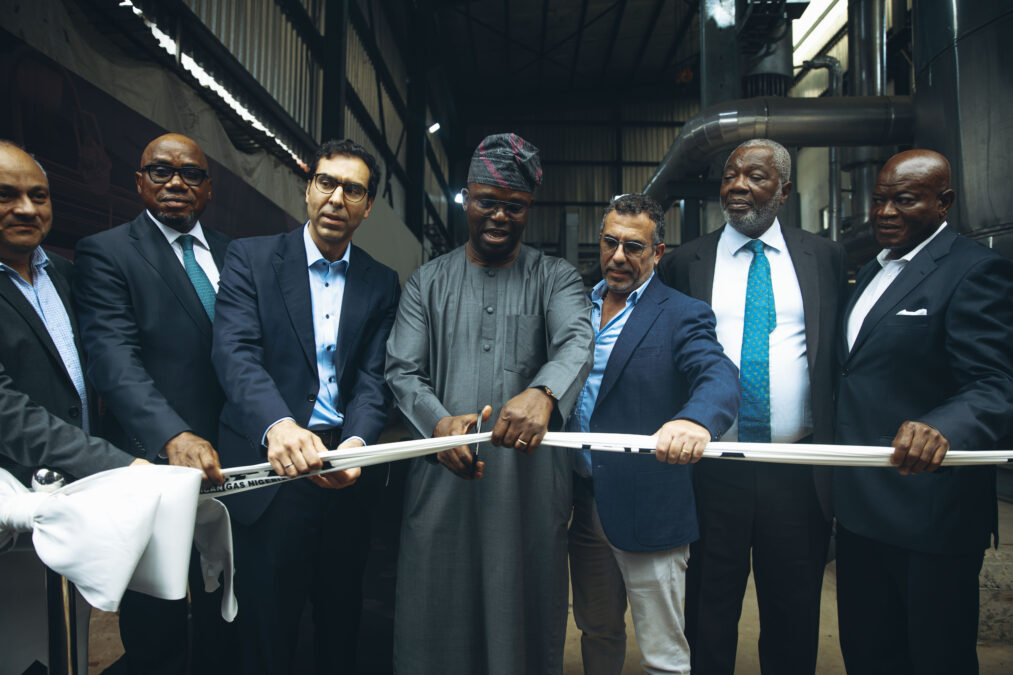
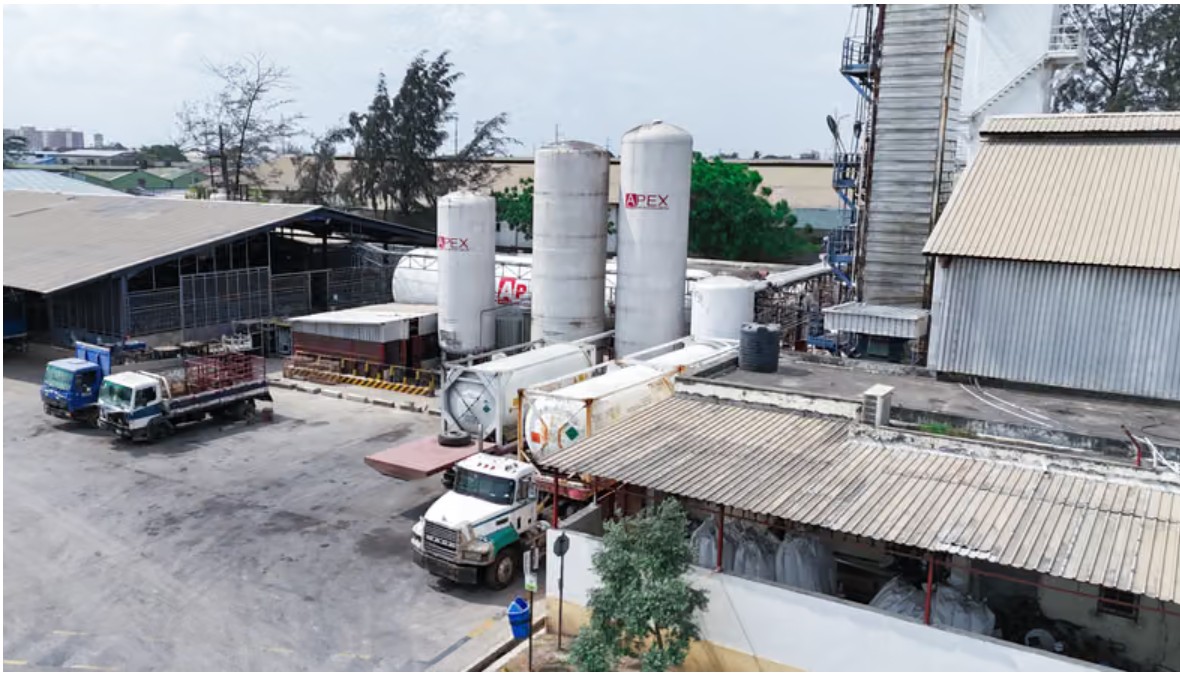
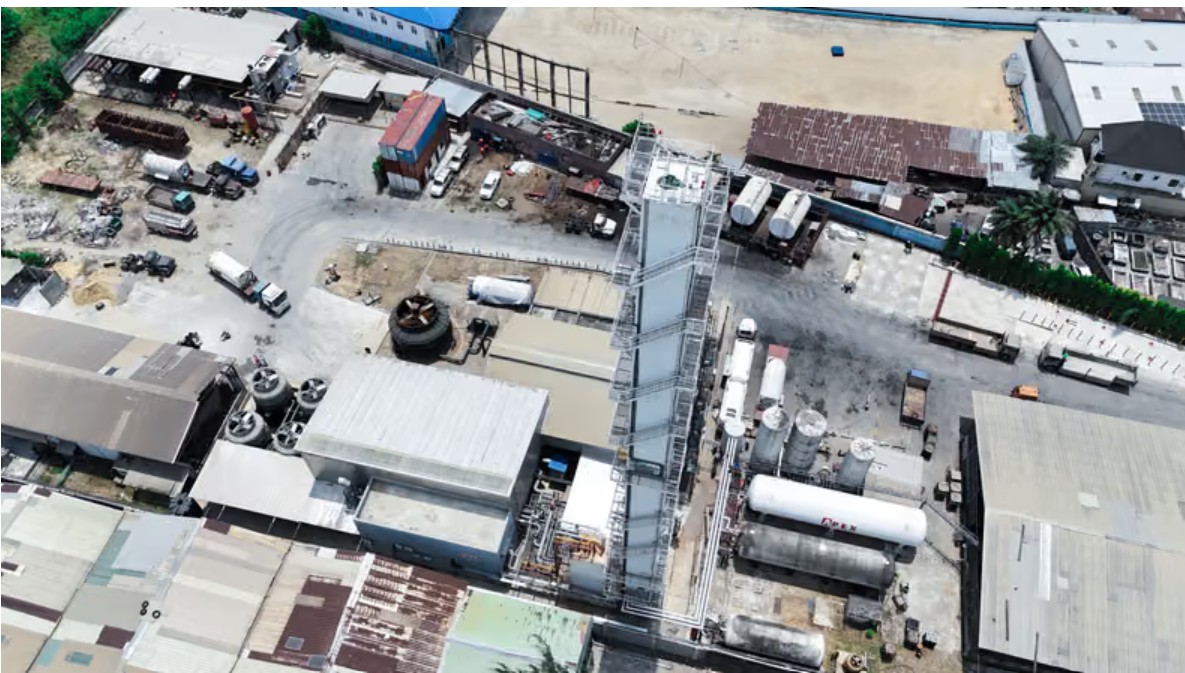
Apex African Gas Nigeria Limited has commissioned a 70-tonne-per-day Air Separation Unit plant in Lagos, a move the company says will help displace imported industrial gases while cementing its position among the country’s largest domestic producers of oxygen, nitrogen and argon.
The facility lifts Apex’s combined output capacity to 110 tonnes per day and follows an investment of more than N10 billion, according to General Manager Charles Allam. The company supplies gases to Nigeria’s healthcare, construction, manufacturing, oil and gas, and food processing industries.
“What we have done so far belongs to all Nigerians,” Allam said at the ceremony. “It is for the benefit of all Nigerians.”
Targeting the oil patch
The plant is designed to capture revenue from the nitrogen-hungry oil services sector concentrated around Port Harcourt, which Chairman Najimu Adeniji described as representing a significant portion of the company’s income.
“Our main customers for nitrogen are in the oil service industries in Port Harcourt and the environment,” Adeniji said. “These are gases that would have been imported if we are not producing locally. So it saves us the foreign exchange costs.”
Nigeria’s industrial gas market has long depended on imports, leaving manufacturers and hospitals exposed to naira volatility and supply disruptions. Apex’s scale-up arrives as federal authorities push to localise production across the healthcare and energy value chains, part of a broader industrial policy agenda under President Bola Tinubu’s administration.
Power bill
Despite the investment, Apex’s executives were candid about the ceiling on competitiveness: electricity costs.
“If we can get a power supply from the national grid, the cost will be significantly cheaper,” Adeniji said, calling on the government to make affordable power available to producers of medical and industrial gases. “What we would like is for the government to provide for us, for the benefit of the general populace, cheaper power so that the cost of oxygen to the general public will be much cheaper than it is.”
Power unreliability is a chronic drag on Nigerian manufacturers, who typically run diesel generators that can account for 40 percent or more of operating costs. For energy-intensive air separation units — which compress and cool air to cryogenic temperatures to separate its components — electricity is the primary input cost.
Allam said the company is in discussions with the government, including through the Presidential Initiative for Unlocking the Healthcare Value Chain, to explore power cost-reduction measures.
Medical Oxygen a Priority
Beyond industrial supply, Apex has positioned itself as a backstop for Nigeria’s public hospital network. Surgeon Commodore Momoh Salihu of the Nigerian Navy’s Medical Services directorate said the company supplied oxygen free of charge to the Nigerian Navy Reference Hospital, Ojo, during the COVID-19 pandemic — and has continued providing support since.
“Recently, Apex Gas has been a valued partner in healthcare delivery since the COVID-19 pandemic,” Salihu said. “This support continued beyond the pandemic, reflecting a genuine commitment to healthcare delivery and community well-being.”
Eniitan Tejuoso, technical adviser to the Presidential Initiative for Unlocking the Healthcare Value Chain, described medical oxygen as an essential medicine, not merely a commodity.
“Every investment that strengthens our ability to produce medical-grade oxygen locally strengthens the resilience of our health system and our capacity to save lives,” she said, adding that the new unit makes Apex the country’s leading producer of liquid oxygen and a milestone for the broader West African region.
Kenny Ewulum, technical director at FHI 360, credited the firm with improving access to liquid medical oxygen across Nigeria, saying the company had stepped in where supply chains routinely failed hospitals.
Political backing
Senator Tokunbo Abiru, who served as the guest of honour, described the facility as evidence of investor confidence in the Nigerian economy.
“This occasion is more than the unveiling of a company. It is the celebration of enterprise, innovation and confidence in the future of our nation,” Abiru said.
The senator called for continued support of indigenous industrial capacity, linking the investment to employment creation and import substitution — themes the Tinubu administration has made central to its economic messaging.


Join BusinessDay whatsapp Channel, to stay up to date
Open In Whatsapp