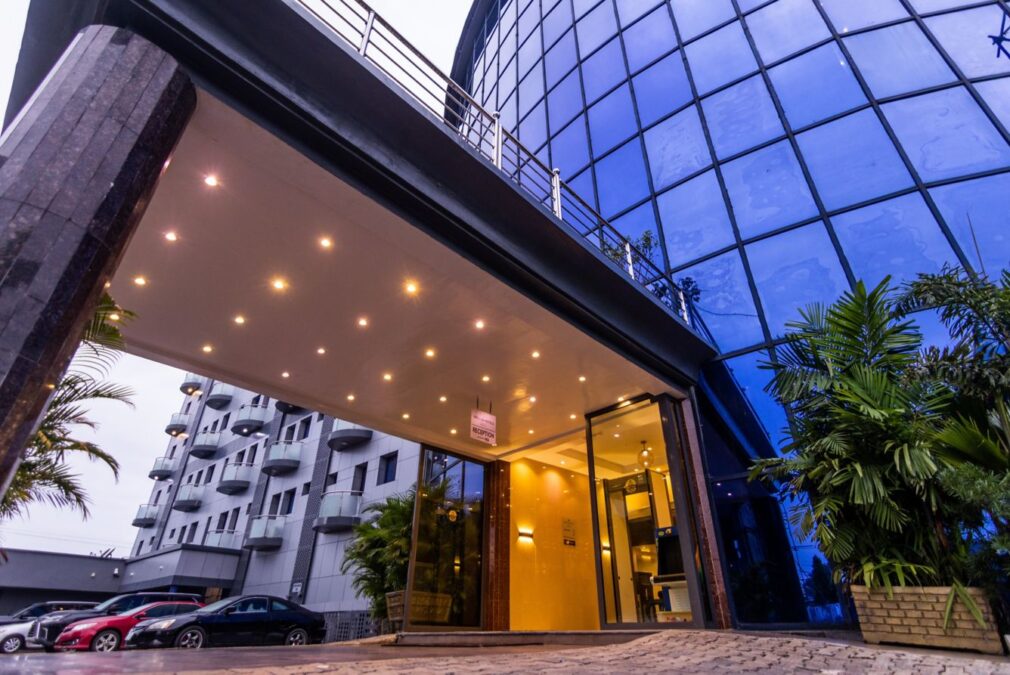
While major cities account for over 70 percent of quality hotel offerings in the country, hope seems to rise for secondary cities as hotel developers and foreign brands are now increasingly considering investments and expansion in other cities.
The attention to secondary cities include state capitals and some cities with business potential, which do not fall under major cities like Lagos, Abuja, Kano and Port Harcourt.
The trend, according to hotel investment experts, is induced by the growing economic activities and sustained infrastructure development across some of the secondary cities, with residents and visitors requiring quality accommodation offerings.
Edwin Aliche, a hotel franchise owner and promoter, noted that these once-neglected cities are bubbling with lots of investment potential, especially for the hospitality industry.
“The lack of quality accommodation offerings in state capitals is an industry gap and business opportunity most foreign brands have noticed and are partnering with willing investors to fill and take advantage of,” Aliche said.
“That is why some brands that were once regarded as Lagos and Abuja luxury hotels are now moving to places like Ikot Ekpene, Benin City, Warri, Owerri and more in the pipeline.”
Emmanuel Ele, CEO, Six Regions Hotel, also noted that opportunities abound in secondary cities as leisure and even corporate offerings are now well attended to by the hotels in the secondary cities.
Citing Owerri as an instance, Ele maintained that the city has become an entertainment hub of the South-East region, hence guarantees return on investments for investors and foreign brands.
Also, across its properties in Nigeria, Marriott International is leading the trend as four out of its over eight properties are in secondary cities.
Protea Hotel Delta in Warri, Four Points By Sheraton in Ikot Ekpene, Protea Hotel Owerri Select, and Protea Hotel Benin City Select Emotan, are all in the secondary cities, including Ikot Ekpene that is not a state capital.
The Radisson Hotel Group, with four properties in Lagos, trails Marriott with three hotels in secondary cities. The upcoming upscale 169-room Radisson Hotel Benin City, Radisson Hotel Aba, a 120-room property, targeted for 2031, Radisson Hotel & Conference Center Yenagoa, 196 rooms, scheduled for 2027.
Read also: Continental Hotels Group partners with UNICEF to empower Nigerian youth in hospitality, tourism
The Hilton Group is also in the race with the 150-key Hilton Garden Inn Hotel in Heliu Business District, Enugu, which is being developed by FIT Hospitality & Entertainment Limited.
However, international brands are moving to secondary cities with their mid-market brands, unlike their upper scale and luxury offerings for major cities.
Marriott International is doing so with Protea, Protea Select, Four Points By Sheraton, its up and mid-market offerings.
Park Inn By Radisson serves the same purpose for the Radisson Hotel Group, while Hilton Garden Inn, a mid-scale offering, captures the Hilton Group in the picture.
According to Aliche, the rationale for mid-market offerings is based on purchasing power and demand.
“You cannot take a four or five-star brand to a remote area and expect to be profitable, except the area is a resort setting,” he said.
“Most hotel promoters borrow to build and they need markets and destinations that can guarantee sustained return on their investments. So, fewer rooms and smaller brands are best for secondary cities or emerging markets”.
On his part, Demola Oganla, a hotelier, noted that secondary cities are high risk business areas for structured hotel business, hence an investor has to carry out extra feasibility studies to ensure sustainability of the business afterwards.
“I have associates who own unbranded hotels in some secondary cities and they are thriving because standards are not the focus but room to pass the night.
“The big brands that are going into these areas now are after those who want and can pay for quality, hence the medium-size hotel and mid-scale brands,” he said.
But foreign brands see the secondary markets beyond brand expansion.
“The opening of Protea Hotel by Marriott, Owerri Select, illustrates our confidence in the potential of Nigeria and is in line with our commitment to grow in strategic secondary cities across the continent. The recent expansion of the city’s airport, will enhance its attractiveness as a destination, which we are confident will further drive business travel,” Volker Heiden, vice president, Protea Hotels by Marriott, Marriott International, said at the opening of Protea Hotel Owerri Select.
On the part of Radisson Hotel Group, secondary cities enable easy expansion, as the objective of the group is to double its portfolio in Nigeria, including in secondary cities.
“We have identified Eastern cities, which include Aba in Abia State. This is why we are partnering with the Abia State government,” Ervan Garnier, Director of Development for Africa, Radisson Hotel Group, said during the MoU signing with the Abia State government for the completion and conversion of Enyimba Hotel Aba to a Radisson hotel.
“We often look at existing properties, in this case Enyimba, which have multiple benefits, the benefits of often being in a prime location although built a long time ago.”
On the part of state governments, welcoming globally franchised hotel brands in their domain boost their infrastructure offerings and ability to host high-profile guests and events.
“This project underscores our commitment to driving economic growth and tourism development in this region,” Victor Ogakwu, chairman, FIT Hospitality and Entertainment Limited, stated, in respect of Hilton Garden Inn as the first globally franchised Hilton hotel in the South East of Nigeria.
With over five operational foreign brands in secondary cities and many in the pipeline, observers think that the numbers will grow rapidly in coming years as guarantee on return on investment is sustained and appetite for portfolio expansion grows.

Join BusinessDay whatsapp Channel, to stay up to date
Open In Whatsapp