…target 44,000 units annually
French automobile manufacturers are partnering with major Nigerian companies to expand vehicle production, also marking a renewed push to enter Nigeria’s auto market.
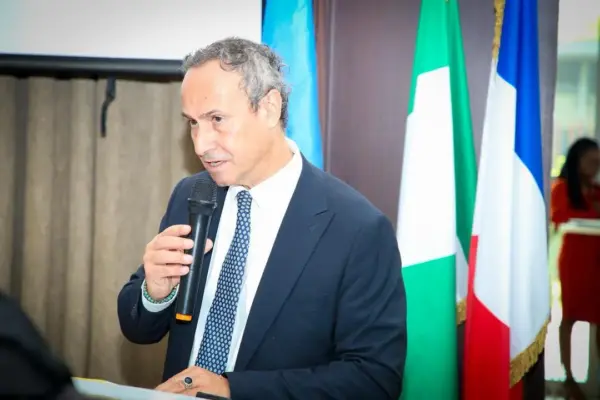
Marc Fonbaustier, French ambassador to Nigeria, said in an interview with Premium Times that there are two key collaborations with ambitious production targets.
Fonbaustier identified the first as the Dangote Peugeot Automobile Nigeria Limited (DPAN), a partnership between Dangote Industries Limited and Stellantis Group, the parent company of Peugeot.
DPAN is a joint venture that operates a vehicle assembly plant in Kaduna State, where cars are built from imported components.
Read also: Nigeria’s auto industry is in need of government support
He said that although DPAN initially launched with the Peugeot 301, the company is now exploring the production of multiple models, including the 308, 3008, 5008, and 508.
The venture is targeting production and sale of 44,000 vehicles annually in Nigeria, a figure described by the ambassador as ambitious but achievable.
French automobile companies, especially Peugeot and Renault, once had a strong presence in Nigeria, particularly from the 1970s through the 1990s.
At the time, Peugeot had a factory in Kaduna called Peugeot Automobile Nigeria (PAN), where they built popular models like the 404, 504, and 505.
The Kaduna plant also employed thousands of people and worked with many local suppliers. Renault, on the other hand, also sold cars in Nigeria on a smaller scale.
Nigeria was trying to build its own car industry, and Peugeot was the star of that plan.
But when Nigeria fell into what has been termed the second recession in the mid-1980s, and oil prices dropped, the cost of automobile production rose.
This, alongside the importation of used cars (tokunbo) and other factors, gradually weakened local assembly operations, leading to a significant decline in production and market share for French brands.
Read also: NADDC pushes automotive industry bill to stimulate investment
Local vehicle production in Nigeria is, however, on the increase with brands like Innoson, GAC, and Mikano.
In the interview, Fonbaustier said the French automobile industry is making a slow but conscientious effort to re-enter the market.
“We have new ambitions, but you know, for the automobile industry, it’s a long cycle. It took a long time for the French to vanish from the automobile scene.
“It will take a bit of time to see the resurrection and the arrival,” he said.
Fonbaustier said the second partnership is between Renault, a major French car manufacturer, and Coscaris Group, a large auto distributor in Nigeria.
He noted that the two companies are working to co-produce some vehicles. The brand, he said, is called Logan.
“But this is not the end of the story. I think French business in Nigeria is broader than that. As you know, we still have about 100 companies operating in Nigeria that directly employ 16,000 Nigerians,” Fonbaustier said, noting that French investments before the shrinkage of the Naira were estimated at $10 billion.

Join BusinessDay whatsapp Channel, to stay up to date
Open In Whatsapp