As artificial intelligence rapidly reshapes global economies, Nigeria is making an ambitious attempt to secure a place in the future digital order through strategic investments in infrastructure capable of powering the next generation of technology-driven growth.
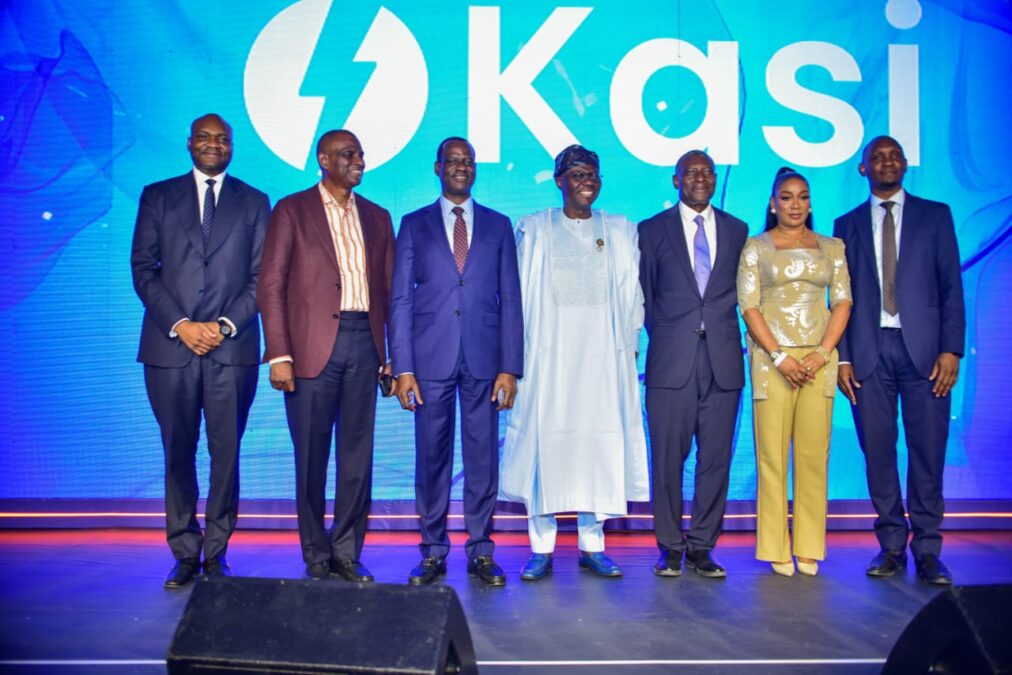
At the centre of that push is the Nigeria Sovereign Investment Authority (NSIA), which is backing the KASI Hyperscale Data Centre project as part of a broader national effort to strengthen Nigeria’s digital economy, reduce dependence on foreign cloud infrastructure, and position the country competitively in the emerging global AI race.
Across the world, countries are investing heavily in data centres, cloud computing systems, and high-performance computing infrastructure that support artificial intelligence applications. These systems are increasingly becoming as important to economic growth as roads, power plants, and oil pipelines.
For Nigeria, the stakes are particularly high. The country has one of Africa’s largest digital economies, a fast-growing fintech ecosystem, and a youthful population driving innovation in e-commerce, education technology, healthcare platforms, logistics, and financial services. Yet much of the infrastructure powering these digital services still sits outside the country.
Read also: Digital transformation in trust services: Opportunities and risks
This dependence on foreign cloud hosting and offshore data storage has continued to expose Nigerian businesses to high foreign exchange costs, data security concerns, and limited local computing capacity.
NSIA believes the KASI Hyperscale Data Centre can help change that narrative. The Authority described KASI as more than a conventional data centre. It is being positioned as Nigeria’s first AI factory, an advanced infrastructure hub designed to provide cloud computing, virtualisation, storage, disaster recovery, and GPU-powered computing capacity required to train and run artificial intelligence systems.
According to NSIA, the facility is expected to support businesses across financial services, telecommunications, healthcare, education, and government operations. The project is also expected to provide local infrastructure for global hyperscalers such as Google, Amazon, and Meta, while helping Nigerian companies reduce reliance on foreign computing infrastructure.
In practical terms, the impact could be significant. Nigerian fintech firms would be able to build AI-powered credit scoring systems locally without routing sensitive customer information through foreign servers. Healthcare institutions could develop medical diagnostic tools trained on Nigerian patient data. Logistics companies could deploy AI-powered optimisation systems, while public institutions could improve cybersecurity and digital service delivery.
NSIA said the world has now entered a global competition centred on compute, the processing power required to train artificial intelligence systems and support digital economies.
Countries investing early in AI-ready infrastructure are increasingly attracting investment, strengthening local innovation ecosystems, and building high-value technology jobs.
For Nigeria, the investment in KASI represents an attempt to ensure the country does not remain a consumer in the global digital economy but becomes an active participant and infrastructure provider.
The scale of the ambition is substantial. Upon full development, the KASI campus is expected to comprise multiple facilities with combined capacity of about 100 megawatts, making it one of Africa’s largest AI-ready hyperscale data centre developments.
Beyond supporting technology businesses, NSIA believes the investment could strengthen Nigeria’s broader economic resilience.
The Authority noted that digital infrastructure now underpins almost every aspect of modern life, from banking transactions and healthcare systems to education platforms and government services.
As more economic activity moves online, the quality of a country’s digital infrastructure increasingly determines the speed of innovation, business productivity, and national competitiveness.
For NSIA, the issue also extends beyond economics into national sovereignty. The Authority argued that locally hosted data infrastructure is becoming critical for cybersecurity, regulatory oversight, and long-term strategic independence.
“Data sovereignty is no longer merely a policy aspiration; it is a strategic economic asset. Every Nigerian dataset processed on Nigerian infrastructure, under Nigerian law and regulation, is data that builds Nigerian capability rather than subsidising capability elsewhere. KASI is, fundamentally, sovereignty infrastructure,” NSIA stated.
Read also: Closeup launches N500m consumer promo to boost customer engagement
The KASI investment also reflects a broader shift in NSIA’s long-term investment philosophy. Traditionally associated with infrastructure sectors such as roads, healthcare, and energy, the sovereign investment institution is increasingly expanding into technology-focused investments that it believes will shape future economic growth.
This strategy includes support for innovation platforms such as the NSIA Prize for Innovation, partnerships like the NSIA-JICA Impact Innovation Fund, and investments through the Future Generations Fund into venture capital and private equity firms focused on high-growth technology sectors.
According to the Authority, these investments are intended to support entrepreneurs, deepen access to growth capital, and strengthen Nigeria’s innovation ecosystem.
Industry observers say the move signals growing recognition that Africa’s next economic transformation may depend not only on physical infrastructure, but also on digital infrastructure capable of supporting artificial intelligence, cloud services, and data-driven industries.
For Nigeria, the challenge will be execution. Power reliability, connectivity gaps, regulatory consistency, and broader infrastructure deficits remain major obstacles to scaling large digital infrastructure projects. Competition is also intensifying as countries across Africa race to attract global technology investments.
Still, NSIA insists the country cannot afford to remain on the sidelines of the AI revolution. “The age of artificial intelligence is not coming; it is here and through investments like KASI, NSIA is ensuring that Nigeria is not merely a spectator but a builder, a host, and a leader in this transformational era,” the Authority stated.


Join BusinessDay whatsapp Channel, to stay up to date
Open In Whatsapp