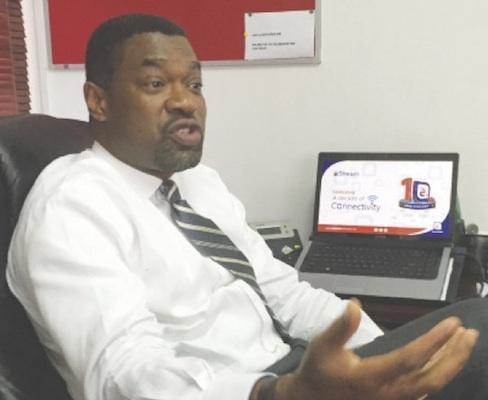
Muyiwa Ogungboye, MD/CEO e.Stream networks, an indigenous Internet Service Provider (ISP) talks to JUMOKE AKIYODE about his plans to bring true fourth generation (4G) mobile Network to Nigeria, challenges faced in the telecoms industry and the growth of his company since establishment ten years ago. Excerpts…
e.Stream Networks recently announced its partnership with Bitflux to launch mobile 4G LTE in Nigeria. How do you intend to stand out from the other providers who have launched this service before now?
Most mobile internet services we have in this country today are using 2G or 3G. What we want to bring on board is the definition of true 4G. A true 4G service has a minimum of 10MB per second speed, anything short of that is not 4G but most Nigerians do not understand the definition of 4G so other vendors, because of the naivety of the Nigerian populace, they are getting away with the 4G slogan but if the Nigerian populace is well educated to know and test that what they are getting from the company is truly 4G then they will understand that it is not 4G that they are getting. What we want to bring on board is the education behind 4G and what it is all about. On 4G you get exceptionally fast speed at a very competitive price. You can imagine getting 100MB per second for as little as N5, 000. It is already happening as I speak to you we have coverage in Lagos Island, Ikoyi, VI and some base stations are coming up in Ogba, Ikeja, Maryland, Surulere. Those ones are currently ongoing and we hope they will be up and running before the year runs out. Our focus is that before the year runs out, Lagos state should have been covered. That is what we want to partake in the mass market section. With that, you and I that are mobile on the road will have access to affordable, reliable internet that is exceptionally fast.
If you go to Europe, what you would see is a minimum of 12MB per second speed because on the move, you want to be able to watch CNN, nollywood or skype and all these things need exceptionally big bandwidth which today’s 2G or 3G cannot really do so the only way to go about it is to latch onto the 4G, that is why e.Stream is coming on board to see how we can also have our share in the market.
How would you be able to drop prices outside Lagos considering the expenses that will be incurred in moving bandwidth outside the state?
I would say a big thank you to NCC for allowing competition to happen because competition has actually forced price to come down drastically, so what you used to pay for some services is now about one third of the price due to competition. A lot of innovation is also coming up that is driving down prices for trunk to locations outside Lagos so I would say they have played a very good role to ensure that companies like ours can play in this market. We are also discussing with some companies that have landed their submarine cables. As I speak to you, one of those companies has actually concluded plans to work with us. Truly speaking, it is an expensive project that only one organization cannot do so we are trying to see how we can collaborate to draw those cables using the sea behind the coast of Nigeria, from Lagos to portharcourt, warri and other states which will also force prices down.
On the other hand, for cables coming from Europe that also landed in Lagos, there is another organisation that we are working with to see how we can benefit. However we are hoping that president Buhari can sort out the problems in the northern part of Nigeria so that we can pass cables from Chad into the north but for the Port-Harcourt and Warri side, before the year runs out, that should be up and running.
The world has started talking about moving to 5G. Giving the situation of internet penetration in Nigeria, do you think we can meet up with the 2020 target for 5G?
The truth is that we can meet up. Take for example, about 15 years ago, how many people had access to affordable internet services or mobile services in the country? But that is history now; we have been able to surmount all those challenges even without any infrastructure. So to get to 5G by 2020 is possible but we need the support of the government and the financial sector because accessing funds is a difficult challenge. We also need the government to recognize local indigenous players. We have to grow our own to develop this country. What is currently happening in the oil sector is making us all to think deeper and think of what we can do within ourselves to move the country forward. So the 5G in 2020 is possible if the intelligence, infrastructure and support are put in place.
Are you thinking of moving 4g into mobile networks and how soon are you going to do this?
We are already in mobile; the only challenge is that the devices that will support our 4G services are not yet available. But with time, hopefully before the year runs out, it will be available. As I speak to you, Huawei is already producing 4G phones that are compatible with our services. I want to believe that companies like Samsung and the others are also thinking of manufacturing 4g compatible devices. We don’t want to be restrictive to our own type of mobile device. If we wanted to do that, we would have launched long before now but we know people would not be happy having our phone with functionalities that they are not used to. It will definitely happen, but it is a matter o time. Today, our 4G works on some specific mobile devices but we want to make it more open to the public where anybody can use of any make of phones that they can purchase.
What are the challenges encountered by e.Stream networks since it was founded 10 years ago?
One of which is capitalization. Accessing funds is a major challenge, the interest rates and conditions to access funds from the bank and ridiculous. That is why I said the government should find a way to create a kind of fund that is accessible to people like us. Of course there will be conditions to it because dollar has not been stable.
We have also had infrastructure challenges such as power which has been a major problem. If we say we earn N100 million a year, we spend more than half of the profit on diesel.
Skill set has also been a challenge. We have to spend a lot of money re-training staff because our education system is not very good. There are some certain things that you expect from a university graduate but it is not happening.
JUMOKE AKIYODE


Join BusinessDay whatsapp Channel, to stay up to date
Open In Whatsapp