Nigeria is seeking greater control over how Artificial Intelligence (AI) systems are built and deployed within its borders, warning that reliance on imported models trained on foreign data could undermine inclusion, trust and national sovereignty.
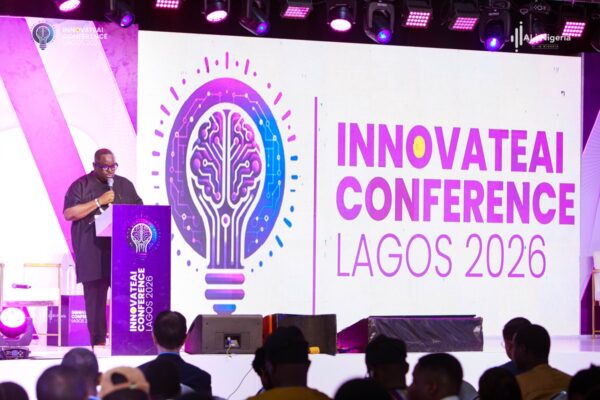
Policymakers, fintech executives and academics, at the Innovate AI 2026 conference in Lagos, said Africa’s largest economy must move beyond adopting off-the-shelf AI tools developed abroad and instead shape systems that reflect local realities.
Delivering the opening address, Ehia Erhabon, president of AI Foundation, Nigeria, urged stakeholders to move beyond fascination with AI’s capabilities and focus on governance, accountability, and societal impact.
He highlighted the Foundation grassroots initiatives, including AI community hubs in 19 states engaging over 25,000 learners monthly, and the Nigeria AI Landscape Report, which tracks the country’s AI ecosystem.
Read also: AI-driven memory rally hits $160bn as Nigeria faces 20% jump in phone prices
“Innovation without responsibility risks deepening inequality and eroding public trust,” said Stanley Jacob, speaking on behalf of the AI Nigeria Foundation board and in his capacity as president of the FinTech Association of Nigeria.
Jacob said Nigeria must anchor AI growth on inclusivity, accountability and sovereignty, arguing that models deployed locally should be trained on representative Nigerian data and subject to domestic institutional oversight.
“Responsible AI is not a constraint, it is the foundation for innovation that can scale and endure,” he said.
The push comes as Nigerian fintech firms increasingly integrate AI into fraud detection, credit scoring and compliance systems. Industry leaders at the conference said algorithms trained primarily on non-African datasets risk misclassifying users in an economy where informal employment and income volatility are widespread.
Read also: Nigerian CEOs bet on AI to drive growth in 2026
Natalia Lyarskaya, managing director of credit at digital lender Kuda, said AI-driven decisions can have lasting human consequences. “Inclusion does not happen automatically,” she said, warning that poorly contextualised systems could exclude viable borrowers.
Government officials signalled that regulatory guardrails are being developed. In a virtual address, Kashifu Abdullahi Inuwa, director-general of the National Information Technology Development Agency, said Nigeria’s National AI Strategy is built around infrastructure, fairness, transparency, accountability and privacy by design.
AI governance must extend across the full lifecycle, from data collection and model training to deployment and monitoring, he said, ensuring Nigerian values are embedded in systems operating within the country.
Concerns about digital colonisation also featured prominently. Nkemdilim Uwaje Begho, chief executive of Future Software Resources, argued that Africa must retain ownership of its data and avoid wholesale adoption of foreign regulatory templates that may not protect local interests.
From the media sector, Victoria Ajayi, chief executive of TVC Communications, said her organisation uses AI tools to deliver news in indigenous languages but maintains strict editorial controls, watermarking and copyright protections to safeguard trust.
Speakers also emphasised talent development and domestic infrastructure as prerequisites for sovereignty.
Jonnie Penn of the University of Cambridge described AI as a socio-technical system requiring cultural and institutional awareness beyond technical design, urging organisations to treat deployment as an ongoing process requiring oversight and public engagement.
Across sessions, a consensus emerged that Nigeria must actively shape AI systems rather than passively import them. With adoption accelerating across finance, media and public services, speakers said the country faces a narrowing window to embed local control before foreign-built architectures become entrenched.
For Africa’s largest economy, the message was that the future of AI in Nigeria will not be outsourced.


Join BusinessDay whatsapp Channel, to stay up to date
Open In Whatsapp