
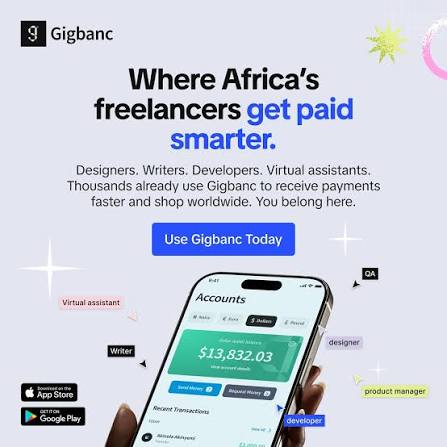
Gigbanc has announced plans to wind down its operations as it becomes the latest casualty of the difficult fundraising environment confronting Africa’s startup ecosystem despite signs of a gradual recovery in venture capital investment.
The company, which provides cross-border payment services for freelancers, remote workers, creators and businesses, notified customers that it will cease operations after initiating an orderly shutdown process. Customers have been advised to convert their foreign currency balances to naira and withdraw eligible funds to their Nigerian bank accounts before the platform closes.
Gigbanc said withdrawals of legitimate customer funds will remain free until July 31, after which its services will no longer be available. The startup also disclosed that it is in talks to be acquired by an unnamed Nigerian fintech infrastructure company, although no timeline or financial details of the potential deal were provided.
Founded to simplify international payments for Africa’s growing digital workforce, Gigbanc positioned itself as a platform that enabled users to receive payments from overseas clients and convert them into local currency with ease.
The startup served freelancers, remote employees, creators, and small businesses seeking alternatives to traditional cross-border payment channels.
Paul Okundaye, co-founder and CEO of Gigbanc, said in a statement that the decision to shut down was driven by the company’s inability to secure the funding required to sustain and scale its operations.
“We built Gigbanc to make global payments easier for Africans participating in the digital economy. While we are proud of what we achieved, the current funding environment has made it difficult to continue operating independently,” he said.
The shutdown comes at a time when venture capital funding across Africa remains concentrated in fewer companies. Although startup funding on the continent has shown modest improvement in 2026 compared with the previous year, investors have become selective, favouring businesses with stronger paths to profitability and sustainable unit economics.
The development reflects a broader shift in Africa’s technology ecosystem, where startups that once prioritised rapid customer acquisition are now under pressure to demonstrate financial discipline amid higher interest rates and reduced investor appetite for risk.
Gigbanc joins a growing list of African startups that have either shut down, downsized or sought acquisitions over the past two years as founders navigate a prolonged funding slowdown.
Mergers and acquisitions are becoming a common exit strategy for startups unable to raise additional capital but with technology or customer bases that remain attractive to larger players.
If completed, Gigbanc’s acquisition by a fintech infrastructure provider would add to the ongoing consolidation within Nigeria’s fintech sector, where established companies are acquiring specialised startups to expand their product offerings and technical capabilities.
Despite the closure, fintech remains Africa’s largest-funded startup sector, accounting for a significant share of venture capital investments on the continent. However, the industry has also experienced some of the highest rates of restructuring and business closures since the global venture capital market tightened in 2022.
For Nigeria’s technology ecosystem, Gigbanc’s shutdown highlights the changing realities of startup building, where access to capital is no longer sufficient on its own as investors demand clear revenue models, operational efficiency, and sustainable growth.


Join BusinessDay whatsapp Channel, to stay up to date
Open In Whatsapp