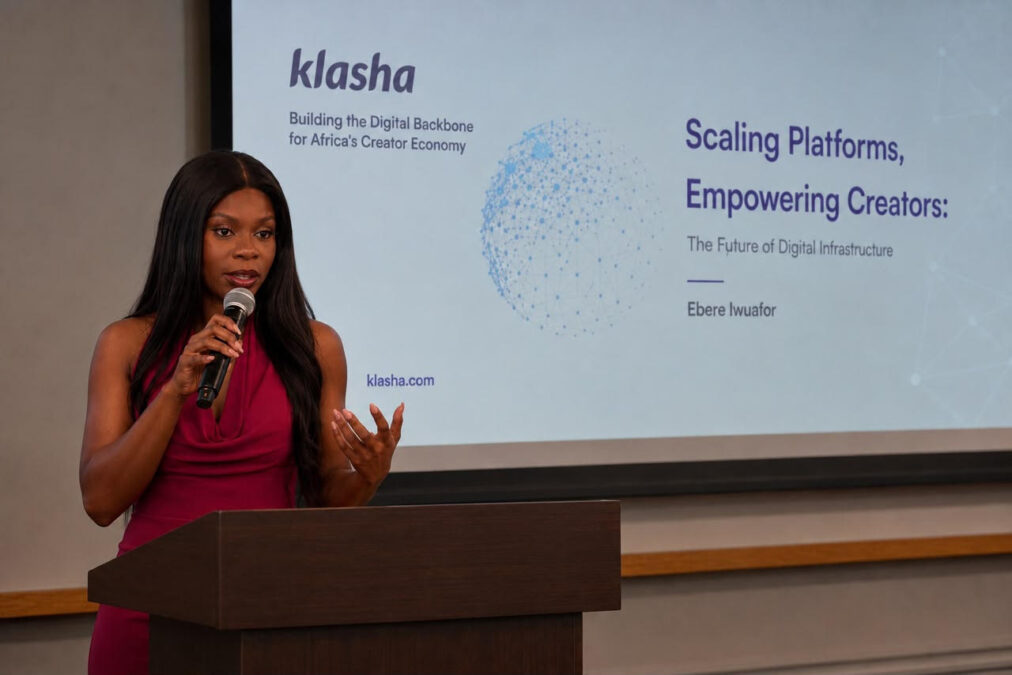
As Africa’s technology ecosystem continues to mature, the conversation has shifted from simply increasing the number of startups to improving the quality of products they build. Investors, accelerators, and technology companies increasingly recognise that sustainable innovation depends not only on engineering talent but also on strong product management, the discipline that transforms customer problems into scalable, commercially viable digital solutions.
While product management has become a core capability within high-growth technology companies, its application beyond commercial software organisations remains relatively limited. One professional helping bridge this gap is Ebere Iwuafor, a Product Manager at Klasha and Trustee and Director at STEMify Africa, who has successfully transferred modern product management methodologies into one of Nigeria’s fastest-growing STEM and innovation organisations.
Alongside leading product initiatives for Klasha’s cross-border payments infrastructure, Ebere has worked with STEMify Africa to strengthen how young innovators identify problems, validate ideas, prioritise solutions, and develop products capable of addressing real societal and commercial challenges.
Rather than approaching innovation as isolated competitions, the organisation increasingly adopts structured product development practices that reflect how successful technology companies build and scale products.
Drawing from her experience in fintech, Ebere introduced frameworks centred on customer discovery, user research, opportunity assessment, value proposition design, product requirement documentation, roadmap planning, feature prioritisation, experimentation, rapid prototyping, minimum viable product (MVP) development, and iterative validation. Participants were encouraged to validate assumptions before investing in solution development, define measurable success metrics, and continuously refine their ideas using structured feedback from mentors, educators, and potential users.
These practices represented a significant shift from traditional project-based learning. Student teams began approaching innovation through evidence-based product thinking, applying customer interviews, user journey mapping, problem framing, prioritisation matrices, and iterative testing to ensure solutions addressed genuine market needs.
This methodology mirrors the operating model used by leading product organisations, where continuous learning and measurable outcomes guide development decisions.
Beyond curriculum development, Ebere contributed to improving the operational systems supporting STEMify Africa’s innovation programmes. She helped establish structured mentor allocation processes, milestone-based product reviews, design thinking workshops, founder readiness assessments, evaluation rubrics based on product maturity, and standardised feedback mechanisms that improved consistency across hundreds of participating teams. These operational improvements strengthened programme scalability while providing participants with practical exposure to product management practices used within venture-backed technology companies.
Her contribution coincided with a period of substantial organisational growth. Participation in STEMify Africa’s flagship innovation challenge increased from 110 student teams in 2022 to 893 teams in 2025 representing more than 700% growth over three years.
Supporting this expansion required repeatable operational processes, scalable programme design, and structured evaluation systems capable of maintaining quality across an increasingly diverse innovation community.
During the same period, STEMify Africa strengthened its international profile by winning a U.S. Department of State Federal Assistance Awards through the U.S. Embassy Abuja worth over $23,000 in 2024. The organisation’s ability to secure successive awards reflected growing confidence in its programme delivery model and its capacity to nurture technology-driven innovation.
The strengthened programme infrastructure also enabled STEMify Africa to deepen collaborations with internationally recognised organisations including the Conrad Foundation, NASA Space Center Houston, Clarkson University, Lagos Business School, and the University of Alberta.
These partnerships provided participants with access to global innovation competitions, entrepreneurship programmes, mentorship, scholarships, and international exposure that extended well beyond local programme delivery.
The results are increasingly visible within Africa’s innovation ecosystem. Student teams emerging from STEMify Africa have progressed to international innovation competitions, secured admissions and scholarships to leading universities, and continued developing solutions addressing challenges across healthcare, education, sustainability, financial inclusion, and emerging technologies.
By embedding structured product thinking early in the innovation journey, the organisation is producing founders who understand that successful products are built through customer validation, continuous experimentation, and disciplined execution rather than technical capability alone.
For Africa’s digital economy, this represents an important evolution. As investment increasingly favours product-led businesses capable of achieving sustainable growth, early exposure to product management principles equips aspiring entrepreneurs with the skills required to build scalable technology companies. The ecosystem benefits not only from more founders, but from founders who understand discovery, prioritisation, iteration, execution, and product-market fit.
Ebere’s contribution demonstrates how experienced product managers can extend their impact beyond commercial organisations by applying proven product methodologies to ecosystem development. Her work illustrates that product management is not simply a function for delivering software, it is a discipline for designing systems, improving decision-making, and creating repeatable processes that enable innovation to scale.
As Africa continues to produce globally competitive technology companies, professionals capable of transferring commercial product expertise into education, entrepreneurship, and innovation ecosystems will play an increasingly important role in strengthening the continent’s digital future. Through her leadership in both fintech and STEM education, Ebere Iwuafor represents a growing generation of product leaders whose influence extends beyond the products they build to the innovation ecosystems they help shape.


Join BusinessDay whatsapp Channel, to stay up to date
Open In Whatsapp