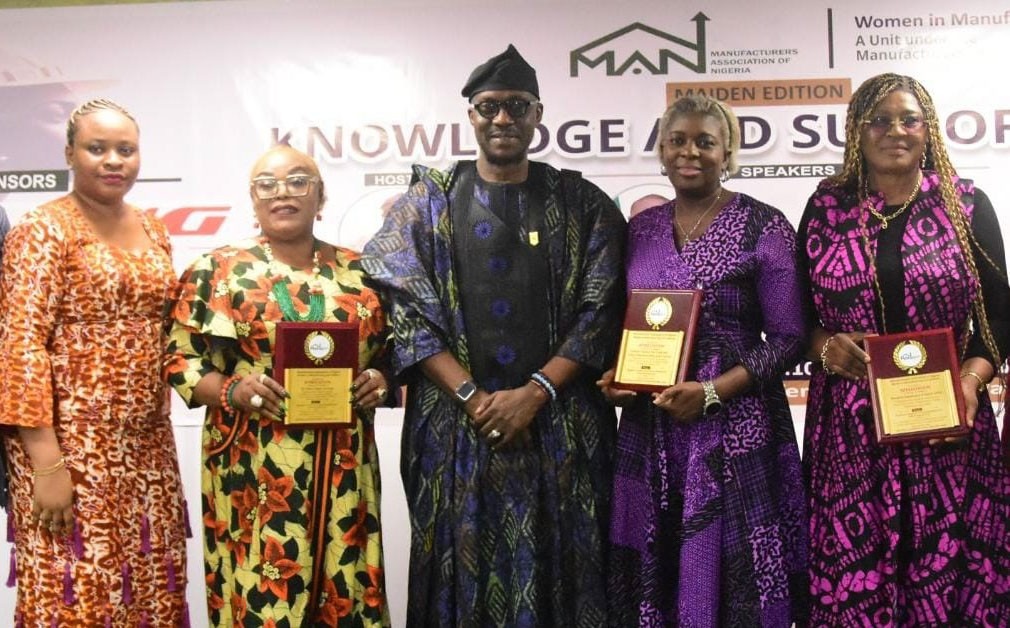
The National Agency for Food and Drug Administration and Control (NAFDAC) and the Standards Organisation of Nigeria (SON) have called on women manufacturers in Nigeria to strengthen compliance with extant regulations to boost global market readiness.
This was the crux of submissions articulated at the maiden knowledge and support series of the Women in Manufacturing (WiMAN) Unit which held in Lagos on Wednesday.
Mojisola Adeyeye, director general of the National Agency for Food and Drug Administration and Control (NAFDAC), said that inconsistent documentation, inaccurate labels, poor standard operating procedures (SOPs) and unprepared facilities are the most common causes of delays and rejections faced by many women manufacturers.
Adeyeye, who was represented by Ekiejare Adebusola, deputy director of the drug registration and regulatory affairs department of the agency, stated that manufacturers must also look to align their businesses with global best practices in terms of processes, quality control, hygiene and safety amongst others.
“Once your product is a regulated product, we determine how you are going to do it. Your facility must follow certain standards that align with international best practices.”
“The facility inspection also must fall in line with what we call the current good manufacturing practice, either for food, for drug, for any product.”
He urged manufacturers to submit complete applications through NAFDAC’s automated portals: NAFDAC Automated Product Administration and Monitoring System (NAPAMS) and the Dossier Management System (DMS) for pharmaceuticals, warning that incomplete or inconsistent documentation, inaccurate labels, and poor standard operating procedures (SOPs) are the most common causes of delays and rejections.
In his remarks, Ifeanyi Okeke, director-general of the Standard Organisation of Nigeria, who was represented by Phebean Arumemi, head of the national product certification department, explained that to attain best practice in any field, manufacturers must strengthen compliance.
He noted that product oversight typically follows three stages: the manufacturer’s own controls, association-level oversight and government confirmation that the product is safe for consumption or use.
In his address, Segun Ajayi-Kadir, director general, Manufacturers Association of Nigeria (MAN), said the WiMAN knowledge and support series is aimed at addressing persistent barriers and strengthen the participation, visibility and competitiveness of women-led manufacturing businesses across Nigeria, most of which, he said, revolved around compliance.
“Compliance should not be seen merely as a regulatory obligation. It is an essential business strategy that builds confidence, improves product quality, enhances competitiveness and creates opportunities for access to larger domestic and international markets,” Ajayi-Kadir said.
Speaking on the vision behind the engagement, Genevieve Nwowu, WiMAN coordinator, said: “Our vision is to ensure that women manufacturers are not only present in the sector but are well positioned to grow, compete, scale, and thrive to achieve this.”
“We must move beyond general conversation and create powerful solution-oriented engagements like this that will respond to real challenges facing women manufacturers,” she added.

Join BusinessDay whatsapp Channel, to stay up to date
Open In Whatsapp