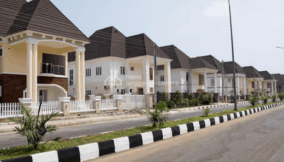
Land tenure system in Nigeria is a huge matter for concern, especially for investors seeking credit from commercial banks. This is because, as Andrew Nervin, former chief economist at PWC, puts it, the system is the most in Africa.
Nervin has highlighted the limitations of the current system in terms of accessibility and affordability, particularly in major cities like Lagos, Abuja and Port Harcourt.
Felix Ijeh, an economist, policy analyst, and banker, takes it further, saying that Nigeria has a land tenure and ownership system that cannot support modern credit markets.
According to him, Nigeria’s land tenure framework shows centralised ownership, and fragmented reality. “Nigeria operates under the Land Use Act of 1978, which vests all land in each state in the hands of the Governor, to be held in trust for the people,” he noted.
Continuing, he said, “in practice, individuals hold rights of occupancy, not absolute ownership. Transfers, mortgages, and charges require Governor’s Consent, and land administration is handled at state and local levels, often manually.”
Read also: How growth in diaspora-driven demand is reshaping property market offering
Ijeh noted that over 80 percent of land in Nigeria is untitled or unregistered. Less than 10 percent of urban land parcels have formally registered titles, Consent and registration processes can take 6–24 months, sometimes longer, and transaction costs (fees, taxes, informal payments) can reach 10–20 percent of property value.
“In an economy where land is the primary store of wealth, Nigeria has built a system that makes land hard to register, difficult to transfer, and risky to use as collateral,” he said, pointing out that credit systems run on collateral certainty.
Ijeh, whose views are contained in his analytical treatise titled ‘Land Without Title, Credit Without Collateral’ published in ‘The Nigerian Economy’ noted that banks always insist land must be clearly owned, easily transferable, and quickly enforceable.
“Nigeria’s land system fails on all three,” he said, listing weak collateral certainty, high transaction costs, and slow and uncertain foreclosure as major reasons for the failure.
Ijeh, who is also a university teacher, explained that when ownership records are unclear or disputed, banks cannot confidently accept land as security, adding hat multiple claims, informal allocations, and incomplete registries raise default risk.
In the same vein, governor’s Consent adds time, cost, and political discretion to every mortgage or charge and, for banks, this raises the effective cost of lending, which is passed on as higher interest rates.
Foreclosure in Nigeria is still a novel idea and because it is legally complex, judicially slow, and politically sensitive, it weakens lenders’ recovery prospects and discourages long-term lending.
This system’s impact on the credit system has consequences that are visible in national credit indicators. Ijeh says that as a result of this, private sector credit to GDP remains below 15 percent, far lower than peer emerging economies.
“Mortgage credit to GDP is below 1 percent; banks prefer short-term, high-yield lending, trade finance, government securities, long-term housing and infrastructure finance remains marginal, in short, illiquid land produces illiquid credit markets,” he said.

Join BusinessDay whatsapp Channel, to stay up to date
Open In Whatsapp