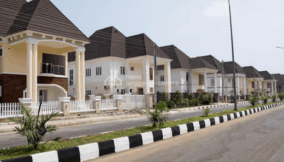
The Lagos Free Zone (LFZ) is a testament to the power of infrastructure and capital in enabling the growth and development of real estate assets, including those of great magnitude.
The free zone is a strategically located modern free trade district, spanning 16,500 hectares in southeastern Lagos, integrated with the recently operational Lekki Deep Seaport.
It was conceived in 2006 and is regulated by the Nigeria Export Processing Zones Authority (NEPZA). The zone has evolved into a thriving industrial ecosystem, attracting multinational and indigenous corporations, regional investors, and international capital.
Over the years, the zone has recorded tremendous economic activities and, therefore, it is transitioning from infancy to accelerated growth, with a significant increase in development activity.
The zone is currently at an interesting development stage, with a rapidly growing project and infrastructure pipeline.
A recent report by Estate Intel notes that the zone has a bright outlook, driven by strong performance from existing commercial assets, completed infrastructure, rising government interest, and institutional capital inflows, which are creating conditions for an accelerated transformation and recognition into a globally competitive free trade district.
Estate Intel is a Lagos-based, data-driven real estate market intelligence platform serving Africa’s real estate and construction sectors. It is a market intelligence and data platform that helps organizations in the African real estate and construction industry make informed, data-driven decisions.
According to the report, the zone emphasises Nigeria’s pivot towards internal manufacturing and export-oriented activities. Its Proximity to the deep seaport, Dangote’s refinery, and the planned airport provides distinct advantages over competing free zones.
Planned infrastructure projects such as the Green Line rail system, which is expected to commence construction in 2026, and the ongoing Lagos-Calabar Coastal Highway project will further improve regional access for people and cargo.
Oyindamola Ladejobi, a researcher at Estate Intel, explained that the zone is also attracting ESG-aligned deals and environmental standards, signalling more interest for sustainability-conscious investors.
“Over the coming years, demand is expected to rise as more infrastructure projects are completed and the economic activity strengthens, both in the primary and secondary markets. For investors, developers and policymakers, the question is no longer about whether to engage, but how to mobilise capital to capture the zone’s growth opportunities,” Ladejobi stated.
Government interventions to restore macroeconomic stability and policy support, as well as independent actions, have enabled infrastructure development, which is increasingly prioritised as the major driver for sustainable growth.
Ladejobi pointed out that the free zone’s expansion is encouraged by facilities that reduce operational stress for existing and prospective occupiers and investors, as well as its integration with the major regional projects, some of which are highlighted below:
The Lekki Deep Sea Port, for instance, is an important asset for the free zone, providing direct maritime access and reducing logistics costs for manufacturing and export-based businesses in the free zone.
It features a container terminal with a 1,200-metre quay, three container berths, and a storage area with over 15,000 container spaces. The port has the capacity to handle 2.5 million twenty-foot equivalent units (TEUs) annually.

Join BusinessDay whatsapp Channel, to stay up to date
Open In Whatsapp