…Acrimonious primaries breed crisis in parties
…Individual ambitions override parties’ interest
…Skepticism grows over possible free, fair, credible polls
Barely eight months to the 2027 general election, concern is mounting over what political observers and stakeholders describe as a deeply flawed and crisis-ridden political process that could undermine the credibility of the polls.
Across party lines, disputes from acrimonious primaries, allegations of imposition, vote manipulation, money politics, factional control and rising defections have intensified fears that Nigeria may be heading into one of its most contentious elections since 1999.
So far, major political parties that have produced presidential candidates are the ruling All Progressives Congress (APC), African Democratic Congress (ADC), Peoples Redemption Party (PRP), Social Democratic Party (SDP) and African Action Congress (AAC). The Nigeria Democratic Congress (NDC) has also formally ratified former Labour Party’s presidential candidate, Peter Obi, as its flag bearer, being the party’s sole aspirant.
Rather than consolidating internal democracy, the primaries have further exposed deep divisions, with parallel conventions, disputed delegate lists and competing leadership claims defining the political landscape.
The African Democratic Congress (ADC) has emerged as one of the most visible flashpoints of the crisis. A faction of the party produced Dumebi Kachikwu as its consensus presidential candidate at a convention in Abuja attended by delegates from across the country, while also “dissolving” the David Mark and Rauf Aregbesola leadership and inaugurating a new National Working Committee (NWC).
Read also: Southern 2027 presidency bid under threat as Tinubu, Obi, 7 others emerge from primaries
However, in a sharp counter-development, the David Mark-led leadership, recognised by the Independent National Electoral Commission (INEC) following a Supreme Court judgement, conducted a separate nationwide direct primary and declared former Vice President Atiku Abubakar as the party’s presidential candidate.
The conflicting outcomes immediately triggered fresh controversy within the opposition party, as former Rivers State governor, Rotimi Amaechi and economist, Mohammed Hayatu-Deen rejected the outcome, citing irregularities and questioning its legitimacy.
The crisis has deepened concerns that internal fragmentation and personal ambition may weaken opposition parties ahead of the 2027 elections.
Fresh turbulence also erupted in the Peoples Redemption Party (PRP) after the campaign organisation of aspirant, Nnaoke Ufere rejected the party’s presidential primary, which was won by former Cross River State governor, Donald Duke.
The Ufere2027 Presidential Campaign Organisation alleged widespread manipulation, inflated vote figures and procedural irregularities during the Abuja-conducted exercise.
It claimed that vote totals announced in some states exceeded accredited party membership figures submitted to the Independent National Electoral Commission (INEC).
The group, through its Executive Director Ishaq Alhassan, demanded the cancellation of the exercise and called for a fresh primary, warning that the credibility of the party had been severely compromised.
Within the People’s Democratic Party (PDP), uncertainty also persists. Oyo State governor, Seyi Makinde has declared his intention to contest the presidency, and has been adopted by the Allied Peoples’ Movement (APM) in alliance with his faction of the PDP as the presidential candidate.
The political calculus within the party became more complex following reports that former President Goodluck Jonathan had obtained nomination forms to contest on the PDP platform, following a court ruling affirming his eligibility for the 2027 race.
Although Jonathan has not confirmed the reports, speculation around his possible return has intensified internal permutations within the party.
Meanwhile, Omoyele Sowore emerged as the presidential candidate of the African Action Congress (AAC), while Adewole Adebayo clinched the Social Democratic Party (SDP) ticket.
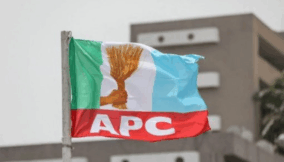
At the same time, the All Progressives Congress (APC) has faced its own wave of controversies across several states, with primaries marred by allegations of godfatherism, imposition of candidates, financial inducement and manipulation of delegate lists.
Read also: 2027: NDC holds nationwide primaries today, to rectify Obi as party presidential candidate
Aggrieved aspirants in multiple states accused powerful political blocs of hijacking party structures and imposing preferred candidates, while parallel primaries reportedly held in some areas further exposed internal fractures.
The post-primary tensions have already triggered defections, with notable figures including former Inspector-General of Police Mohammed Adamu, former Jigawa State House of Assembly Speaker Isah Idris, Senator Garba Maidoki and former Deputy Senate President Ovie Omo-Agege exiting the party. Many cited exclusion, imposition and unfair processes as reasons for their exit.
Although the APC leadership has embarked on reconciliation efforts, aggrieved members have dismissed them as superficial and ineffective.
Stakeholders weigh in on credible polls, good governance
Political analysts warn that the growing disunity across parties and the dominance of individual ambition over collective interest could erode public confidence in the electoral system and deepen voter apathy.
On the question of credibility, political analyst Jackson Lekan Ojo, said the imposition of unpopular candidates remains a major threat to Nigeria’s democratic stability.
In a telephone interview with BusinessDay, Ojo warned that the 2027 elections risk losing legitimacy if parties continue to sideline internal democracy.
“When unpopular candidates are imposed through electoral manipulation, godfatherism or voter apathy, they often produce poor governance because they lack genuine public legitimacy,” he said.
Similarly, Ikechukwu Obiora, a governance advocate, said Nigeria’s leadership crisis is rooted in decades of compromised electoral practices.
Speaking at the launch of Leadership 365 in Abuja, Obiora argued that the political system was built on a faulty foundation where elections became instruments of manipulation rather than expressions of the people’s will.
“The foundations of today’s systemic crisis were laid when elections became instruments of manipulation instead of platforms for popular choice,” he said.
Former PDP chieftain Daniel Okorie, said the 2027 outcome would depend not only on party structures but on candidate viability and public appeal, stressing that political parties must align with citizens’ aspirations to remain relevant.
Also, Senator Osita Izunasor argued that Nigeria’s leadership challenges will persist unless the country prioritises selfless, service-driven leadership over political ambition.
He stressed that holding public office does not automatically equate to leadership, warning against the misconception that position equals competence.
“You can never have good governance without true leaders. Leadership is not something you assume because you are in office. It is about selflessness and service,” he said.
Former presidential adviser Akin Osuntokun also warned that opposition fragmentation is strengthening the ruling APC’s advantage ahead of 2027, noting that the failure to unite remains a major setback for the opposition bloc.
BusinessDay reports that the concerns raised by stakeholders point to a common fact that Nigeria’s 2027 electoral challenges may be less about individuals and more about entrenched systemic failures in political recruitment, internal democracy and value orientation within the political class.

Join BusinessDay whatsapp Channel, to stay up to date
Open In Whatsapp