…Reactions trail crowded race amid Atiku’s power battle
Fresh concerns have emerged over the South’s chances of retaining presidential power in 2027 as multiple influential candidates from the region have emerged across different political parties, raising fears of a fragmented Southern vote that could hand advantage to the North.
Political analysts and stakeholders warn that the development may weaken the long-standing power rotation arrangement between the North and the South, which many believe should keep the presidency in the South until 2031 following the completion of former President Muhammadu Buhari’s eight-year tenure.
Southern contenders
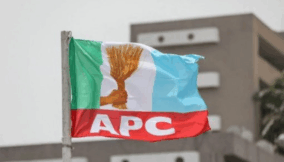
The unfolding political manoeuvring has produced an unusually crowded field of Southern contenders, with President Bola Tinubu of the All Progressives Congress (APC), Peter Obi of the Nigeria Democratic Congress (NDC), Seyi Makinde of the Allied Peoples Movement (APM) and Donald Duke of the Peoples Redemption Party (PRP) all emerging as presidential candidates.
Others are Adewole Adebayo of the Social Democratic Party (SDP), Omoyele Sowore of the African Action Congress (AAC), Esther Nkem Okereke of the National Rescue Movement (NRM), Chibuzo Okereke of the Labour Party (LP) and Sandy Onor of the People’s Democratic Party (PDP).
There are also controversies over the adoption of former President Goodluck Jonathan by the Turaki-led faction of the Peoples Democratic Party (PDP) for the contest.
The situation has triggered intense debate within political circles, especially as former Vice President Atiku Abubakar, candidate of the African Democratic Congress (ADC), currently stands as the most prominent Northern contender in the race.
Observers fear that while Southern politicians battle among themselves for votes across the South-West, South-East and South-South, the North could rally behind a single candidate and reclaim power in 2027 earlier than expected.
Reactions trail crowded southern field
Olusegun Osoba, former Ogun State governor has said there is a coordinated political strategy aimed at weakening Tinubu’s influence across the South ahead of the election.
Speaking at the Presidential Lodge in Abeokuta during the announcement of the APC presidential primary results in Ogun State, Osoba cautioned APC members against underestimating the growing opposition within the region.
According to him, several prominent Southern political figures are strategically positioning themselves in ways that may ultimately split votes from the South.
“Many people are saying we have no opponents, but that is a misleading narrative. The enemies are many. As we approach the next election, there is a strong gang-up against us. They are plotting to field several candidates from our region in the South,” Osoba said.
Jackson Lekan Ojo, a political analyst, also warned that the emergence of several Southern candidates across different political platforms may create deep divisions within the region and indirectly strengthen Atiku’s chances.
In a telephone interview with BusinessDay, Ojo argued that the South risks losing power if political actors fail to unite behind a single candidate.
Ojo said the fragmentation may create a strategic advantage for Atiku if Northern political interests consolidate around him, recalling that Buhari maintained a massive loyal voting base in the North for years and noted that Tinubu himself depended heavily on Northern support to win the 2023 presidential election.
“The North remains a critical factor in determining who becomes president in Nigeria. Any Southern strategy that ignores that reality may face serious electoral consequences,” Ojo said.
He further noted that worsening insecurity, economic hardship, poverty and displacement of farmers across many Northern communities could shape voting patterns in the election.
However, Bernard Mikko, political scientist and former governorship aspirant in Rivers State, dismissed suggestions that Atiku could successfully reclaim power for the North in 2027.
Mikko insisted that the presidency should remain in the South until 2031 in line with the country’s informal power-sharing arrangement. According to him, allowing the North to return to power after only one Southern term could destabilise the fragile political balance that has shaped Nigeria’s democratic transition since 1999.
“Atiku has no place in the race because it is still the turn of the South to complete its eight years, just as Buhari completed eight years for the North,” Mikko said. He warned that the Southern political class must rise above personal ambition and protect the region’s collective interest ahead of the election.
BusinessDay reports that the Independent National Electoral Commission (INEC) has fixed January 16, 2027, for the presidential poll. The outcome remains to be seen.

Join BusinessDay whatsapp Channel, to stay up to date
Open In Whatsapp