Across Africa, a quiet shift is happening among founders, business owners, and families with growing interests across multiple sectors and jurisdictions.
For a long time, the focus was naturally on growth. Building businesses, acquiring property, expanding into new markets, creating opportunities for children abroad, entering new investment circles and securing global mobility options. Families moved quickly when opportunities presented themselves, and in many cases, that growth happened successfully.
But over time, many families begin to encounter a different reality. This was not because the businesses are failing or the assets are underperforming, but because life itself has become bigger than the structures supporting it.
A business may be operating in Nigeria, while property sits in the UK and investments are held elsewhere. Children are studying abroad in Australia. Family members now live across multiple countries. New partners, advisors, and investment interests are introduced into the picture. Decisions that once felt straightforward now carry tax implications, governance implications, succession implications, and even immigration considerations. Yet in many cases, the structure around the family has not evolved at the same pace as the family itself.
This is becoming one of the defining realities for many African families today.
From the outside, things often appear successful and stable. But internally, many families are carrying more operational and decision-making pressure than people realise. Important information still sits largely with the founder. Different advisors operate independently, with businesses, properties, and investments being owned in ways that made sense years ago but may no longer reflect the realities of where the family is today.
Sometimes, there is no clear distinction between personal assets and business assets. In other cases, there is little visibility across the full picture of ownership. Succession conversations are postponed, and governance is treated as something to address later. Critical decisions remain heavily dependent on one or two individuals carrying everything mentally.
The issue is rarely the absence of success. It is that growth has outpaced structure.
Then, as families become more global and more sophisticated, this gap becomes harder to ignore. What many families are beginning to realise is that preserving continuity requires far more than simply owning valuable assets. It requires systems that allow those assets, businesses, relationships, and decisions to function cohesively over time.
Now the conversation begins to shift from accumulation to structure: not structure in the narrow sense of paperwork or legal entities alone, but structure in the broader sense of how a family organises itself. How decisions are made, how ownership is held, and how businesses connect to long-term family priorities. It also extends to how succession is approached, how younger generations are prepared and how mobility, investments, governance, and operations work together rather than separately.
For many African families, wealth creation was deeply entrepreneurial and instinctive. Opportunities were pursued quickly, relationships drove expansion, and decisions were often centralised around the founder because that was what the stage of growth required. But eventually, every growing family reaches a point where intuition alone is no longer enough to carry increasing complexity.
At that point, coordination becomes essential.
This is why many globally connected families are gradually moving away from isolated advisory relationships toward more integrated approaches. Legal, tax, governance, investment, and family decisions no longer exist independently from one another. A business restructuring affects succession planning. Residency decisions affect tax exposure. Liquidity events create governance questions. Expansion across borders introduces new operational realities.
The lives of successful families do not happen in silos. Advisory can no longer operate in silos either.
This shift is also changing the role of trusted advisors. Increasingly, families are looking beyond transactional support toward advisors who can see the broader picture and help align different parts of the family’s affairs over time. In practice, this may look different for each family.
For some, it begins with governance conversations that were previously avoided. For others, it may involve reorganising ownership structures, introducing clearer reporting systems, formalising succession plans, or creating a more deliberate approach to family decision-making. In some cases, it means establishing a family office structure or building a more coordinated advisory framework around existing businesses and investments.
What matters is not necessarily how sophisticated the structure appears on paper. What matters is whether the structure is capable of supporting the reality of the family behind it. Because without that alignment, growth can eventually create strain instead of stability. Businesses continue to expand, but visibility becomes weaker. Assets increase, but coordination reduces. Family members become more global, but long-term continuity becomes less clear.
The conversation many families are now having is no longer simply the following:
“What else should we acquire?”
It is increasingly:
“How do we organise what we already have in a way that can endure beyond us?”
That question is becoming more relevant with Africans as wealth transitions from one stage to another — from founder-led accumulation to long-term continuity.
And in many ways, that transition may become one of the most important shifts in the future of African private capital and family enterprise, for ultimately, the families that endure across generations are rarely the ones that simply accumulated the most.
They are the ones that built systems around what they accumulated, and in the end, enduring legacies are not sustained by assets alone.
They are sustained by structure.
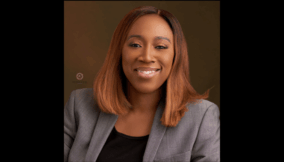
Olufunke Olumide is a Partner at Acuity Partners LLP and leads The Legacy Haus, the firm’s multifamily office practice. She works closely with African families, founders, and business owners to structure their ownership, governance, and long-term continuity across generations, helping organise assets, businesses, and family interests into coordinated frameworks that support continuity.

Join BusinessDay whatsapp Channel, to stay up to date
Open In Whatsapp