1. Controversy and irony in the arrest of Ifechukwu Dennis as a whistleblower now claim the IGP arrested the wrong person
The Nigeria Police Force, through a crack team under the Inspector-General of Police (IGP), arrested Ifechukwu Dennis in Benin City. The arrest was publicly announced by Bayo Onanuga, the Special Adviser to the President on Information and Strategy.
The official statement claimed that Mr Dennis “originated the fake voice that he passed on to his gullible targets as President Tinubu’s voice”. The investigation centred on an AI-generated voice note that was widely circulated online, falsely attributed to President Bola Tinubu, and superimposed on an original video of activist VeryDarkMan (VDM).
End of story? Not nearly.
Whistleblower’s Claim: “Wrong Person Arrested”
Social media activist Martins Vincent Otse, popularly known as VeryDarkMan (VDM), who was initially accused by the Presidency of spreading disinformation, has since become a vocal critic of the arrest. He has claimed that the police arrested the wrong person. In a video response, VDM stated that the person identified by Bayo Onanuga is “also innocent” and suggested he may have been “wrongly identified”. He further emphasised his own initial victimisation, saying, “They first accused me, and now they have arrested another person”. This claim from a prominent social media figure, often seen as a whistleblower against corruption, adds another layer to the controversy.
The Irony of Police Priorities
A central element of the controversy is the public’s reaction, which highlights a stark irony. Many Nigerians questioned the speed and focus of the police investigation. At a time when the nation is grappling with severe security challenges, including the abduction of schoolchildren in Oyo and Borno states, the swift tracking and arrest of the creator of a fake audio clip drew sharp criticism. Social media users pointedly contrasted the police’s efficiency in this case with their inability to apprehend kidnappers and bandits who are actively holding innocent people hostage. A common sentiment expressed was, “What about the kidnappers on TikTok?”, with many arguing that the police should focus their resources on more pressing threats to national security.
A video clip says that Ifechukwu Dennis’ parents claim he did not originate the disingenuous video but only spread it. Why would anyone do so?
The incident illustrates various perils on social media.
1. The urge to quickly pass on videos deemed interesting.
2. Failure to check for consequences in doing so.
3. An inadequate police investigation may be clouded by the person involved.

2. A SPUR for content rights and compensation
Joining the fight to establish fair practices with AI firms. A coalition of news publishers banding together to ensure AI firms pay for the content they use has seen a major expansion in its membership, with 30 additional organisations from across journalism joining the alliance. The additional members of the Standards for Publisher Usage Rights (SPUR) were announced at the World News Media Congress in Marseille and include several Canadian publishers such as The Globe and Mail, Torstar and CBC/Radio-Canada, Switzerland’s Ringier media group, Austria’s Der Standard, Sweden’s Bonnier and Sanoma Media Finland. A number of new affiliate members include Digital Content Next (DCN), Independent Publishers Alliance, and the Independent Media Association (IMA).
What does SPUR do? SPUR’s members have come together to create global licensing frameworks that give AI companies access to their content to train their models, while ensuring that publishers retain control over it and are fairly compensated. It will also “create technical tools that protect intellectual property, enable transparent use of journalistic content and develop shared industry standards,” writes Dan Milmo of the Guardian, one of the founding organisations alongside the BBC, FT, Sky, Media Huis and Telegraph Media Group.
3. Nigeria’s 2026 Internet Code of Practice Takes Effect: Stricter Rules for ISPs, Platforms, and AI Deployments
Internet users in Nigeria now have enforceable rights to access lawful content and to use any device or app. If your ISP throttles video streaming or blocks a legal service, you can file a complaint with the NCC.
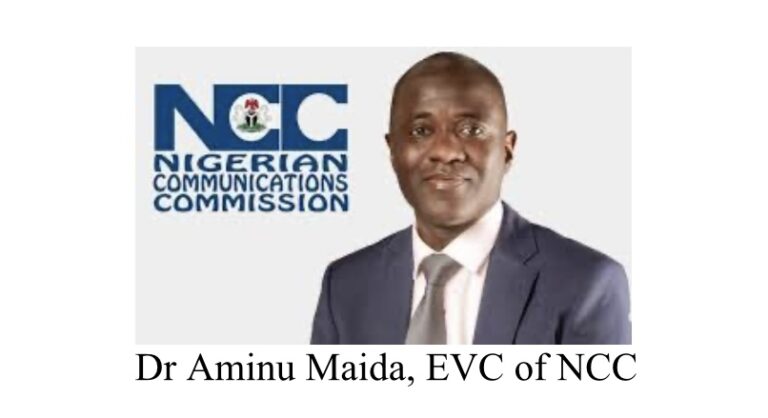
Nearly four months after its official release, the Nigerian Communications Commission’s (NCC) 2026 Internet Code of Practice (ICP) is now moving into its second phase of enforcement, with several landmark provisions already in force and more set to take effect on 13 August 2026.
The ICP, which replaces the 2009 edition, was issued as guidelines under Section 70 of the Nigerian Communications Act 2003. It aims to balance an open internet with stronger protections for user privacy, child safety, and national security, while imposing new compliance obligations on Internet Access Service Providers (ISPs), online platforms, and digital service providers.
What Changes on 13 August 2026?
The next wave of provisions – exactly six months after the Code’s release – introduces some of the most debated requirements:
– User Rights – Consumers are formally guaranteed the right to access and share lawful content, use any application or service of their choice, and connect appropriate devices. These rights are subject only to reasonable network management.
– Cybersecurity Baseline – Providers must implement the NCC’s issued cybersecurity framework as their operational baseline, raising the bar for threat detection and incident response.
– Parental Controls & Child Online Protection – ISPs must offer optional but easy‑to‑enable parental control tools (content filters, monitoring) either directly or via third‑party solutions. They must also provide guidance in multiple languages, incorporate opt‑in default settings for minors, and educate families on online risks.
– AI Deployment Notification– Before deploying any AI tool or solution related to network management or customer engagement, providers must notify the NCC. This is one of the first national rules requiring pre‑deployment transparency for AI in telecoms.
– Harmful Content Management – The NCC can direct providers to remove content deemed harmful, unsafe, or offensive, in coordination with agencies such as the National Broadcasting Commission and the National Film and Video Censors Board.
– Spam Mitigation – Providers must implement anti‑spam measures and adhere to network governance rules.
Industry and Civil Society Reactions
While major telcos like MTN Nigeria and Glo have privately expressed concerns over the administrative burden of monthly IP reporting and AI pre‑notification, consumer advocates have largely welcomed the Code.
“For the first time, Nigerian users have a legally recognised right to an open internet – no more arbitrary throttling or blocking of legal services,” said Adaobi Nwosu, a digital rights lawyer in Lagos. “But the harmful content clause is a double‑edged sword. It gives the NCC powers to remove content that must be exercised transparently, not as a censorship tool.”
The child online protection provisions have been praised by child safety groups, though some note that “opt‑in” parental controls still place the onus on families. “Many parents don’t know these tools exist,” said Tunde Olaniyan of the Safe Internet Initiative. “The NCC must run a public awareness campaign.”
What Should Users and Businesses Do?
– For consumers – You now have enforceable rights to access lawful content and to use any device or app. If your ISP throttles video streaming or blocks a legal service, you can file a complaint with the NCC.
– For parents – Ask your ISP about available parental control tools. From 13 August, they are required to offer them.
– For online platforms– The deadline to submit community rules to the NCC is 13 August 2026. Platforms that fail to comply risk enforcement action.
– For ISPs and digital service providers – Ensure your cybersecurity framework aligns with NCC standards and prepare AI notification procedures. The full compliance monitoring window opens in just over two months.
The 2026 Internet Code of Practice represents Nigeria’s most ambitious attempt to govern the internet in the age of AI, data harvesting, and platform power. With staggered deadlines now well underway, all eyes will be on the NCC’s enforcement approach – and whether the promised open, safe, and responsible internet becomes a reality for Nigeria’s 160 million internet users.

Join BusinessDay whatsapp Channel, to stay up to date
Open In Whatsapp