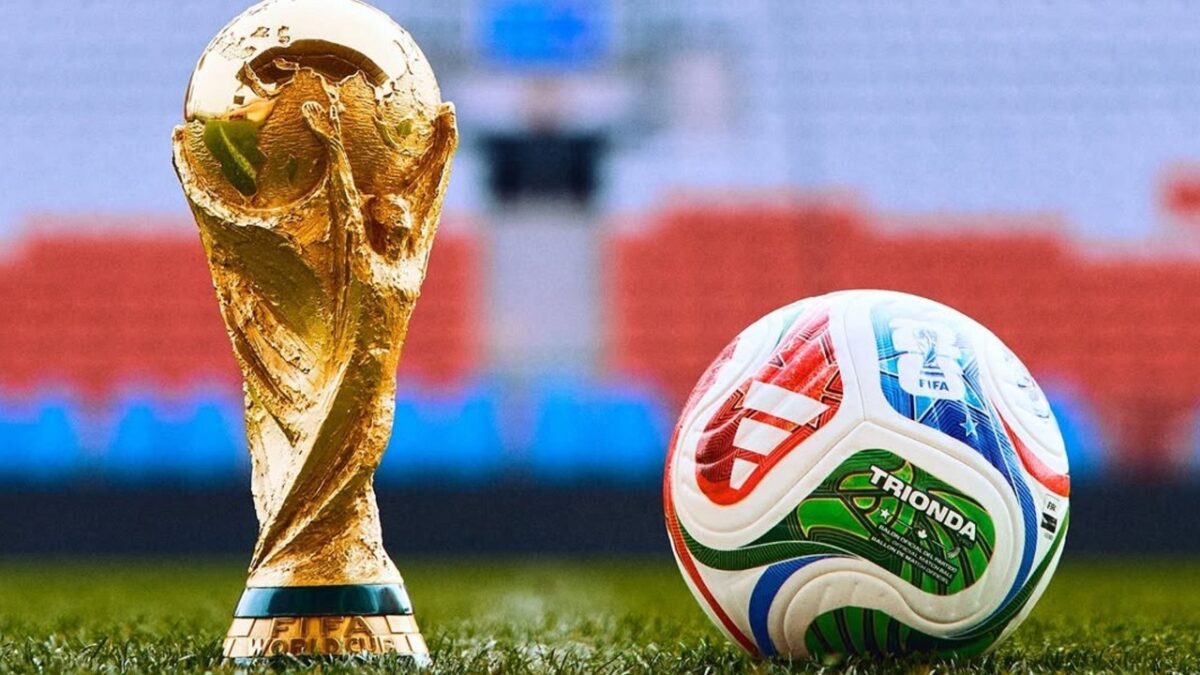
When people think about the FIFA World Cup, they think about football on the pitch.
The matches. The goals. The celebrations. The drama.
But for governments, businesses, destinations and sports organisations, the World Cup begins years before the opening whistle. It is a platform for trade, tourism, diplomacy, innovation, investment and international partnerships. And unlike the matches themselves, those opportunities do not begin with the opening whistle.
Or at least, they shouldn’t.
One of the most significant misconceptions surrounding major sporting events is that preparation starts once a country qualifies or the tournament gets underway. In reality, by that point, many of the most valuable opportunities have already been created… or missed.
Preparing for a World Cup is not simply about preparing for football; it is also very much about becoming part of everything football brings with it.
Nigeria demonstrated this during the FIFA World Cup 2026. Although the Super Eagles were absent from the tournament itself, Nigeria was impossible to ignore. Its music echoed through fan parks, its fashion remained one of the tournament’s defining styles, its football brand was everywhere, and its cultural influence continued to shape the World Cup experience. That is precisely why this article is about much more than qualification.
Nigeria’s presence during World Cup 2026 raises an interesting question. If a country can generate that much visibility without even participating, what more could it achieve through a deliberate, long-term approach?
That question has shaped much of my own work in recent years. While leading the Netherlands’ preparations for World Cup 2026, I came to see the tournament not simply as a sporting event but as a platform for diplomacy, trade, innovation and international partnerships.
What made the Dutch approach particularly effective was that it was not the work of a single organisation but the alignment of many.
Our diplomatic network across North America worked alongside governmental and semi-governmental trade organisations, the Royal Netherlands Football Association (KNVB), businesses, universities, sports organisations and other public and private partners.
Each stakeholder brought different objectives, expertise and networks, but the anticipation for the World Cup gave us a common platform. Diplomacy reinforced trade. Sport served as a catalyst for business and innovation. Universities facilitated knowledge exchange. Companies explored new markets, while cultural and governmental organisations strengthened international relationships.
Together, these stakeholders created far more than any single organisation could have achieved alone.
The role of the football federation was particularly important. A major national federation is not merely responsible for selecting a team and organising football. Through the international appeal of its players, supporters, history and identity, it also acts as an ambassador for its country and, in many respects, as an unofficial tourism bureau.
Dutch football is one of the Netherlands’ strongest and most recognisable international brands. It creates immediate interest and opens doors that might otherwise remain closed.
Imagine meeting the leadership of a World Cup host city and saying:
“There is a chance the Netherlands will play here.”
The conversation immediately becomes much broader than football.
A Dutch match could bring thousands of supporters to the city, with the famous Orange March coming right to your door. A possible World Cup game could attract business delegations looking to establish partnerships, ministers and senior government officials, members of the Dutch Royal House, international media, sponsors and cultural organisations.
It raises questions about fan zones, (fan) mobility, public safety, visitor experience, hospitality and protocol. It creates opportunities for Dutch companies to showcase their expertise, universities to deepen academic partnerships, cultural institutions to organise programming and local organisations to establish long-term international connections.
The football match itself becomes the catalyst, not the objective. It creates a platform on which diplomacy, trade, innovation, tourism and international partnerships reinforce one another.
That realisation shaped the Dutch approach to the World Cup 2026.
Rather than waiting for qualification or the draw, we invested early in relationships, focusing on anticipation. We organised trade missions; connected Dutch companies with North American partners; supported sports innovation through initiatives such as the Sports Tech Innovation Bridge; exchanged knowledge with universities and governments; and worked closely with host cities long before they knew which countries they would eventually welcome and long before the Netherlands had even qualified.
Qualification strengthened those efforts, certainly, but it was never the reason to begin them. That is an important distinction.
Because the real opportunity lies in anticipation.
Every major sporting event generates something extraordinarily valuable: global attention. For a limited period, the world’s eyes turn toward the host nations, their cities and the countries expected to participate.
The World Cup does not create a country’s strengths or opportunities. It amplifies them.
That is why the World Cup creates possibilities for far more countries than the 48 that eventually qualify.
Nigeria is a perfect example.
Missing the FIFA World Cup 2026 did not diminish Nigeria’s influence. If anything, it highlighted just how deeply the country is embedded in the global football landscape.
Its football brand remains one of the strongest in Africa and one of the most recognisable in the world. The Super Eagles’ colours, supporters, history and identity carry meaning far beyond Nigeria’s borders. Combined with one of the world’s largest diasporas, they give the country a level of international visibility that many nations can only aspire to.
That influence extends well beyond the national team. During World Cup 2026, Nigerian music became part of the soundtrack of the tournament. Burna Boy featured on the official FIFA World Cup album, Davido drew thousands to the FIFA Fan Festival in Atlanta, and Nike once again positioned Nigeria among its premier football brands.
None of this happened because Nigeria qualified. It happened because Nigeria had already become a global cultural and football brand. That says something profound about the country’s football culture and the international reach of its talent. And the reach of a nation.
Even on the pitch, Nigeria’s influence remained unmistakable. At least sixteen players of Nigerian heritage represented other nations during the tournament, further illustrating the country’s extraordinary contribution to world football.
That is precisely the point.
Qualification determines whether a team competes. It should never determine whether a country prepares.
The relationships established, partnerships created and visibility generated around a World Cup often prove far more valuable than the results on the pitch.
That is why no country should organise itself around qualification.
It should organise itself around opportunity.
No need for Nigeria to copy the Dutch approach. Every country has its own ambitions, priorities and strengths. The principle, however, is universal.
Every nation already possesses assets that can be amplified by a major sporting event. Nigeria’s economy is one of Africa’s largest, with a globally recognised football identity, world-leading creative industries, a powerful diaspora and growing influence across technology, entrepreneurship, fashion, music and film.
The opportunity is not to expose those strengths. The magic is to connect them.
Now imagine those strengths deliberately aligned around a shared ambition for World Cup 2030. Imagine those assets working toward one shared ambition. Not operating separately, but reinforcing one another through a common vision for World Cup 2030. That is how individual successes become national opportunities.
That is why I believe the next World Cup begins long before the opening whistle.
For countries willing to think beyond football, 2030 has already started.
About the author:
Maurice Ouderland is a global strategist specialising in sports diplomacy, international partnerships, and branding. He advises governments, sports federations, brands, and development organisations on how to transform major sporting events into high-yield platforms for trade, tourism, investment, and long-term national legacy. He’s also the founder of the OneLove campaign.

Join BusinessDay whatsapp Channel, to stay up to date
Open In Whatsapp