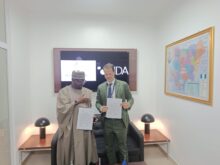
….framework targets private investment, infrastructure expansion
The World Bank has approved $1.25 billion in fresh financing for Nigeria and unveiled a new six-year country strategy aimed at accelerating private sector-led growth, expanding infrastructure, and creating jobs, as the country seeks to consolidate economic reforms and tackle persistent poverty.
The financing, approved under the Nigeria Actions for Investment and Jobs Acceleration (NAIJA) Development Policy Financing operation, forms part of the World Bank’s new Country Partnership Framework (CPF) for Nigeria covering 2026 to 2032.
The framework is designed to support the government’s efforts to translate recent macroeconomic gains into sustained economic growth, employment, and improved living standards.
The new strategy comes as Nigeria pursues reforms intended to stabilise the economy, improve public finances, and attract private investment following years of sluggish growth, high inflation, and foreign exchange challenges.
Read also: World Bank-backed governance programme approves $27m incentive for 19 performing states
According to the World Bank, the CPF will focus on unlocking private investment to complement public resources while expanding access to energy, digital infrastructure, agriculture, and human capital development.
The Bretton Woods lender said the programme aims to provide electricity access to 32 million Nigerians, broadband connectivity to 58 million people, improve health and nutrition services for 40 million people, and support 9.5 million farmers.
Mathew Verghis, World Bank Country Director for Nigeria, said the new framework reflects the institution’s long-term commitment to helping Nigeria create more and better jobs by strengthening the role of the private sector in driving economic growth.
“Our new Country Partnership Framework provides the strategy for how the World Bank Group will support Nigeria over the coming years, with a strong focus on helping to create more and better jobs, particularly by enabling private sector-led growth,” Verghis said.
He noted that recent macroeconomic reforms had contributed to stronger economic growth, improved government revenues, higher foreign reserves and increased investor confidence but said sustaining those gains would require addressing structural constraints that continue to limit private investment and job creation.
The $1.25 billion NAIJA financing will support government reforms aimed at deepening Nigeria’s capital markets, modernising regulations for the digital economy and e-governance, advancing power sector reforms to expand electricity access, reducing trade barriers in line with regional commitments under ECOWAS and the African Continental Free Trade Area, improving access to quality agricultural seeds and strengthening domestic revenue mobilisation.
Read also: From gridlock to global recognition: What the World Bank’s port data is telling us
The International Finance Corporation (IFC), the World Bank Group’s private sector investment arm, said the success of Nigeria’s reform agenda would depend largely on its ability to attract investment and improve productivity.
“Nigeria’s long-term growth potential will be shaped by the economy’s ability to attract investment, raise productivity, and unleash private sector job creation building on the capital of a rapidly growing population,” Dahlia Khalifa, IFC Divisional Director for Nigeria said.
She added that the new partnership framework would help unlock private investment, expand access to infrastructure and essential services, and create conditions that enable businesses to innovate and compete, with the ultimate goal of translating ongoing reforms into broader economic opportunities.
The World Bank’s Multilateral Investment Guarantee Agency (MIGA) also signalled plans to increase support for investors through guarantees and political risk insurance as part of the new strategy.
“MIGA’s role is to help manage these risks—through guarantees and political risk insurance—so that investors can step in with confidence,” Ed Mountfield, MIGA’s vice president and chief financial officer, said.
He said the World Bank Group Guarantee Platform, housed within MIGA, would expand its support for priority sectors, including financial services and infrastructure, to help mobilise private capital, create jobs and strengthen economic growth.
The latest financing adds to the World Bank Group’s broader support for Nigeria, combining policy-based lending with investments in energy, agriculture, digital infrastructure, social protection and private sector development.
The lender said the integrated approach is intended to improve economic resilience, reduce poverty and ensure that the benefits of recent reforms translate into higher employment and stronger long-term growth.

Join BusinessDay whatsapp Channel, to stay up to date
Open In Whatsapp