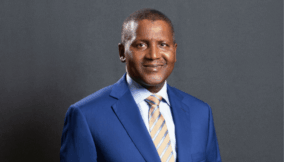
Victor Ufot, managing director, Ten Trade Africa, has advanced reasons for Nigerians to embrace financial literacy and income diversification, saying it will bring about financial stability amid growing economic uncertainties and inflationary pressures.
Ufot spoke at a recent Ultimate Trader Finance Conference in Enugu, where he argued that global and domestic economic realities were reshaping traditional assumptions about income, financial security and wealth creation.
“We are living through a period in which the traditional assumptions surrounding income, financial security, and economic mobility are being fundamentally disrupted by both global and domestic pressures, forcing individuals and institutions alike to rethink how financial stability is built and sustained,” he said.
According to him, geopolitical developments continue to exert significant influence on economies around the world.
“At the global level, geopolitical instability continues to shape economic outcomes, with the ongoing conflict involving the United States and Iran contributing significantly to volatility in oil markets, investor confidence, commodity pricing, and broader macroeconomic sentiment.”
Looking beyond the conference itself, Ufot noted the broader objective was to equip Africans with the knowledge and tools required to thrive in a rapidly changing economy.
“Ultimately, our mission at TenTrade Africa extends beyond facilitating trades. Our mission is to help people earn more, live better, and move from financial vulnerability toward financial confidence and long-term empowerment.”
Ufot, described the gathering as evidence of growing interest in financial education among Nigerians, noted that: “What stood out most was the hunger in the room, the willingness to learn, the determination to grow, and the understanding that the future belongs to people who are prepared financially, mentally, and strategically.”
He added: “Enugu showed us once again that Nigeria is filled with brilliant people ready to compete globally when given the right tools and environment.”
For Ufot, the message is clear. As economic conditions continue to evolve, financial literacy and strategic income diversification are no longer optional.
“The future will favour those who understand that financial literacy and strategic income diversification are no longer optional, they are essential.”
He noted that the global developments are contributing to persistent inflationary pressures that are affecting households and businesses alike.
In Nigeria, he said, the impact is even more pronounced because international economic pressures are compounded by longstanding domestic challenges.
“Nigerians today are dealing with sustained increases in petrol prices, elevated transportation costs, persistent food inflation, unstable electricity supply, and rising rent and household operating expenses, all of which materially weaken disposable income,” he also said.
Ufot further observed that many Nigerians now bear the direct cost of providing services that should ordinarily be less burdensome.
“Beyond those pressures, the average citizen increasingly finances essential services privately, including electricity generation, water provision, private security, and portions of healthcare, thereby absorbing costs that significantly raise the true cost of living beyond headline inflation figures.”
The consequence, he said, was that many hardworking citizens are finding it increasingly difficult to achieve the level of comfort and security they once expected from their earnings.
“The result is that many people are working harder than ever, yet finding that their earnings no longer deliver the level of comfort, security, or aspiration they once expected. For many households, salary income has become insufficient for the realities of modern living.”
He, therefore, urged Nigerians to reconsider their dependence on a single source of income.
“This changing economic reality demands a strategic shift in how individuals think about income generation and wealth creation.
Dependence on a single source of income is becoming increasingly unsustainable in a world of rising costs and economic volatility.”
He identified participation in financial markets as one of the avenues through which individuals can diversify income and build wealth.
“Financial market participation represents one of the most powerful modern avenues through which disciplined individuals can diversify income, build capital, and create additional streams of financial opportunity,” he added.

Join BusinessDay whatsapp Channel, to stay up to date
Open In Whatsapp