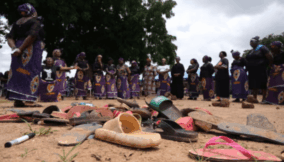
The recent resurgence of terrorist activity across sections of Borno State — a region that had previously witnessed a promising restoration of peace — represents a frustrating setback to Governor Babagana Zulum’s programme for the reconstruction, rehabilitation, and resettlement of displaced communities.
The administration designed this programme as the primary pivot for its broad economic recovery plans, intended to help resettled communities rebuild their pre-insurgency lives and resuscitate local commerce. Consequently, the government has relocated virtually all Internally Displaced Persons (IDPs) out of Maiduguri and other principal towns to their ancestral homes. Until recently, progress appeared to be moving in strict accordance with the governor’s strategic timeline.
Terror resurgence threatens economic stability
However, the latest wave of violence exhibits a coordinated trend aimed at plunging Borno State back into the depths of economic homelessness seen prior to 2019. If not promptly checked, Boko Haram and ISWAP forces risk sacking one community after another, forcing residents back into IDP camps in Maiduguri and other secure locations.
Ngoshe, for instance, was resettled barely six weeks before a Boko Haram attack reduced the community to rubble. The victims, who had previously spent more than a decade in Cameroonian refugee camps, have now been forced back into the Pulka displaced persons camp.
Read also: I will prioritise social protection, resettlement drive before my tenure ends- Zulum says
Unplanned security spending disrupts state budget
Abubakar Mohammed Kareto, a public affairs analyst, lamented that the Borno State government is being forced to divert vast resources toward security rather than development. He noted that the prolonged conflict continues to bedevil the region, causing significant budgetary disruptions.
”It is obvious that Borno State, particularly, incurs a lot of unplanned spending, causing budget disruptions and exhausting resources that should ordinarily be channelled toward critical developmental sectors,” Kareto said. He added that the government’s commitment to reconstruct damaged structures in Ngoshe for over 30,000 displaced people represents a significant liquidity shock to the state’s treasury.
Security as a safeguard for fiscal health
Kareto warned that billions of naira spent through the Ministry of Reconstruction, Rehabilitation, and Resettlement (RRR) risk being depleted if the cycle of destruction continues. He emphasised that adequate protection is not merely a military necessity but a vital fiscal safeguard to prevent the state budget from becoming a “bottomless pit” where progress is constantly erased by insecurity.
Inspecting the devastation in Ngoshe, Governor Babagana Zulum described the destruction as “shocking and deeply distressing,” noting that he had not witnessed such scale of damage in recent times. “It is sheer madness, but Insha Allah, we shall build back better,” the governor stated, pledging to restore social infrastructure, including schools, health facilities, and private homes.
Strategic importance of Ngoshe to regional security
The governor has directed officials from the RRR Ministry to assess the damage for immediate intervention. He also emphasised a renewed partnership with the Nigerian Armed Forces and the Multinational Joint Task Force (MJTF) to address the presence of insurgents on the Mandara Hills using air defence systems, attack helicopters, and drones.
Baba Umoru, a local stakeholder, noted that Ngoshe’s stability is critical to the security of the wider Gwoza Local Government Area. He warned that the fall of Ngoshe poses serious risks to Pulka, Kirawa, Gwoza, and Bama. With over 10,000 people currently taking refuge in Pulka, Umoru called for scaled-up military operations in the Mandara Hills and Sambisa Forest to ensure that economic recovery does not remain a distant prospect.

Join BusinessDay whatsapp Channel, to stay up to date
Open In Whatsapp