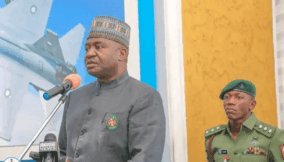
The National Economic Council (NEC) on Thursday approved ₦83.2 billion as part of the Anticipatory Action Task Force (AATF) intervention plans to mitigate flooding disasters nationwide.
The council approved the funding during its 158th meeting, following a presentation by Abubakar Atiku Bagudu, the Minister of Budget and Economic Planning.
Shifting from reaction to proactive climate action
Bagudu stressed the critical need to proactively address perennial flooding across Nigeria, particularly during the rainy season. The council subsequently approved strategies to mitigate the impact of anticipated floods and climate-related emergencies, focusing heavily on frontline states designated as highly vulnerable.
Urging state governments to prioritise early preparation, Bagudu emphasised that anticipatory measures are vital to managing disasters and emergencies effectively. He noted that the council must move away from a legacy of purely reactionary responses to predictable environmental crises.
Translating economic reforms into visible prosperity
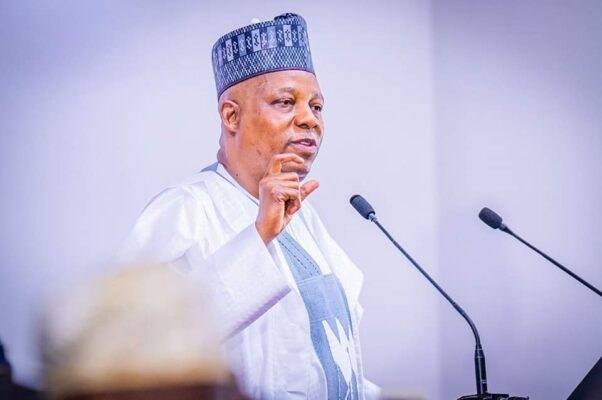
In his remarks, Vice President Kashim Shettima stated that the administration of President Bola Tinubu must now translate its reform agenda into visible results across the federation.
Shettima asserted that the council’s success must be measured by tangible improvements in the lives of ordinary Nigerians, particularly farmers, manufacturers, vulnerable citizens, unemployed youth, and future generations.
”When this council last met, I called our economy a workshop—a place of measurement and correction,” Shettima said. “A place where plans are turned into systems, and systems into institutions, before any of it becomes prosperity.”
Driving coordinated national growth
The Vice President challenged council members to focus on execution rather than policy design, noting that a workshop is judged by what comes off the bench rather than the plans pinned to its walls. He described Nigeria as a federation transitionally moving from stabilisation to production, from aspiration to implementation, and from isolated interventions to coordinated national growth.
“The assignment has not changed,” Shettima added. “What has changed, I hope, is our proximity to delivery. A federation does not earn its prosperity by leaving its most vulnerable behind and hoping they catch up. The dignity of the citizen with the least is the floor beneath which we have resolved that no Nigerian shall fall.”

Join BusinessDay whatsapp Channel, to stay up to date
Open In Whatsapp