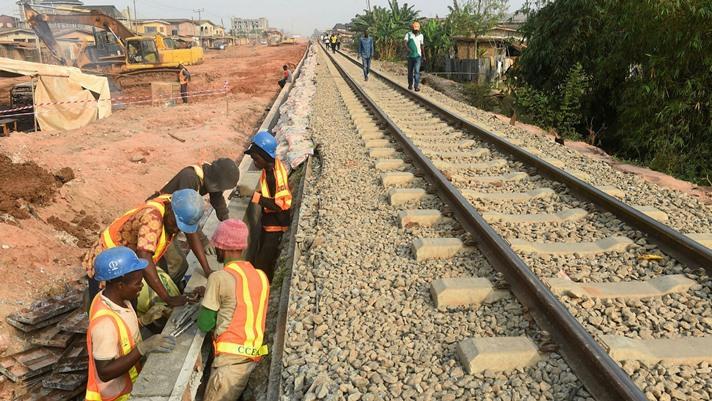
Nigeria’s federal ministries, departments, and agencies are struggling to execute capital projects despite improving government revenues, as delayed cash releases stall infrastructure spending, slow service delivery, and raise fresh concerns about the Tinubu administration’s ability to translate fiscal gains into economic growth and jobs.
A senior official at the Office of the Accountant General of the Federation (OAGF) told BusinessDay that capital releases have remained constrained, with only a fraction of appropriated funds for ongoing projects disbursed so far this year.
The official, who requested anonymity because she was not authorised to speak publicly, said the government is still funding rolled-over obligations from the previous fiscal cycle.
“The government is still disbursing about 30% of capital projects carried over into this year,” the official said. “We have not fully commenced implementation of the 2026 budget.”
The comment points to a widening gap between budget approvals and actual cash backing, a recurring feature of Nigeria’s public finance system that has left thousands of projects either delayed or only partially executed.
Although official budget execution data for 2026 are not yet available, the latest implementation report covering January to September 2025 illustrates a pattern that officials say has persisted into the current fiscal year.
Data from the latest budget implementation report shows that only N1.208 trillion was released to MDAs for capital expenditure between January and September 2025, against an annual appropriation of N13.89 trillion.
That translates to an implementation rate of just 8.7 percent, leaving a shortfall of more than 91 percent.
Quarterly disbursements which highlight the uneven pace of releases show that N34.32 billion was released in the first quarter, N393.86 billion in the second and N780.28 billion in the third, compared with a quarterly budget allocation of N4.63 trillion.
For many analysts, the persistent gap reflects structural weaknesses in Nigeria’s budget execution framework rather than a single-year funding shock.
Vahyala Kwaga, country director at BudgIT, said the pattern of releases has effectively limited government activity to recurrent spending while capital investment remains largely unfunded.
“Some monies are being released, but those monies are for personnel and overhead, at least for salaries,” Kwaga said. “Capital expenditure is not being released. What this means is that development will simply be slowed down and will not happen.”
He warned that the funding imbalance undermines the credibility of fiscal policy at a time when the government is expanding its tax base and expecting greater compliance from citizens.
“Why should I pay my taxes if you’re not going to release money to deliver goods and services for me?” he said. “It would be unconscionable for a government to expect citizens to pay taxes in that type of context.”
Kwaga added that while donor-supported projects often receive external financing, the federal government’s counterpart funding obligations are frequently delayed, disrupting project timelines in infrastructure, health and education.
For contractors and investors, the delays are increasingly feeding into financial stress and credit risks across the economy.
Chijioke Ekechukwu, chief executive officer of Dignity Finance & Investment Limited, said late and irregular releases distort project cycles and worsen debt exposure for contractors who rely on bank financing to execute government jobs.
“Delay in commencement of budget implementation is fiscal indiscipline,” Ekechukwu said. “Developed countries will shut down if funds are not released for execution of the budget.”
He said many contractors are now trapped in debt due to delayed government payments, with banks increasingly exposed to rising non-performing loans linked to public sector receivables.
“Many contractors borrowed funds to execute contracts and are owing banks and other financial institutions,” he said. “The non-performing loans of financial institutions are rising every day because of the level of defaults in repayment.”
Ekechukwu also warned that late-year bulk releases encourage inefficiency and misallocation of public funds.
“When these payments are made towards the end of the year, they encourage corruption as ministries and agencies rush to exhaust their budgets,” he said.
Beyond fiscal discipline concerns, economists say the funding squeeze is already translating into visible infrastructure and service delivery gaps across key sectors.
Dele Oye, chairman of the Alliance for Economic Research and Ethics, said Nigeria is effectively accumulating debt without corresponding asset creation due to weak capital budget implementation.
“Withholding capital funds after they have been appropriated undermines economic activity because capital expenditure is a major driver of growth, employment and infrastructure development,” Oye said.
He warned that the pattern creates what he described as a fiscal imbalance in which borrowing continues while productive investments remain stalled.
“The government is reducing economic output while maintaining debt servicing obligations,” he said. “This creates a dangerous fiscal paradox in which borrowing continues but productive investments remain stalled.”
Oye said the consequences are already visible in the health sector, where delayed capital releases have slowed hospital construction and equipment procurement, forcing greater reliance on private healthcare providers.
He added that similar delays in education, agriculture, transport and power projects are weakening productivity and limiting long-term competitiveness.
“Unless capital budget implementation improves, Nigeria risks prolonging infrastructure deficits, weakening investor confidence and limiting its long-term economic potential,” he said.
The funding gaps persist even as senior officials report stronger revenue performance. The Nigeria Revenue Service generated N7.44 trillion in tax revenue in the first quarter of 2026, while the Nigeria Customs Service collected N1.75 trillion over the same period, supported by improved compliance and trade facilitation reforms. Both institutions have assured that they will not only meet but also overshoot their year’s revenue target.
Despite the revenue gains and borrowings, spending execution has lagged.
During the 2026 budget defence at the National Assembly, Mohammed Pate, minister of Health and Social Welfare, told lawmakers that only N36 million of the N218 billion allocated for capital projects for the 2025 fiscal year had been released, attributing the shortfall to cash flow constraints.
“The limited release has constrained implementation of key health infrastructure projects,” he said.
Similar disclosures also emerged across other ministries, with Saidu Alkali, transportation minister, saying that only about one percent of his ministry’s N256.73 billion capital budget was released in 2025, forcing the rollover of nearly 70 percent of projects into 2026.
Adegboyega Oyetola, Marine and Blue Economy minister, also told lawmakers that just N202 million of his N3.53 billion capital allocation had been disbursed, representing 1.7 percent of the approved budget.
Raising concerns over the trend, the Senate Committee on Finance warned it may block future budget submissions from the Office of the Accountant General if implementation does not improve, criticising what it described as systemic weaknesses in Nigeria’s envelope budgeting framework.
The Presidency, however, maintains that the broader fiscal picture is improving, citing stronger revenue inflows and increased allocations to states for development projects.

Join BusinessDay whatsapp Channel, to stay up to date
Open In Whatsapp