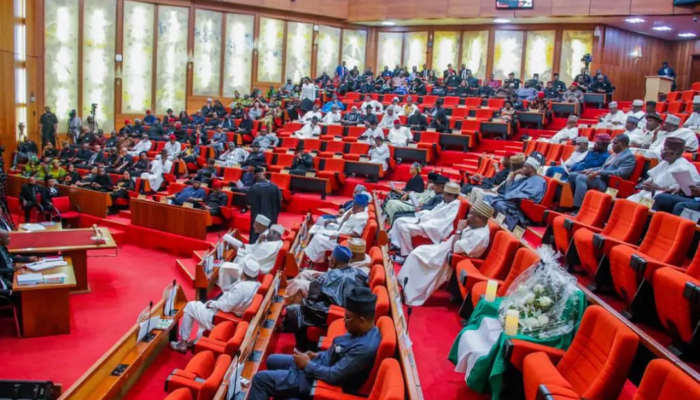
The Senate on Tuesday widened the scope of its investigation into the Safe Schools Initiative (SSI), extending the mandate of its Ad-hoc Committee to cover the Tertiary Education Trust Fund (TETFund), Nigerian Education Loan Fund (NELFUND), Universal Basic Education Commission (UBEC), Federal Ministry of Humanitarian Affairs and Poverty Alleviation, and the National Social Investment Programme Agency (NSIPA).
Lawmakers also approved a three-week extension for the committee to complete its assignment after adopting a motion sponsored by Orji Uzor Kalu (APC, Abia North), the committee chairman, pursuant to Orders 41 and 51 of the Senate Standing Orders, 2026 (as amended).
Moving the motion, Kalu told senators that the panel’s preliminary findings indicated that the Safe Schools Initiative shares significant operational and funding links with agencies responsible for education financing, student support, humanitarian interventions and social investment programmes.
He argued that limiting the investigation to the Safe Schools Initiative alone would not provide the Senate with a complete understanding of the challenges surrounding school security, education infrastructure and interventions aimed at supporting vulnerable pupils and students.
“The issues surrounding student security, educational infrastructure funding and social intervention schemes for vulnerable learners across the country are deeply interwoven.
“Investigating the Safe Schools Initiative without reviewing these complementary bodies will result in fragmented legislative oversight,” Kalu said.
He added that expanding the committee’s terms of reference would enable lawmakers to produce a more comprehensive report capable of improving accountability, strengthening student safety and ensuring transparency in the management of intervention funds.
Under the new mandate, the panel will scrutinise funding flows, accountability systems and implementation challenges across the Safe Schools Initiative and the newly added agencies.
The committee will also examine social intervention programmes linked to school feeding, emergency assistance for displaced learners and education rehabilitation projects handled by the Humanitarian Ministry and NSIPA.
In addition, it will assess TETFund’s infrastructure and security projects in tertiary institutions, evaluate NELFUND’s loan disbursement process, operational efficiency and student access framework, and review UBEC’s interventions in basic education.
Explaining the need for more time, Kalu said the committee had been unable to complete visits to some critical locations because of its workload and other legislative commitments.
“We’re supposed to submit our report, and there are four key areas that were not done. I needed the permission of the Senate so that we can conclude it in the next two or three weeks and come back with a report,” he said.
Senate President Godswill Akpabio subsequently put the request to a voice vote, with senators overwhelmingly approving the three-week extension.
The Senate inaugurated the probe in December last year following growing concerns over repeated attacks on schools despite years of government funding and security interventions.
The investigation gained further urgency after bandits abducted 25 female students of Government Girls Comprehensive Secondary School, Maga, Kebbi State, and reportedly killed the school’s Vice Principal.
The Safe Schools Initiative was established in May 2014 after the abduction of 276 schoolgirls from Chibok, Borno State.
It was conceived as a partnership involving the Federal Government, the United Nations and private sector stakeholders to improve security around schools, particularly in conflict-affected areas.
During earlier hearings, the committee questioned the utilisation of the ₦15 billion released for the programme in 2023. The Nigerian Police Force received the largest share of ₦6.225 billion, while the Nigeria Security and Civil Defence Corps got ₦3.362 billion, Defence Headquarters received ₦2.250 billion, and the Federal Ministry of Education was allocated ₦519 million.
The amount released to the Department of State Services (DSS) was not disclosed during the hearing.
The panel also raised concerns over alleged financial irregularities and consultancy payments linked to the initiative, directing the Safe Schools Financing Office to submit a reconciled breakdown of all funds released, expenditures, contractors and supporting documents relating to the Central Bank of Nigeria Trust Fund account.
Appearing before the committee, Halima Iliya, the National Coordinator of Financing Safe Schools in Nigeria, disclosed that the initiative attracted support from both local and international partners, including $10 million from the Federal Government, $10 million from Nigerian business leaders, $1 million from the African Development Bank, €2 million from the German Government, $4 million from the Norwegian Government managed through UNICEF, alongside contributions from USAID, the Qatar Foundation and United Nations agencies.
With the expanded mandate, the Senate committee is expected to conduct a broader review of education and humanitarian intervention funds and determine whether existing programmes are effectively improving the safety, welfare and learning conditions of Nigerian students.

Join BusinessDay whatsapp Channel, to stay up to date
Open In Whatsapp