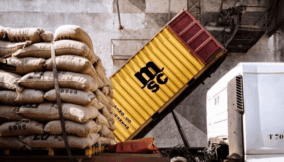
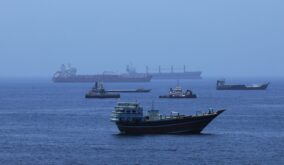
The National Inland Waterways Authority (NIWA) has raised concerns over the growing practice of overloading container barges on Lagos waterways, warning that excessive stacking of containers is creating dangerous blind spots for vessel operators and increasing the risk of accidents.
At the 2026 Shipping Correspondents Association of Nigeria (SCAN) Dockworkers’ Day in Lagos this week, the agency said some operators were compromising safety in a bid to maximise earnings from each trip.
“To maximise profit per trip, operators frequently overload barges with shipping containers,” said Kelvin Abba, who represented NIWA in a goodwill message.
According to the agency, containers stacked too high or improperly arranged can obstruct the forward visibility of tugboat captains, making navigation difficult on busy waterways.
“When these heavy containers are stacked too high or poorly arranged, they create a massive blind spot that completely blocks the tugboat captain’s forward visibility,” the authority said. “Operating a vessel without a clear line of sight is incredibly dangerous.”
NIWA identified some channels in Lagos where barge operations have expanded in recent years as an alternative means of evacuating cargo from the ports, as one of the areas where the challenge has become more pronounced.
The authority said poor visibility makes it difficult for captains to detect oncoming traffic, shallow areas and smaller passenger vessels in time to avoid collisions.
As a result, NIWA said it has intensified monitoring and enforcement activities at loading points to ensure compliance with approved loading standards and visibility requirements.
The warning comes as barge transportation continues to play an increasingly important role in cargo evacuation from Lagos ports, helping to ease pressure on roads serving Apapa and Tin Can Island ports.
Abba also raised concerns over the misuse of safety gear and the growing problem of marine litter, which it said poses risks to navigation and inland water ecosystems.
“Maritime workers often confuse work vests with standard life jackets, yet they serve entirely different functions and environments,” He said, noting that lightweight work vests are strictly meant for routine work tasks performed on a vessel’s deck, docks, or over-the-side maintenance while the ship is moored, while standard life jackets with high-buoyancy are designed for emergency transit, abandonment situations, and rough or open waters.
The authority urged operators, dockworkers and other maritime stakeholders to prioritise safety and environmental responsibility as cargo movement through inland waterways continues to expand.
“Safety on the water relies on a chain of smart choices. Securing the load properly, wearing the right vest for the task, and keeping trash out of the water ensures everyone makes it back to the jetty safely,” the authority said.

Join BusinessDay whatsapp Channel, to stay up to date
Open In Whatsapp