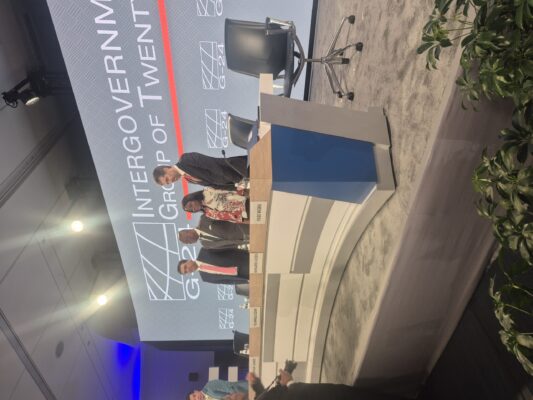
Wale Edun, Nigeria’s minister of Finance and Coordinating Minister of the Economy, has said that recent economic reforms, including the removal of fuel and foreign exchange subsidies, must be sustained despite mounting external pressures from global energy shocks and tightening financial conditions.
Edun, who chaired the G24 press briefing, said Nigeria’s reform programme had delivered important structural gains but noted that these gains were now being tested by external shocks beyond the country’s control.
“I think the key is building resilience to weather the current shocks. In some cases, this means using the buffers that have been built up over time. However, the focus should be on providing targeted and temporary relief, particularly for the poor and most vulnerable, to help them cope with the cost-of-living pressures, rather than rolling back the structural transformations that economies have undertaken.
Read also: Nigeria’s Edun to chair G-24 talks as emerging economies seek financing reforms
“As you know, in the case of Nigeria, reforms moved very quickly under President Bola Ahmed Tinubu, who came into office in 2023 and removed subsidies on petroleum products as well as those linked to the foreign exchange market. These reforms had been delivering important gains and were progressing at pace, but they are now being affected by external shocks that are not specific to Nigeria or even to developing countries as a whole,” Edun said.
He said oil-producing countries such as Nigeria face a mixed impact from higher oil prices, which can boost government revenues while simultaneously increasing domestic costs such as food, fertiliser and energy inputs.
According to him, the global energy crisis has created a situation where both oil-importing and oil-exporting countries are under pressure, making policy responses more complex and requiring greater resilience.
Edun cautioned against a return to broad-based subsidy regimes, stressing that such measures have not proven sustainable in the past and could reverse hard-won economic gains. Instead, he said governments should prioritise targeted and temporary support for the most vulnerable groups to cushion the impact of rising living costs.
“In the case of Nigeria, significant reforms were undertaken under the current administration, including the removal of fuel subsidies and foreign exchange-related subsidies. These reforms created important gains, but they are now being tested by external shocks beyond the country’s control,” he said.
Read also: Port reforms, $746m modernisation drive Nigeria’s $3tn blue economy ambitions
He added that while higher oil prices could strengthen fiscal and external balances for net oil exporters like Nigeria, such gains must be managed prudently to support macroeconomic stability and public investment.
Edun also said that tighter global financial conditions, rising interest rates and increased risk aversion in capital markets are limiting capital flows to emerging and developing economies, increasing financing pressures across countries.
He emphasised the need for stronger domestic resource mobilisation, improved tax systems and expanded private sector participation as key pillars for sustaining growth and reducing vulnerability to external shocks.
Other participants who addressed journalists included first vice-chair Akhtar Javed, executive director of the State Bank of Pakistan; second vice-chair Bernardo Acosta, alternate executive director for Ecuador at the IMF, representing Sariha Moya, minister of Economy and Finance of Ecuador; Iyabo Masha, director of the G-24 Secretariat; and Pavis Devahasadin, communications officer at the IMF, who moderated the session.

Join BusinessDay whatsapp Channel, to stay up to date
Open In Whatsapp