The Federal Government has renewed its push for the full implementation of the Digital Switch Over (DSO), saying the programme has already attracted more than N60bn in investment as part of efforts to modernise Nigeria’s broadcasting industry, create jobs and expand the digital economy.
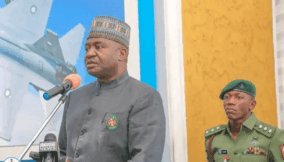
Mohammed Idris, Minister of Information and National Orientation, disclosed this on Wednesday at the national launch of the DSO project in Abuja, describing the initiative as a key pillar of the country’s broader digital transformation agenda.
The DSO programme, overseen by the National Broadcasting Commission (NBC), represents Nigeria’s transition from analogue to digital terrestrial television broadcasting. It is designed to improve broadcast quality, free up spectrum for broadband expansion and deepen participation in the digital economy.
Idris said full implementation of the DSO ecosystem would have wide-ranging economic benefits, including job creation, growth in local manufacturing, expansion of audience reach, stronger content production and new revenue streams across the broadcasting value chain.
“This is why the Federal Government directed the National Broadcasting Commission to continue the long-term sustainability of the system, increase advertising revenue, and support the long-term viability of this programme,” he said.
He added that the success of the initiative underscores the commitment of President Bola Tinubu’s administration to digital transformation under the Renewed Hope Agenda, noting that the project should be viewed beyond technology as a long-term economic investment.
“From the onset, President Bola Tinubu has demonstrated a clear commitment to building a modern communications ecosystem capable of supporting development, creating jobs and enabling global industries,” Idris said.
He commended the President’s backing of reforms in the media and broadcasting sector, as well as the contributions of stakeholders including NBC, NIGCOMSAT and industry operators. Idris assured that government would continue to strengthen local capacity, encourage innovation and attract investment into the sector.
Also speaking, Benjamin Kalu, Deputy Speaker of the House of Representatives, said the National Assembly was advancing legislative reforms to support Nigeria’s digital future, including stronger data protection frameworks, cybersecurity measures and incentives to expand affordable broadband access to underserved communities.
Kalu said ongoing reforms also focus on promoting local content development, digital skills acquisition and improved spectrum management across broadcasting, telecommunications and satellite services.
He said these efforts align with the administration’s digital-led growth strategy aimed at boosting economic expansion and enhancing Nigeria’s global competitiveness.
Bosun Tijani, Minister of Communications, Innovation and Digital Economy,, said the DSO represents one of the early visible outcomes of a broader national investment programme in digital infrastructure.
According to him, government is currently deploying 90,000 kilometres of fibre-optic infrastructure while also investing in two new communications satellites to strengthen connectivity and service delivery across the country.
Tijani said the combination of terrestrial fibre and satellite infrastructure would improve domestic connectivity while positioning Nigeria as a regional digital hub.
“What you are seeing today is just a glimpse of what is to come,” he said, adding that the strategy would enable Nigeria to deliver world-class connectivity and expand digital services beyond its borders.
Charles Ebuebu, Director-General of the NBC,said the digital transition would stimulate activity across the broadcasting value chain, improve spectrum efficiency and support local content development.
He noted that Nigeria currently has between 35 million and 40 million television households, adding that earlier implementation challenges meant the programme had to be reassessed.
“We’re not casting blame. We’re just saying that the plan that we had in place didn’t work and we have to go back to the drawing board,” he said.
Ebuebu said the broader objective of the DSO goes beyond technology, describing it as a national vision aimed at ensuring equitable access to information, education and digital opportunities regardless of location or income level.
He disclosed that the platform would launch with about 100 standard-definition channels, with plans to scale up to high-definition broadcasting. He also announced the establishment of six regional production hubs to support content creators outside major production centres such as Lagos, Abuja and Kano.
Jane Egerton-Idehen, Managing Director and Chief Executive Officer of NigComSat, said the DSO underscores the importance of satellite infrastructure in bridging Nigeria’s connectivity gaps and advancing digital inclusion.
She said digital broadcasting would expand opportunities for filmmakers, broadcasters, technology providers and creative entrepreneurs, while also improving access to educational and informational content in underserved communities.
“Technology becomes meaningful when it creates opportunity and reaches everyone. This switchover is about inclusion, innovation and economic empowerment,” she said.
Stakeholders at the event said the success of the DSO rollout would ultimately depend on sustained collaboration between government, regulators and private sector operators, as Nigeria positions itself to unlock new value from its digital broadcasting ecosystem.

Join BusinessDay whatsapp Channel, to stay up to date
Open In Whatsapp