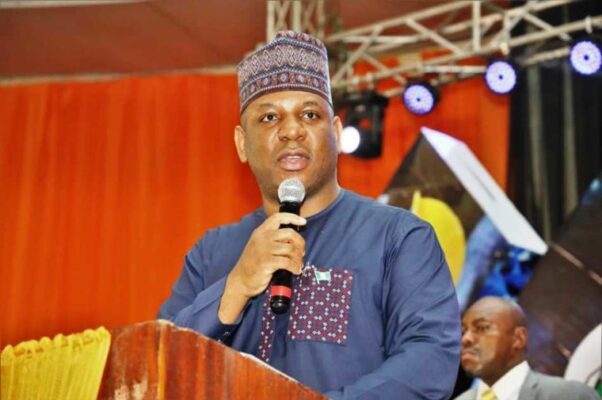
Nigeria is setting its sights on reclaiming a dominant position in Africa’s industrial landscape, as Shuaibu Abubakar Audu, minister of Steel Development, has unveiled an ambitious roadmap to revive the country’s steel and metal industry through stronger government–private sector collaboration.
Speaking at the maiden Nigeria Steel Forum, held on the sidelines of the 10th Nigeria Mining Week in Abuja, Audu outlined a comprehensive strategic vision under President Bola Ahmed Tinubu’s Renewed Hope Agenda, positioning steel as a central pillar of Nigeria’s reindustrialisation drive and long-term economic diversification plan.
He disclosed that the government is targeting 10 million tonnes of crude steel production annually by 2030, an output that could inject over ₦10 trillion into the economy and generate more than 500,000 direct and indirect jobs.
“Nigeria has the raw materials, the market, and the manpower. What we need now is coherent policy, private sector leadership, and coordinated investment in infrastructure and technology,” Audu said, noting that four countries—Egypt, South Africa, Algeria, and Morocco—currently produce 88% of Africa’s total steel output despite Nigeria’s abundant iron ore reserves.
Audu reaffirmed the federal government’s commitment to providing fiscal incentives, legal reforms, and stable regulatory frameworks to attract local and foreign investors.
He emphasised that the administration is prioritising public-private partnerships (PPPs) to resuscitate moribund plants such as Ajaokuta Steel Company and NIOMCO, while developing industrial clusters to support downstream manufacturing.
The minister praised the Ministry of Solid Minerals Development, led by Dele Alake, for aligning mining and steel development policies, describing the Steel Forum as a “cross-sector bridge” designed to harmonise industry efforts and unlock private capital for critical infrastructure.
In his remarks, Chris Isokpunwu, Permanent Secretary, Ministry of Steel Development, described the Forum as a milestone in Nigeria’s industrial resurgence, building on the outcomes of the National Steel Summit.
He highlighted that renewed partnerships and capacity-building initiatives are already underway to rebuild the technical manpower base required for full-scale production.
“This administration is not just talking policy; it is implementing reform that directly targets production, jobs, and competitiveness,” Isokpunwu stated, urging stakeholders to move from dialogue to investment.
Read also: How firmer African currencies are easing business costs in 2025
Also speaking, Faruk Yusuf Yabo, permanent secretary, Ministry of Solid Minerals Development, noted that global financial tightening, the COVID-19 aftermath, and climate-related pressures have made private capital indispensable for industrial development.
“To unlock growth in steel, Nigeria must attract sustainable private financing. The minister’s approach—anchored on institutional reform and investor confidence—offers a clear path to achieving that,” Yabo said.
Industry observers say the Forum marks a turning point in Nigeria’s industrialisation efforts, potentially laying the groundwork for a new era of value-added manufacturing that could reduce import dependence and strengthen the economy.

Join BusinessDay whatsapp Channel, to stay up to date
Open In Whatsapp