The Nigeria Customs Service (NCS) needs to generate N7 trillion between July and December 2026 to meet its revenue target for the year amid a spate of ongoing reforms and a war in the middle east that has disrupted global shipping calendars.
On Monday, the appropriation committee of the Nigerian Senate approved a revenue target of N11.074 trillion for the Service, about N4 trillion more than it generated in the 2025 fiscal year.
So far, as at June 2026, Customs has generated N4.043 trillion, as reported by Adewale Adeniyi, the comptroller general of Customs.
The service’s 2025 revenue haul of N7.2 trillion that exceeded its beat-down target of N6.5 trillion was impressive to its principals.
In February, amid meetings with the National Assembly, Adeniyi told journalists he was confident the Service could meet N9 trillion in revenue this year.
The Senate Committee thinks it can do much better amid ongoing reforms that it said have helped fight smuggling and facilitate trade.
“Customs remains one of the major drivers of revenue generation in this country. I therefore urge the Comptroller-General and his management team to work even harder in 2026 to actualise the ambitious revenue target before the Service,” said Isah Jibril, chairman of the Senate committee on Customs and Excise during the budget defence.
The Service faces a deluge of new realities to see its goal to fruition. This year, the federal government introduced tariff adjustments under the 2026 fiscal policy Measures.
In April, import tariffs on fully built passenger vehicles was cut from 70 percent to 40 percent. Two months later, levies on new vehicle imports were halved from 20 percent to 10 percent, while the import levy on used vehicles were reduced from 15 percent to five percent to usher in a two and four percent green tax on fuel-heavy vehicles from July 1.
But beyond vehicles, the government has continued to adjust tariff lines to support industrial policy, protect some local industries through import duty waivers and lowering costs for selected imports where necessary. These changes, implemented by Customs through the Common External Tariff schedule hinder the revenue the Service generates, it said.
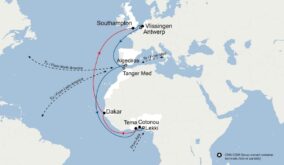
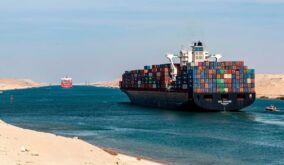
Meanwhile, the war between the United States, Israel and Iran has disrupted maritime trade leaving ships stranded with shipping companies rerouting vessels away from certain ports include Nigeria’s. This disruption has affected the Service’s operations.
“The crisis around the Strait of Hormuz disrupted global supply chains and reduced cargo throughput into Nigerian ports. We are encouraged, however, that June recorded our strongest monthly revenue performance this year, giving us confidence that collections will improve as global trade stabilises,” Adeniyi said.
Read also: Nigerian exporters bleed profits as shipping lines shun major Gulf ports
He remains confident in the dividends of the Service’s technology reforms. The Service went national with its Unified Customs Information System (UCIS) also known as B’Odogwu this year after several months of testing.
The system is designed to enhance post-clearance audit, and intelligence-driven anti-smuggling operations.
“Our technology platform is now stable and fully operational. It has improved automation across our commands, strengthened compliance and significantly enhanced revenue collection,” Adeniyi said.
The Service also rolled out its Authorised Economic Operator (AEO) programme this year, issuing 51 companies the certification that grants seamless Customs procedures and less i trusive inspections. This is in addition to an integration into the National Single Window, the unified digital trade processing platform with a planned Phase two launch.
Read also: Cargo clearance drops from seven days to 41 hours for AEO-certified traders
These reforms paired with international partnerships to solve cross-border problems and close documentation loopholes fuels the Service’s optimism to meet its new goals.
Adeniyi, whose tenure as CG was extended by 6 months by President Tinubu faces a final test of converting reforms into revenue and setbacks in cashbacks without compromising on trade facilitation, the primary role of the Service.

Join BusinessDay whatsapp Channel, to stay up to date
Open In Whatsapp