… Niger Delta Agric Development and Investment Fund coming
The Niger Delta Development Commission (NDDC) is set to begin mobilization of the oil region back to what grows on the soil (agric), instead of what is in the soil, oil/gas.
This seems to be because for decades, the Niger Delta was defined by what came out of the ground: oil. Then agitations over neglect and underdevelopment. The next thing the NDDC wants out of the ground is food, according to officials working with the topmost management.
Come July 1, 2026, the Office of the Vice President and the NDDC will host an Agric summit at the Banquet Hall of the Presidential Villa, Aso Rock, Abuja. The big event is said to be designed to formally launch the Niger Delta Agricultural Development and Investment Fund, establish a coordinating platform for agricultural development and investment, and define a demand-side strategy to generate a credible pipeline of investable agricultural opportunities.
According to insiders, the summit will mobilise the collective commitment of government, investors, development partners, and the private sector to transform the Niger Delta’s agricultural potential into measurable economic progress.
The road to the summit is said to have begun with a regional workshop convened by the NDDC in 2025, with support from the Niger Delta state governors, who delegated their state commissioners, permanent secretaries, and directors of agriculture to attend. The workshop is said to have set the stage for the Abuja summit.
Following the successful workshop, Samuel Ogbuku, the NDDC Managing Director, met with the Vice President, Kashim Shettima, to review the state of agricultural development in the Niger Delta and plan the Niger Delta Agricultural Development and Investment Summit.
The summit is understood to be tied directly to President Bola Ahmed Tinubu’s agrarian programme under the ‘Renewed Hope Agenda’. The gathering of agricultural stakeholders will provide a high-level platform to address systemic challenges in agriculture, unlock investment pipelines, and co-create actionable strategies to shape Nigeria’s agricultural economy over the next decade.
The Niger Delta region of Nigeria is known for its rich biodiversity and agricultural potential. However, it faces numerous challenges that hinder the growth and sustainability of its agricultural sector and associated value chains. The Agric Summit aims to reframe these challenges as opportunities for sustainable food security in the Niger Delta Region.
In preparation for the summit, the MD paid a visit to Abubakar Kyari, the Minister of Agriculture and Food Security, to discuss the details of the high-profile event.
In response, Kyari pledged the technical support of the Federal Ministry of Agriculture and Food Security to ensure the successful organisation of the conference.
The discussions touched the Ministry’s other agric projects and interventions in the oil region including the Livelihood Improvement Family Enterprises in the Niger Delta (LIFE-ND) Project, the Special Agro-Industrial Processing Zones (SAPZ) Programme, and several private-sector-driven initiatives in key value chains such as palm oil, rubber, cocoa, cassava, and rice production.
These interventions are expected to enhance productivity, stimulate economic growth, and create employment opportunities across the region. The target is to build on the strengths of the Niger Delta states in various crops.
The logic is simple, build on Bayelsa’s aquaculture, Delta’s cassava, Rivers’ fisheries, Ondo’s cocoa, Edo’s oil palm, among others. Alone, they’re state projects. Integrated, they’re a food system.
According to the NDDC boss, the Commission will align with the President’s vision on agric to ensure food security; farms replace bunkering; cooperatives replace militancy.
On her part, Winifred Madume, the NDDC Director of Agric and Fisheries, said the Commission is “determined to make the Renewed Hope Agenda of the Federal Government a reality in the Niger Delta region by ensuring food security for the people.”
Agriculture, the backbone of the Nigerian economy before oil took centre stage, remains the road to greener pastures.
Unarguably, a large proportion of Nigeria’s rural population depends on subsistence agriculture for survival. Despite this, 65 years after Independence, the nation still grapples with food security challenges. Surely, agriculture remains the surest path to sustainable development. It could play a pivotal role in the country’s economy, as it did for the United States of America and Malaysia, among others.
It is well-known that more than 80% of Niger Deltans were farmers and fishermen before oil exploration and exploitation changed the equation. Now, most of these hitherto self-reliant people have been rendered jobless by the activities of the oil companies. No thanks to many years of ceaseless gas flaring and incessant oil spillages that rendered the land and rivers unproductive.
The challenges of pollution notwithstanding, providing sustainable means of livelihoods for the army of the unemployed in the Niger Delta calls for a return to serious farming. This time around, however, emphasis should be on modern farming techniques.
The NDDC says it has taken up the challenge to lead the way back to farming with modern implements.
Mechanisation and tractorisation:
In what could be described as a swift response to the Federal Government’s programme to diversify the Nigerian economy from dependence on oil, the Commission has distributed more than 100 tractors to State Ministries of Agriculture in the nine Niger Delta states to boost food production. This is in recognition of the fact that for Nigeria to tackle youth unemployment and achieve self-sufficiency in food production, it must adopt mechanised farming.
As part of its efforts to fast-track the process of properly engaging our youths and ensure that the NDDC plays its role in the development process. It has also facilitated the training of 11 agricultural engineers in mechanised farming. The beneficiaries were trained in India on tractor maintenance and operation and are now at the core of the commission’s mechanised agro-development plan across the region.
To further take its agricultural programmes to rural communities, the NDDC is said to partner with the International Fund for Agricultural Development (IFAD) on a $60 million (about N21 billion) job-creation programme designed to help reduce youth unemployment in the Niger Delta.
The NDDC has also made an impact in promoting agricultural development through the implementation of entrepreneurial skill development programmes for youth and women, the disbursement of microcredit facilities to NDDC-trained farmers, and the procurement and distribution of tractors and fishing tools for farmers and fisherfolk in the region.
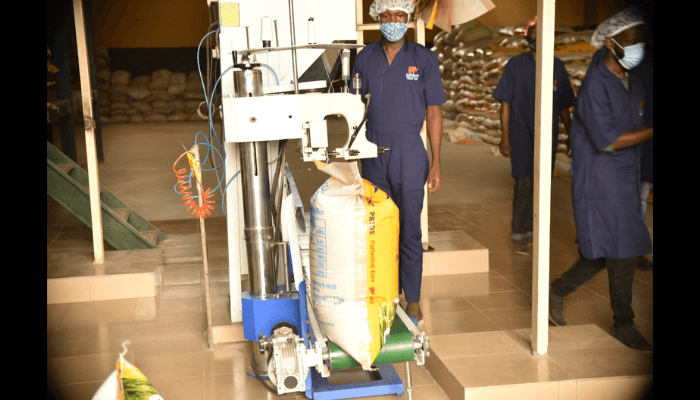
The NDDC built two rice processing plants, with a combined capacity of 210 metric tonnes per day, at Elele Alimini in Rivers State and Mbiabet-Ikpe in Akwa Ibom State. The rice mills would encourage local farmers to produce more rice and develop the out-growers scheme, in which community members would be encouraged to grow rice.
The prospects for the future look good. The gathering in Abuja is expected to produce a comprehensive master plan for the region’s agriculture. This time, the stakeholders will move beyond communiqués to a working document for 2026-2030.
The summit joins a busy 2026 calendar that includes Africa Farmtech Expo in Lagos and Agric Summit Africa in Abuja. But NDDC’s version is the only one focused exclusively on the nine states of the Niger Delta region.

Join BusinessDay whatsapp Channel, to stay up to date
Open In Whatsapp