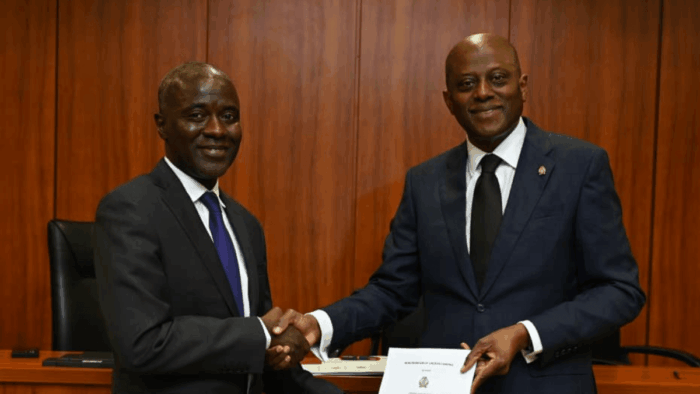
Dr Aminu Maida, executive vice chairman/CEO, Nigerian Communications Commission, NCC; and Mr. Olayemi Cardoso, governor, Central Bank of Nigeria, during the signing Memorandum of Understanding between NCC and CBN, at the CBN”s Headquarters Abuja, on Monday.
Nigeria has taken a major step to tackle rising digital fraud as the Nigerian Communications Commission (NCC) and the Central Bank of Nigeria (CBN) signed a new agreement to strengthen consumer protection across telecom and financial services.
Read also: CBN dismisses reserves decline concerns, cites strong external buffers
The agreement, known as a Memorandum of Understanding (MoU), is coming at a time when mobile phones have become central to banking, payments, and identity in Nigeria, increasing both convenience and risks for millions of users.
Under the deal, both regulators also launched two joint committees, one focused on payment systems and consumer protection, and another overseeing the Telecoms Identity Risk Management System (TIRMS), a new platform designed to detect and prevent fraud linked to mobile numbers.
Speaking at the event, Aminu Maida, NCC’s executive vice chairman, said the partnership will create a clear system for cooperation in key areas such as fraud prevention, secure payments, and digital inclusion. He explained that the goal is to build trust in Nigeria’s growing digital economy while protecting consumers and small businesses.
Maida noted that the collaboration between both regulators is not new, pointing to their recent joint effort in resolving the USSD debt crisis, which helped restore stability in mobile banking services. According to him, the new agreement builds on that experience by creating a more structured and long-term approach to tackling shared challenges.
A major highlight of the initiative is the TIRMS portal. The system will allow banks and other financial institutions to track the status of phone numbers used for transactions. This includes whether a number has been recycled, swapped, disconnected, or flagged for suspicious activity.
This is important because fraudsters often exploit recycled or swapped SIM cards to gain access to bank accounts. With the new system, financial institutions will have real-time data to detect such risks early and prevent losses.
Maida said the platform will significantly improve the ability of the financial sector to fight electronic fraud, which has become more common as digital services expand across the country.
He added that the MoU will also improve how customer complaints are handled. For example, users who experience failed airtime or payment transactions can expect faster resolution through better coordination between telecom operators and financial institutions.
On his part, Olayemi Cardoso, CBN governor, said the agreement will improve how both sectors work together on approvals, technical standards, and innovation. He noted that it will also support sandbox testing, where new financial products are tested in a controlled environment before full rollout.
Read also: Reps asks CBN to halt payment to ZTE over ‘vague’ $460m CCTV project
Cardoso said the CBN is committed to building a safer and more inclusive financial system that supports economic growth while protecting consumers.
The partnership reflects a growing need for regulators to work together as Nigeria’s digital economy becomes more interconnected. Today, telecom networks power most financial services, from mobile banking to fintech apps, making collaboration between both sectors critical.
Fraud involving SIM swaps, identity theft, and unauthorized transactions has increased in recent years, raising concerns among users and regulators. By linking telecom data with financial systems, the new framework aims to close these gaps.
Industry analysts say this move could also boost confidence in digital payments, especially among rural users and small businesses who are still hesitant to fully adopt digital financial services due to security concerns.
If properly implemented, the NCC-CBN partnership could become a key pillar in Nigeria’s push toward a more secure, inclusive, and trusted digital economy.

Join BusinessDay whatsapp Channel, to stay up to date
Open In Whatsapp