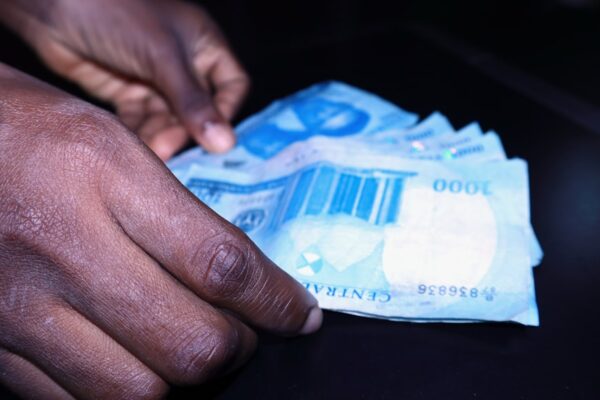
The naira on Monday strengthened to a two-year high of N1,450 per dollar in the parallel market, popularly referred to as the black market, buoyed by improved liquidity and spillover effects of recent foreign exchange reforms in the official market.
The last time the local currency appreciated to
```
Members Only
Login or create an account to continue
This article is available to registered BusinessDay readers. Please login if you already have an account, or create a new account to continue reading.
New to BusinessDay? Register now and start reading.
```
Hope Moses-Ashike
Hope Moses-Ashike is an Associate Editor, Banking and Finance, with more than a decade of experience reporting on Nigeria’s financial system and broader economy. She closely tracks market movements, monetary policy decisions, company disclosures, regulatory actions, economic indicators, and global developments, and interprets what they mean for businesses, investors, policymakers, and households. Her reporting helps readers understand complex issues such as inflation trends, foreign exchange market dynamics, interest rate decisions, bank performance, and investment risks.
She also covers major international events and periodically travels to Washington, D.C., to report on the World Bank/IMF Spring and Annual Meetings.
Her dedication to financial journalism has earned her multiple recognitions and invitations to high-level professional development programmes. She is an alumna of the International Visitors Leadership Programme (IVLP) in the United States and holds an Advanced Financial Journalism Certificate from the Press Association Training in London, UK. Her other notable achievements include completing the Lagos Business School CMC Programme, the Bloomberg Media Africa Initiative Programme, and a Master Class in Journalism at Rhodes University in South Africa.