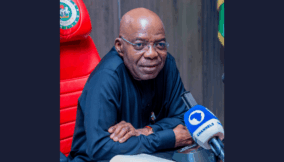
Once upon a time, being in the opposition in Nigeria’s House of Representatives meant something. It meant intense debates, strong dissenting voices, and lawmakers willing to challenge the ruling party’s excesses. But today, that opposition seems to be vanishing into thin air.
Instead of a robust opposition, Nigerians are witnessing a slow and steady decline in dissenting voices, as defections, internal party conflicts, and political expediency weaken what was once a formidable counterweight to the ruling All Progressives Congress (APC).
At the start of the 10th National Assembly in June 2023, the opposition had something it hadn’t had in years: numbers. The ruling All Progressives Congress (APC) held 175 seats in the House of Representatives, while opposition parties collectively commanded a slim majority with 182. The People’s Democratic Party (PDP) led the pack with 118 lawmakers, followed by the Labour Party (LP) with 35 and the New Nigeria Peoples Party (NNPP) with 19.
This numerical advantage gave the opposition a rare opportunity to influence legislative decisions and offer an alternative voice in governance.
So, what happened?
Fast forward nearly two years, and that expectation has all but evaporated. Instead of using their strength to push back against the ruling party’s dominance, the opposition has been steadily losing members—both in numbers and in influence. Defections have hit hard, with at least six PDP lawmakers crossing over to the APC, another six from the LP following suit. What should have been a strong opposition has instead become a fragmented, ineffective force, unable to hold the government accountable.
Rather than mounting a united front, opposition lawmakers appear more focused with their own political survival. Many have chosen silence over confrontation, aligning themselves with the government instead of challenging it.
Political analysts believes that political patronage plays a significant role in this shift. The ruling APC, with its control over executive resources, has made defection an attractive option. For lawmakers who choose personal gain, the ruling party’s offerings aren’t difficult to resist. In contrast, those who remain in the opposition risk being sidelined in key policy decisions and constituency development projects.
For instance, when Hussein Jallo, member representing the Igabi federal constituency, Kaduna in the House effected from PDP to APC, he said he was inspired by the APC leadership in the House.
“I have been inspired by your (Speaker Abbas Tajudeen) excellent and exemplary leadership this time and the inclusive manner in which you, your dedication to national unity, good governance, and legislative excellence have built my belief that the All Progressive Congress is the appropriate platform to further my legislative and constituency development agenda”, he wrote in his defection letter.
But, the defections are not just about the lure of political relevance. The opposition has been its own worst enemy. The PDP has been riddled with internal conflicts, struggling with leadership crises and factional battles that have weakened its cohesion. The LP, despite its post-2023 election momentum, has failed to build the strong structures necessary to keep its members engaged and committed. Without a clear agenda or a united strategy, opposition lawmakers have found it easier to defect than to stay and fight for their parties. Many of the lawmakers who defected recently moths cited party crisis as key reasons.
Democracy at risk?
The missed opportunities have been significant. When the 10th Assembly convened, the opposition had the numbers to influence leadership positions, to push back against executive overreach, to set the legislative agenda.
The consequences of this decline have an impact on democracy. Innocent Awuzie, a political analyst, believes that without a strong opposition, democracy is at risk; and without effective checks and balances, the ruling party can pass legislation without meaningful debate, make policy decisions without scrutiny, and consolidate power unchecked. The very essence of democratic governance, a system where different viewpoints compete and hold each other accountable, is being eroded.
Awuzie expressed concerns that the political fallout will extend beyond the National Assembly. As opposition lawmakers defect, they take with them grassroots support, funding, and voter confidence. This makes it harder for opposition parties to compete in future elections, further tilting the political landscape in favor of the ruling party.
According to Awuzie, if this trend continues, Nigeria could be on a path toward one-party dominance, where electoral competition becomes a mere formality.
For the opposition to remain relevant, it must rediscover its purpose. That means resolving internal disputes, strengthening party discipline, and creating a compelling alternative vision for governance.
Political analysts want Lawmakers must resist the short-term allure of power and focus on the long-term goal of keeping democracy vibrant. Otherwise, the silence will only grow, and Nigeria’s Green Chamber Assembly will become nothing more than an extension of the ruling party’s will—where opposition voices are not just ignored, but almost nonexistent.

Join BusinessDay whatsapp Channel, to stay up to date
Open In Whatsapp