Governors of the 36 states have renewed calls for the establishment of state police, insisting that a decentralised policing system is crucial to tackling emerging security threats.
The position was one of the key resolutions reached at the meeting of the Nigeria Governors’ Forum (NGF), which began late Wednesday and ended in the early hours of Thursday in Abuja.
The renewed demand came amid rising concerns over insecurity across the country, including terrorism, banditry, kidnapping and communal violence, which have intensified calls for the decentralisation of policing.
State police has remained one of the most debated security reforms in Nigeria, with supporters arguing that it would improve intelligence gathering and response to local security threats.
Recall that the House of Representatives had last Thursday overwhelmingly voted in favour of a constitutional amendment bill seeking to establish state police across the country, marking a major step in efforts to address Nigeria’s worsening security challenges.
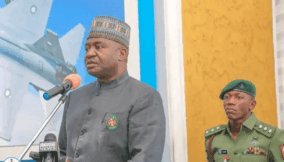
Reading the communiqué at the end of the meeting, Dapo Abiodun, Governor of Ogun State, disclosed that the governors had advanced discussions on the creation of state police, including consultations on constitutional amendments designed to provide a solid legal foundation for its operation across the country.
“Governors emphasised the need for state police to be properly structured and to be constitutionally sound and aligned with federalism and citizens’ rights,” he said.
The communique signed by AbdulRahman AbdulRazaq, Kwara State governor and Chairman of the Nigeria Givernors’ Forum (NGF), said governors agreed that any state police arrangement must be professionally structured, constitutionally sound and consistent with the principles of federalism, democratic accountability and the protection of citizens’ rights.
According to the communique, the governors expressed optimism that ongoing consultations would help harmonise positions among stakeholders and strengthen the states’ collective drive towards achieving the long-sought security reform.
On power sector, the governors received a presentation on the National Solar Super Grid Initiative (NSSG), a proposal aimed at expanding electricity access through large-scale decentralised solar power generation linked to a national high-voltage transmission network.
The governors noted that the initiative has the potential to accelerate industrialisation, improve energy security, strengthen state electricity markets and stimulate economic growth across the country.
Consequently, they reiterated their commitment to ongoing electricity sector reforms and pledged to deepen collaboration with relevant stakeholders to ensure Nigerians have access to reliable, affordable and sustainable power supply.
The governors also reaffirmed their commitment to reducing malnutrition and improving the well-being of children across the country.

Join BusinessDay whatsapp Channel, to stay up to date
Open In Whatsapp