…Moves to boost food security
In a bid to unlock Nigeria’s agricultural potential and curb rising youth unemployment, the Federal Government has launched the Youth Agribusiness Land Trust Fund (YALTF), aiming to dismantle the archaic land tenure system holding back next-generation agro-investors.
The YALTF initiative is spearheaded by the Ministry of Youth Development to ease land title and accessibility.
Despite Nigeria’s vast arable land mass, bureaucratic land administration and fragmented ownership structures have long stifled long-term investment, leaving the country heavily reliant on food imports.
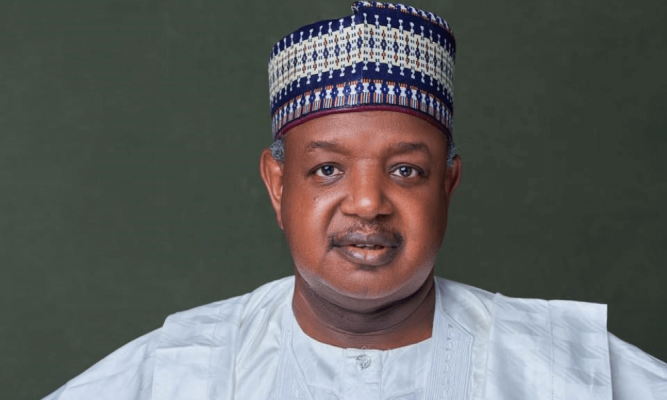
Speaking at the national launch of the initiative in Abuja, on Monday, Abubakar Bagudu, Minister of Budget and Economic Planning, stated that granting the youths seamless access to land is a non-negotiable prerequisite for driving productivity across the agricultural value chain.
Bagudu argued that the nation must shift its perception of agriculture away from high-risk subsistence farming toward a high-yielding corporate business sector capable of driving macroeconomic growth.
“Agricultural success is determined not only by land size but by organisation, technology, skills, and productivity,” Bagudu said, citing the Netherlands—a global agritech giant with limited land mass—as a benchmark for Nigeria’s new trajectory.
The minister noted that under the government’s Renewed Hope Ward-Based Development Programme, data is currently being aggregated to map out land availability and commercial opportunities across all local communities.
However, acknowledging fiscal constraints, he added that public funds alone cannot bankroll this transformation. “We need aggressive private-sector participation and venture capital investment in agribusiness to achieve true scale.”
For decades, Nigeria’s agricultural policies have been criticised for being heavy on rhetoric and light on execution. Minister of Youth Development, Ayodele Olawande, emphasised that YALTF is designed to break that cycle, aligning directly with President Bola Tinubu’s economic recovery agenda.
“The challenge facing Nigerian youth is not a lack of talent or innovation, but limited access to opportunities and institutional support,” Olawande stated.
Olawande disclosed that the trust fund was conceptualised after discovering vast tracts of dormant land at various youth development centres nationwide.
The scheme is structured not just as a land-allocation exercise, but as an incubator that bundles land with aggregate financing, modern inputs, and direct access to off-takers.
“Land alone is insufficient without structured financing, technical support, and market linkages,” Olawande told stakeholders, urging financial institutions and international development partners to back the trust fund.
He disclosed that the initiative was inspired by visits to youth development centres across the country, where he observed large tracts of underutilised land with the potential to become productive agribusiness hubs.
This discovery, he said, prompted the Ministry to develop a programme that goes beyond land allocation, providing young people with training, mentorship, technology, business support, and market access.
Describing YALTF as a national programme designed for long-term impact, the minister emphasised that its success depends on collaboration among government institutions, financial organisations, development partners, and the private sector.
He maintained that land alone is insufficient without financing, technical support, and market linkages, and therefore urged stakeholders to actively support the initiative.
Commending partner institutions and relevant ministries for their contributions, he described the launch not merely as a ceremonial event but as a declaration of confidence in Nigerian youth and a collective commitment to building sustainable pathways for economic empowerment and agribusiness development across the country.

Join BusinessDay whatsapp Channel, to stay up to date
Open In Whatsapp