…Bets on simpler tax code, technology to lift compliance
Read also: Nigeria’s tax reform risks setback without better state spending
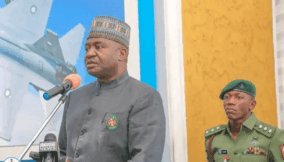
Speaking at the 2026 BusinessDay Tax Conference in Abuja themed “Navigating the New Tax Regime: What It Means for Your Wallet,” Adesokan said the initiative forms part of a broader tax reform agenda aimed at simplifying Nigeria’s tax system, improving compliance and creating a fairer regime for taxpayers and businesses.
According to him, the task force will be set up in collaboration with law enforcement authorities to curb the activities of illegal tax collectors and dismantle informal levies that continue to affect the movement of goods and services across the country.
“We are going to meet the IG very soon and we are going to set up a national tax force that will tackle these matters,” Adesokan said.
He noted that the government has already outlawed cash-based tax collections and roadside tax enforcement practices that have become common in parts of the country, stressing that businesses and individuals should no longer pay taxes in cash to any official.
“If any tax officer approaches you for cash collection, please do not pay, help spread the message that there is no cash collection anymore,” he said.
Adesokan said efforts to address the problem are also being supported by reforms at the subnational level, with several states already adopting new legislation aimed at harmonising taxes and eliminating illegal levies.
According to him, about 14 states have passed into law a model tax framework developed to standardise subnational tax collections and reduce the proliferation of taxes imposed on businesses by state and local authorities.
He explained that the framework, known as the Model Taxes and Levies Act, was introduced to streamline the wide range of charges imposed across states and curb the activities of non-state actors involved in illegal collections.
Adesokan said the law has already helped some states eliminate informal tax collectors, although enforcement challenges remain in other areas.
“What we realised is that the states that passed the act into law have chased out all their non-state actors, but it seems the non-state actors are now accumulating in FCT,” he said.
He added that the legislation is currently being considered by about 16 additional state assemblies and could soon achieve nationwide adoption, which would significantly reduce the complexity of subnational tax regimes across Nigeria.
Adesokan explained that the broader reforms are designed to simplify Nigeria’s tax framework by consolidating multiple tax laws into a single structure known as the Nigeria Tax Act. The unified framework brings together existing laws covering personal income tax, company income tax, value-added tax, petroleum profits tax and capital gains under one comprehensive legislation.
The new framework, he said, is intended to make the tax system easier to understand, reduce compliance burdens for taxpayers and encourage investment.
“We need to reform our tax landscape so that we will not continue to tax poverty, or tax prosperity… We won’t continue to tax investments, capital, but tax the profits and tax dividends,” he said.
Adesokan also said the government is deploying technology to reduce human interference in tax administration, close revenue leakages and improve transparency across tax authorities.
Beyond enforcement, the reforms are expected to reduce tax burdens for a large segment of workers. He said most Nigerians earning around N2 million annually will either pay significantly lower taxes or none at all under the new framework.
He added that expanding the tax net rather than introducing new taxes will help government boost revenue while maintaining a more business-friendly environment.
“Government will definitely get more revenue… There will be more people into the net. They are not introducing new taxes at all, very clear. But more people are coming to the net,” he said.
Also speaking, Michael Ango, Executive Chairman of Federal Capital Territory Internal Revenue Service (FCT‑IRS) announced plans to digitise tax collection across the territory, in a move aimed at phasing out street-level enforcement often linked to unofficial tax collectors.
Ango said the digital transition is part of a broader revenue reform strategy to boost compliance while reducing the physical presence of enforcement officers on roads and in public spaces.
“Having the constitutional authority to collect revenue does not justify harassing residents or motorists on our streets,” he said, emphasising the importance of lawful, non-confrontational tax administration.
The FCT‑IRS’s strategy is anchored on a three-pronged approach: stakeholder engagement, public education, and targeted enforcement.
While acknowledging that longstanding challenges in revenue mobilisation cannot be resolved overnight, Ango said progress is evident through collaboration with the Honourable Minister of the FCT to minimise street-level disruptions.
He also highlighted ongoing coordination with area council authorities, responsible for certain local collections, to ensure enforcement remains lawful and structured, particularly during election periods.
Central to the reform is a new digital tax portal, which will allow residents and businesses to generate bills, make payments online or via banks, and receive official receipts all without engaging street agents.
The platform covers market fees, levies, advertisements, and other charges and is expected to reduce friction between taxpayers and enforcement personnel.
“We want Abuja to be a model city,” Ango said. “With our digital platform, compliance can now be achieved without reliance on street-level enforcement.”
He added that discussions are ongoing with area councils to establish a collaborative monitoring system to track payments and reinforce efficient, transparent tax administration across the territory.

Join BusinessDay whatsapp Channel, to stay up to date
Open In Whatsapp