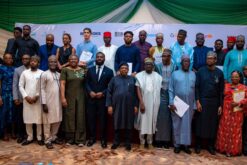
The federal government has signed agreements with Algeria and Niger to push forward the Trans-Saharan Gas Pipeline (TSGP) project, which aims to boost gas exports to Europe.
Officials from the three countries formalised the agreements on Tuesday, February 11, 2025, during a meeting in Algiers, the capital of Algeria.
According to Dada Olusegun, President Bola Tinubu’s special assistant on social media, the agreements involved energy firms from Nigeria, Algeria, and Niger.
The deals cover key aspects of the project, including an updated feasibility study, a compensation framework, and a non-disclosure agreement (NDA) between the involved companies.
Read also: Reps order probe into $12bn trans-saharan gas pipeline project
“The TSGP is a strategic initiative to transport natural gas from Nigeria through Niger to Algeria, where it will be exported to European and global markets,” Olusegun stated.
The Trans-Saharan Gas Pipeline, designed to span 2,565 miles across the Sahara Desert, will connect Nigeria’s Warri hydrocarbon fields to Algeria’s Hassi R’Mel hub on the Mediterranean coast.
Algeria’s segment alone will stretch 1,435 miles, over half the pipeline’s total length.
Once completed, the project is expected to transport up to a trillion cubic feet of natural gas annually.
Originally proposed in the 1970s, the TSGP saw periods of progress in 2002, 2005, 2006, and 2009 but eventually stalled.
In 2022, energy ministers from Nigeria, Algeria, and Niger revived discussions to move the project forward.
An estimated $13 billion is needed to complete it, $10 billion for pipeline construction and equipment, and $3 billion for gas-gathering centers.


Join BusinessDay whatsapp Channel, to stay up to date
Open In Whatsapp