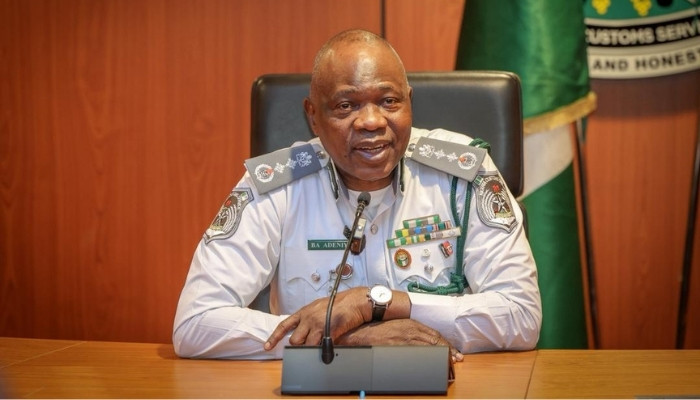
The Nigeria Customs Service has assured onion farmers and exporters of the removal of non-tariff barriers to the commodity’s trade following engagements with regional stakeholders.
The Regional Observatory of Onion in West and Central Africa (ORO/AOC), led by its president, Aliyu Maitasamu, visited Adewale Adeniyi, the comptroller general of Customs this week in Abuja, following the reopening of the Tsamiya border, a major agricultural trade route with Benin Republic after a seven-year closure.
“We will remove all known non-tariff barriers and work with other government agencies and stakeholders to create a more facilitating environment for your trade,” he said.
He explained that over the past six months the service had faced sustained pressure from economic operators in Benin and Niger Republic over the use of Nigeria’s transit corridors, particularly routes through northeastern Nigeria and the Kamba axis.
Tsamiya, located in Bagudo Local Government Area and linked to Segbana in Benin, has traditionally served as an outlet for agricultural commodities moving into neighbouring West African markets.
Also read: Nigeria reopens Tsamiya border with Benin after 7-year closure
Its border opening is expected to restore cross-border movement of farm produce including onions, garlic, white beans, dry pepper, and grains—both maize and sorghum, from Nigeria’s northern food basket to Benin.
“With recent developments and the reopening now in effect, we are here to appreciate the NCS for its prompt action,” Maitasamu said, while calling for sustained engagement to ensure smooth and lasting operations, in line with earlier assurances given by the Comptroller-General in Kebbi State.
Maitasamu said Nigeria is Africa’s second-largest onion producer after Egypt, with an annual output of about 2.1 million metric tonnes. Data from the Food and Agriculture Organisation values Nigeria’s onion production at approximately N1.17 trillion, noting that Nigeria and Niger currently remain the two most significant players in onion production and exchange within the ECOWAS and Sahel regions.
Timi Bomodi, deputy comptroller-general of Customs in charge of enforcement, inspection and investigation spoke of a proposed token system discussed at the meeting with elements of data and infrastructure.
“One component is the data, which your association already has,” he told the ORO/AOC “The other is infrastructure. Trucks moving across these corridors put pressure on our roads, and the token system will allow the government to recover some of those costs over time for road maintenance,” he said.

Join BusinessDay whatsapp Channel, to stay up to date
Open In Whatsapp