…Recovers container of donkey genitals, exotic animal parts in nationwide crackdown
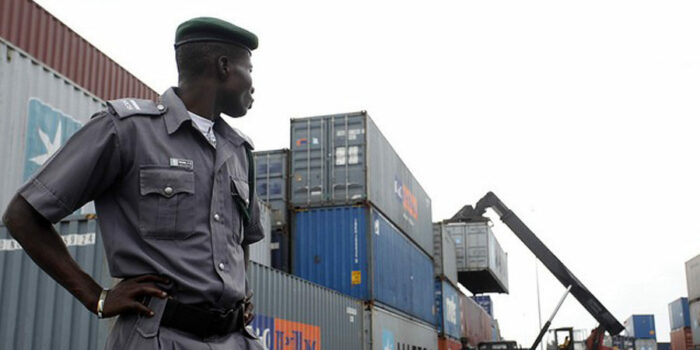
Authorities at the Nigeria Customs Service (NCS) have escalated their crackdown on the illicit wildlife trade, linking it to a broader web of transnational crimes, including money laundering, arms smuggling, and illicit currency flows.
Addressing journalists in Abuja on Thursday, Abdullahi Maiwada, Assistant Comptroller and the National Public Relations Officer of Customs, said the service has made a series of high-profile seizures in recent months.
The latest, according to him, is a 40-foot container loaded with donkey genitals intercepted along the Kaduna–Abuja expressway on June 5, 2025.
“This seizure is not an isolated incident,” Maiwada said. “It is a symptom of a wider and more sinister enterprise—one that increasingly intersects with organised crime networks across borders.”
The container was recovered by operatives of the Special Wildlife Office (SWO), a unit within the Customs Intelligence Unit (CIU), and handed over to the National Environmental Standards and Regulations Enforcement Agency (NESREA) on Thursday in Abuja.
The SWO works closely with partners like the Wildlife Conservation Society, Wildlife Justice Commission, and Interpol to identify, intercept, and prosecute traffickers.
Maiwada told journalists that over the past year, Customs has disrupted wildlife trafficking operations across multiple states, recovering: six African grey parrots, with one suspect arrested in Kano; two live pangolins; five Mona monkeys; two Tantalus monkeys; one baby baboon; one African grey parrot at Lagos airport; 213 parrot heads; six eagle heads, 128 hornbill heads, and other exotic species in Cross River.
Other recoveries are tortoises handed over in Oyo State; life-sized lions, zebra hides, gorilla parts, and other taxidermy specimens; 119.4kg of pangolin scales in Calabar; as well as 120 African grey parrots rescued, with one suspect arrested in Fufore, Adamawa State.
“The Nigeria Customs Service considers this an issue of national importance, not only from an ecological standpoint but also because wildlife trafficking is increasingly linked with other forms of organised crimes including money laundering, arms smuggling, and illicit currency flows,” Maiwada said.
He also mentioned that Customs is expanding its use of digital forensics, phone analysis, and species identification tools, with several prosecutions already underway.
He then urged Nigerians to report suspicious activity, especially in border areas, adding: “The fight against wildlife crime requires sustained collaboration, vigilance, and an unyielding commitment to justice.”
Also speaking at the press event, A.S. Mani, Assistant Comptroller of Customs and head, SWO, O, revealed that the unit intercepted 10,603 male donkey genitals between December 2024 and June 2025—part of a sweeping crackdown that is “disrupting entire supply chains” behind illegal wildlife trafficking.
In total, the SWO recovered 6,087.9 kilograms of pangolin scales; 4.15 kilograms of worked ivory; 157 African Grey Parrots; 20 green parrots; six monkeys, four pangolins, and 3022 donkey skins, among other items. The team also seized 37 taxidermy specimens and 16 zebra skins in that period.
“We have apprehended more than 10 suspects involved in wildlife trafficking networks,” Mani said. “Out of this, we already have one conviction, while the other cases are ongoing.”
Mani credited the momentum to expanded intelligence gathering, inter-agency collaboration, and officer training supported by international NGOs. “Our mission has been clear: to protect Nigeria’s rich biodiversities, combat illegal wildlife trafficking, and uphold our international obligations under CITES,” he stated.
He warned that wildlife crime “continues to evolve, demanding ongoing vigilance and innovation.”

Join BusinessDay whatsapp Channel, to stay up to date
Open In Whatsapp