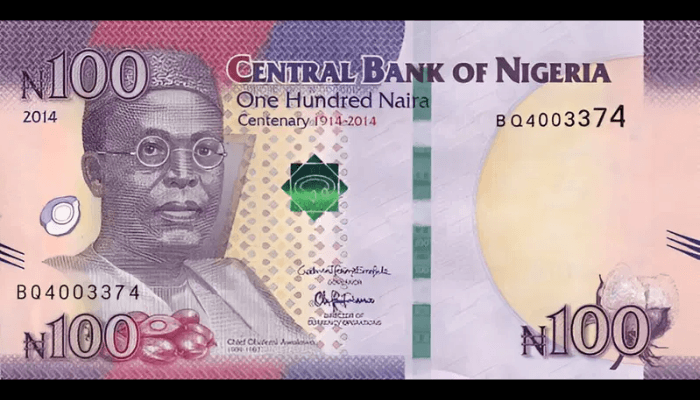
The Central Bank of Nigeria (CBN) has warned individuals, businesses and financial institutions against rejecting the standard N100 banknote, saying offenders risk sanctions for violating the law and undermining confidence in the national currency.
The warning follows reports that some members of the public and businesses have refused to accept the standard N100 note over concerns that it is no longer legal tender.
In a statement issued on Tuesday by Hakama Sidi-Ali, acting director of Corporate Communications, the apex bank clarified that both the commemorative N100 banknote introduced to mark Nigeria’s centenary and the standard N100 banknote remain legal tender and must be accepted for all transactions across the country.
The CBN stressed that the commemorative N100 banknote did not replace the existing standard N100 banknote, contrary to the misconception that has led to the rejection of the older note in some transactions.
“The Central Bank of Nigeria hereby reiterates that both the commemorative N100 banknote and the standard N100 banknote remain legal tender in Nigeria and must be accepted for all transactions nationwide,” the bank said.
Read also: Naira cools to N1,410/$ in black market on renewed dollar demand
The apex bank cautioned that rejecting the standard N100 note constitutes a breach of the provisions of the CBN Act and weakens public confidence in the naira.
“The CBN strongly cautions individuals, businesses, financial institutions and other economic agents against rejecting the standard N100 banknote. Such rejection constitutes a violation of the provisions of the CBN Act and undermines confidence in the national currency. The Bank will not hesitate to apply appropriate enforcement measures against any person or entity found to be in breach,” the statement said.
The Central Bank said it remains committed to protecting the integrity of the naira, maintaining confidence in all duly issued banknotes and ensuring the smooth circulation of currency across the economy.
It therefore urged Nigerians to continue accepting and transacting with all banknotes legally issued by the CBN, including both versions of the N100 note.
The bank also advised members of the public seeking further clarification on the status of any banknote to contact the CBN through its official communication channels.

Join BusinessDay whatsapp Channel, to stay up to date
Open In Whatsapp