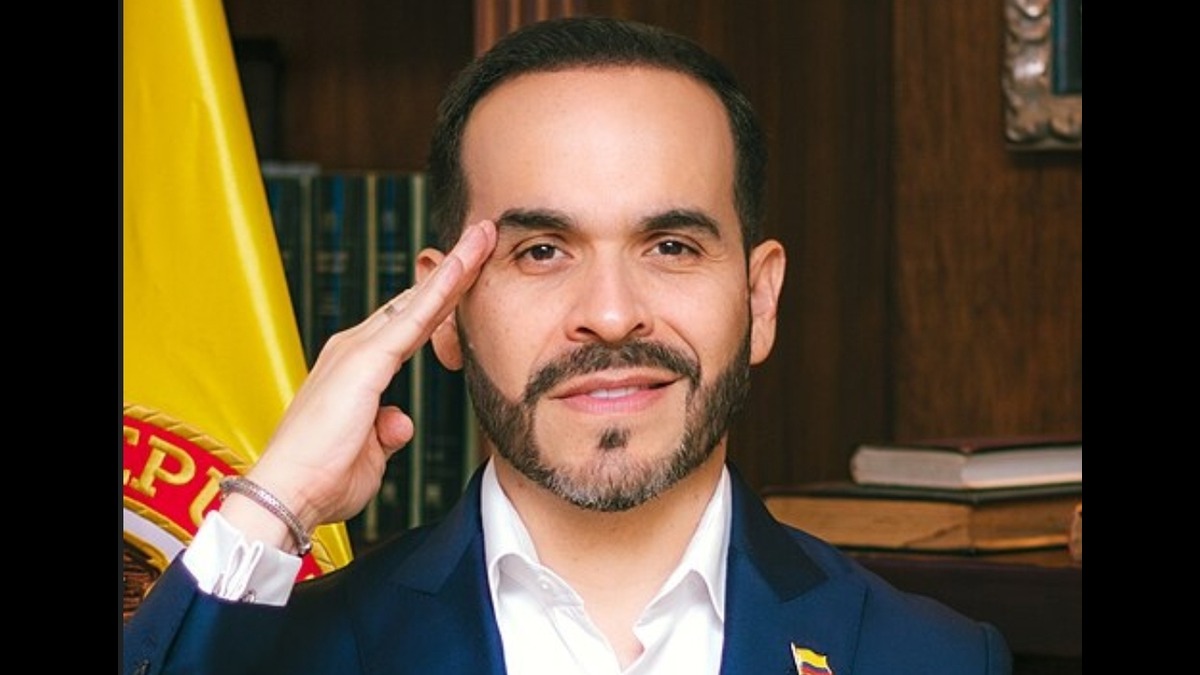
Abelardo de la Espriella, Colombia’s president-elect has unveiled one of the country’s most dramatic foreign policy shifts in decades, announcing plans to close or suspend diplomatic missions in 15 countries spanning Africa, Asia, the Caribbean and Eastern Europe, while reopening Colombia’s embassy in Jerusalem a move that signals a decisive break from the outgoing administration’s international agenda.
The president-elect said embassies in Palestine, Algeria, Azerbaijan, Barbados, Cuba, the Czech Republic, Ethiopia, Ghana, Haiti, Hungary, Malaysia, Nicaragua, Romania, Senegal and South Africa would either be closed or have their operations suspended as part of a broader effort to cut government spending and refocus Colombia’s diplomatic engagement on countries deemed to offer greater strategic and economic value.
The decision, one of the incoming administration’s first major foreign policy pronouncements since winning the presidential election, underscores a significant ideological shift from the policies of the outgoing government, which had strengthened ties with several developing nations while distancing itself from Israel.
At the center of the diplomatic reset is the planned reopening of Colombia’s embassy in Jerusalem, reversing the current administration’s decision to withdraw diplomatic representation from the city amid deteriorating relations with Israel over the war in Gaza.
Abelardo de la Espriella argued that Colombia must pursue a foreign policy anchored on national interest, economic diplomacy and fiscal discipline, maintaining that the cost of operating embassies in countries with limited trade, investment and strategic cooperation can no longer be justified.
The announcement is expected to reshape Colombia’s diplomatic footprint across four continents and could affect bilateral cooperation in trade, education, culture and consular services for Colombians living in the affected countries. Government officials have yet to explain whether consular responsibilities will be transferred to nearby embassies or handled through non-resident diplomatic missions.
The decision to restore diplomatic representation in Jerusalem is also likely to attract international attention. Jerusalem remains one of the world’s most disputed cities, with Israel regarding it as its capital while Palestinians seek East Jerusalem as the capital of a future state. Consequently, many countries continue to maintain their embassies in Tel Aviv pending a negotiated settlement to the decades-long conflict.
Relations between Colombia and Israel deteriorated under the outgoing administration following disagreements over Israel’s military campaign in Gaza. Diplomatic tensions escalated with reciprocal measures, including the suspension of defence cooperation and the downgrading of bilateral relations.
Political analysts say the president-elect’s proposals reflect a broader realignment toward closer relations with Israel and conservative allies while scaling back diplomatic engagement with countries viewed as offering limited economic or geopolitical returns.
The embassy closures and Jerusalem decision are expected to face political and diplomatic scrutiny before they are implemented when the new administration formally assumes office and begins executing its foreign policy agenda.

Join BusinessDay whatsapp Channel, to stay up to date
Open In Whatsapp