Families affected by the presence of the British Army Training Unit Kenya (BATUK) have renewed calls for justice, compensation and accountability ahead of the expected renewal of the Defence Cooperation Agreement between Kenya and the United Kingdom, as women from Nanyuki and surrounding communities continue to share accounts of abuse, abandonment and loss linked to British soldiers stationed in the region.
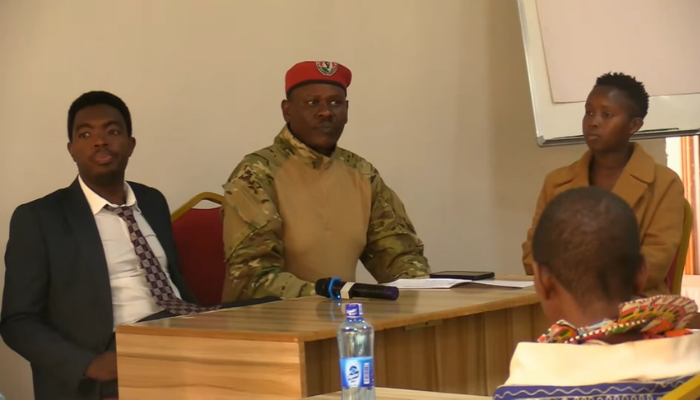
The renewed calls emerged during a strategic community meeting held on 20 June 2026 at the Sportsman’s Arms Hotel in Nanyuki, Laikipia County. The gathering brought together survivors, families, legal advocates and human rights defenders who say communities have suffered harm connected to BATUK’s long-standing presence in the area.
Among those in attendance were human rights defender Bob Njagi, lawyer Kevin Kubai, Njeri Migwi, economist and political activist Boniface Mirikwa, Communist Party Marxist–Kenya General Secretary Booker Omole, and Esther Njoki, the niece of Agnes Wanjiru, whose death 14 years ago remains one of the most prominent cases associated with the campaign for accountability.
The meeting took place against the backdrop of testimonies from women who say they suffered abuse, abandonment and other harm linked to British soldiers operating in Laikipia County.
Read also: Cleared in London, needed at home: Diezani urged to face Nigerian justice
One woman, who worked as a bar attendant in Nanyuki town, said she met a British soldier at her workplace in November 2020. What began as a relationship later left her raising a child alone after the soldier allegedly cut ties with her.
“The relationship grew, and after a few months, I got pregnant. I informed him, and he said it was okay and he promised to take care of the baby.”
She said the soldier initially provided gifts and money, but in April 2021 stopped visiting. When she later confronted him at another bar, he allegedly assaulted her and knocked out two of her teeth. She said he later sent her KSh50,000 and instructed her to manage the pregnancy alone.
She eventually gave birth to a son. The father has never returned and has provided no further support. She says she continues to face stigma and rejection in her community for raising a child without a husband. She is now calling on the UK government to comply with a London court order issued in late 2025 requiring the disclosure of the names of soldiers accused of fathering and abandoning children in Kenya.
Another woman recounted an incident she says occurred in 2016 when a British soldier sexually assaulted her.
“It happened in 2016 when he forced himself on me under the guise of being drunk. I got pregnant, and before I gave birth, he was gone, and I have never heard from him again. He cut all the communication.”
She said she has raised the child without any support from the father.
A third woman, a casual labourer at Lolldaiga Conservancy, linked the loss of her unborn child to a BATUK military training exercise conducted in 2021. She said soldiers started a fire that produced smoke and fumes while she was three months pregnant.
One week later, she suffered a stillbirth.
“It was later established that the smoke from the fire caused by the soldiers was toxic, and that is what caused the stillbirth.”
The women’s accounts form part of wider allegations that have followed BATUK for years in Laikipia and Samburu counties. Concerns have included claims of sexual abuse, child abandonment, environmental damage and unresolved criminal cases.
Among the most well-known cases is the death of Agnes Wanjiru in 2012 at the Lions Court Hotel in Nanyuki. A British soldier has been linked to the case, but her family continues to seek accountability and justice.
In December 2025, Kenya’s National Assembly Committee on Defence, Intelligence and Foreign Relations released a 94-page report following a two-year investigation into allegations involving BATUK personnel. The report documented cases of sexual abuse, assault and abandonment of children fathered by British soldiers. It also found that many complaints dating back to the early 2000s were dropped, mishandled or left unresolved.
The committee criticised BATUK officers for declining to appear before the committee, citing diplomatic immunity. Lawmakers recommended amendments to the defence cooperation agreement to allow Kenyan courts jurisdiction over serious offences, including sexual abuse and murder committed by foreign soldiers. The committee also called for stronger community protections and mechanisms to secure child maintenance support through negotiations with the United Kingdom.
Speaking at the Nanyuki meeting, Esther Njoki questioned the planned renewal of the defence agreement while her aunt’s case remains unresolved.
“In 2021, Kenyan authorities said they would not renew the contract until Agnes’ case had been solved. It has not been solved. Why are you renewing this contract?”
She also highlighted the impact of the case on Agnes Wanjiru’s daughter.
“There’s a child who was five months old when Agnes was killed, and now she’s turning 15. When this man gets away with it, who did you expect to raise this child? That one we are not negotiating. Compensation, it’s a must.”
Lawyer Kevin Kubai said the issues raised by affected families extend beyond individual cases and touch on broader questions of justice and sovereignty.
“To date, I have obtained more than 25 declarations of parentage from a British court declaring that these soldiers were the legal fathers of children abandoned here in Nanyuki. These fathers are not willing to take up responsibility. We are calling for the quick expedition of justice and full compensation for these victims. But more importantly, we are talking about the sovereignty of the Kenyan people. Article One of our Constitution states that all sovereign power is vested in the people.”
Kubai also spoke about the challenges victims face when pursuing justice.
“For ongoing cases, getting witnesses to testify also remains an issue, while authorities do not give these cases the attention they deserve. But at times, we cannot blame them when you consider who is in charge in this whole scenario.”
He added: “These violations need to stop. The solution is that simple. Take people to court and let them be charged. Delivery of justice is the best way of handling cases where no one is punished.”
Human rights defender Bob Njagi urged both governments to place affected communities at the centre of any future agreement.
“We demand that both the Kenyan and UK governments prioritise the rights of local citizens. We want swift legal remedies and comprehensive restitution for all impacted local families who have suffered as a result of BATUK’s activities.”
Booker Omole linked the concerns raised by residents to a wider historical context in Laikipia County.
“There have been historical injustices here in Laikipia, beginning with land. Over 50 percent of this county is in the hands of what we call the remnants of colonialism. The time has come for us, as Kenyans, to say no to the neocolonialism being perpetuated on our people.”
At the conclusion of the meeting, participants agreed on three actions. They will pursue a formal parliamentary petition directed at the Kenyan Parliament, state agencies, BATUK leadership and the British Ministry of Defence. They also plan to establish a memorial monument for individuals and families who say they have suffered harm connected to the presence of British soldiers. In addition, they will launch a digital legal-support platform to help affected families document claims, access legal assistance and pursue remedies through national and international legal channels.
BATUK has operated in the region for decades and contributes to the local economy through employment, procurement and community projects. The unit has supported the construction of classrooms, drilling of boreholes, medical outreach programmes and environmental activities. However, affected families argue that these contributions do not erase the experiences of those who say they have suffered harm.

Join BusinessDay whatsapp Channel, to stay up to date
Open In Whatsapp