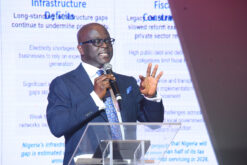
Nigeria is positioning itself as an attractive destination for long-term domestic and foreign capital by strengthening policy predictability, institutional integrity and the rule of law, Taiwo Oyedele, minister of Finance and coordinating minister of the Economy, has said.
Oyedele said the government was committed to creating an investment environment that would attract capital into businesses and productive sectors as Nigeria seeks to convert macroeconomic stability into investment, productivity, jobs and higher incomes.
Speaking at the 14th BusinessDay Annual CEO Forum in Lagos, he said global capital was not driven by emotional appeals or patriotic rhetoric but by stable policies, strong institutions and effective execution.
“Every single morning, trillions of US dollars flow through international financial markets. That capital has no passport. It has no trial and no political affiliation. It does not respond to emotional appeals or patriotic rhetoric. It responds to stable policy, strong institutions and diligent execution of policies,” Oyedele said.
“Therefore, our job in government is to make Nigeria one of the most attractive, predictable and legally secure destinations for long-term capital globally.”
He said Nigeria was open for business and committed to providing greater regulatory predictability, institutional integrity and respect for the rule of law to local and international investors.
“To the local and traditional investors and development partners here today, Nigeria is truly open for business,” he said.
Oyedele said investment was central to the next phase of Nigeria’s economic transformation, following reforms aimed at restoring macroeconomic stability.
He said the country’s economic transition would require stability to attract investment, investment to drive productivity, productivity to create jobs and jobs to raise incomes and improve living standards.
The minister said the government had initiated reforms to address structural distortions in the economy, including the unification of the foreign exchange market, fiscal reforms, the rebuilding of external reserves and the removal of distortions affecting productive sectors.
He said the reforms had begun to produce results, citing improvements in macroeconomic stability, the functioning of the foreign exchange market, external reserves and international investor confidence.
However, Oyedele said stability was only the foundation for growth and prosperity.
“A stable economy can still be a stagnant one if we become complacent or return to business as usual. A stabilised currency can still mean low purchasing power if our national productivity is suboptimal. Lower inflation can still coexist with high unemployment,” he said.
He said the government had identified key sectors that could attract investment and drive economic growth, including technology and digital services, agro-processing, energy, manufacturing and financial services.
In technology and digital services, Oyedele said the government was focused on broadband expansion, data protection, clear fintech regulations and artificial intelligence integration, to scale Nigeria’s technology ecosystem and export digital services globally.
He said the government was also seeking to move agriculture from the export of raw materials to high-value local processing and storage, while investing in energy infrastructure to provide reliable and affordable power for industrial zones.
In manufacturing, he said the government was supporting industrial clusters, upgrading port facilities and seeking to domesticate supply chains to position Nigeria as a manufacturing hub for West Africa and the wider continent.
He said financial services would also play a key role through deeper capital markets and improved access to credit for small, medium-sized and large businesses.
Oyedele also stressed the importance of coordination between fiscal and monetary authorities in creating a predictable investment environment.
He said fiscal reforms, including stronger expenditure controls, a broader non-oil revenue base and sustainable debt management, would support the monetary authorities’ efforts to maintain price stability and support the naira.
“Conversely, a stable, predictable monetary environment allows us to plan our fiscal policies with confidence,” he said.
“Our aim is to avoid policy surprises, no sudden reversals and no administrative friction. We are aligned, coordinated and committed to strategic clarity.”
The minister said the government was also seeking greater coordination between the federal and subnational governments, the private sector and international partners.
He urged businesses to respond to the reforms by increasing investment and innovation.
“We need banks that finance productive, long-term local industry rather than short-term trading. We need manufacturers who build for domestic consumption and export capacity. We need technology companies that solve real-world problems. We need family businesses with the ambition to scale into global enterprises,” Oyedele said.
He said the government was working to simplify the regulatory environment, protect intellectual property and remove bureaucratic bottlenecks that consume businesses’ time and resources.
“In return, we ask you to match our reforms with your investments, your innovation and your belief in Nigeria’s future,” he said.
Oyedele said Nigeria’s next phase of economic development would require a stronger partnership between the public and private sectors.
“The next chapter of Nigeria’s economic history will not be written by the government alone. It will be co-authored by enterprises,” he said.

Join BusinessDay whatsapp Channel, to stay up to date
Open In Whatsapp