For the thousands of women who power the famous Abakaliki rice mill in Ebonyi State, the cost of living is paid in coughs, chronic headaches, and chest pains.
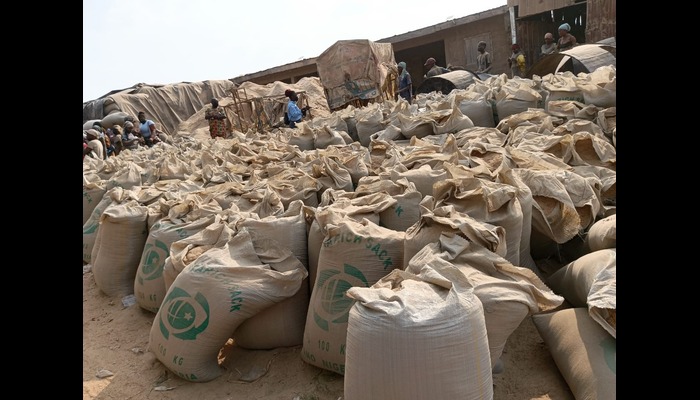
While Abakaliki rice is a staple on dinner tables across Nigeria, the process of bringing it to market is a hazardous ordeal. In the sprawling mill complex, workers operate within a permanent haze of rice dust and machine smoke, often without a single piece of protective gear.
“We know the dust is affecting us, but what can we do?” asked Nkechi Sunday, a rice mill worker, her voice heavy with resignation.
“We are in this work because we don’t know what to do. We don’t have any alternative to it.”
For Sunday, the job has come with a growing list of health challenges.
“I have been having frequent headaches, body and chest pains. If I complain, they will tell me the rice mill dust work is the cause and that I should stop it. But if I stop, who will take care of me and my children? Who will train them?”
A workplace full of risk
Health concerns are not limited to women alone.
Solomon Onu, another worker at the mill, said the environment takes a heavy toll on the lungs of many laborers.
“This rice milling business affects my health seriously,” he said. “Each day I have cough, serious cough after the work. That is why some of us don’t stay here all the time because both the rice dust and the smoke from the milling machines are very dangerous for health.”
Workers say the absence of protective equipment such as face masks, gloves and other safety kits has worsened the situation.
“We need safety kits,” Nkechi pleaded. “Government should build a hospital here where we can check our health and treat the diseases we contract here.”
Ironically, a hospital once built within the rice mill during the administration of former Ebonyi State governor Martin Elechi now lies abandoned, leaving thousands of workers without immediate medical support.
Glimmer of hope from a rare intervention
Recently, a rare medical intervention brought temporary relief to the mill. This occurred when the David Umahi Federal University of Health Sciences, Uburu (DUFUHS) launched a free respiratory screening and treatment programme at the rice mill.
The initiative, under the Equi-Resp Africa Research Project, drew a large crowd of workers eager to receive medical attention many of them had never accessed before.
“You can see the crowd here,” said Onu. “We have never seen this type of thing before and it is free of charge. That is why many of us came.”
Even visitors were drawn to the outreach.
“I am a customer. I came to buy rice but when I saw what was happening, I decided to benefit from it,” said Nweze James. “I advise government to provide safety kits for these mothers and other workers in this business. As you can see, they don’t have protective devices against these dusts and smoke they inhale daily, and it is very dangerous.”
Treating the invisible threat
Vice Chancellor of David Umahi university of health Sciences (DUFUHS) Professor Jesse Uneke, said the outreach was designed to address the growing health risks faced by workers in the mill.
“The Abakaliki rice place is very critical to the economy, not just for Ebonyi State but Nigeria,” Uneke said during the launch of the programme.
“There is no place in the country where you do not hear about Abakaliki rice. But we must not forget that the men and women laboring here to provide good rice for Nigerians their health is also very important.”
According to him, the university has made arrangements for complete treatment for the first 200 workers diagnosed with respiratory diseases.
“We came here to do screening, and everyone identified with respiratory disease will be treated free of charge,” he said. “We have free treatment drugs for the first set of 200 persons.”
The intervention is being carried out in collaboration with the Institute of Child Health at Alex Ekwueme Federal University Teaching Hospital, Abakaliki (AE-FUTHA).
Professor Techla Ezeonu, Director of the institute, said the outreach became necessary after studies showed that many workers in the rice mill suffer respiratory illnesses.
“Their health is necessary,” she said. “They are working for us, feeding us with rice, but we must also bring healthcare to them.”
Measuring the air they breathe
Beyond treatment, researchers are also studying the air quality within the rice mill.
Uneke said air quality monitors have been installed to determine the level of pollution and health risks in the area.
“If you say this place is heavily polluted and you don’t have the data to prove it, you may not be able to formulate proper policies,” he explained.
The research, he said, will generate evidence that government ministries can use to design policies that specifically address the health challenges faced by rice mill workers.
A call for lasting solutions
While the outreach has brought temporary relief, workers say their long-term survival depends on deeper government intervention.
They are calling for the revival of the abandoned hospital within the rice mill and the provision of protective equipment.
Until then, many of them say they will continue to inhale the dust that sustains their families.

Join BusinessDay whatsapp Channel, to stay up to date
Open In Whatsapp