…says INEC to test technology ahead of 2027 presidential poll
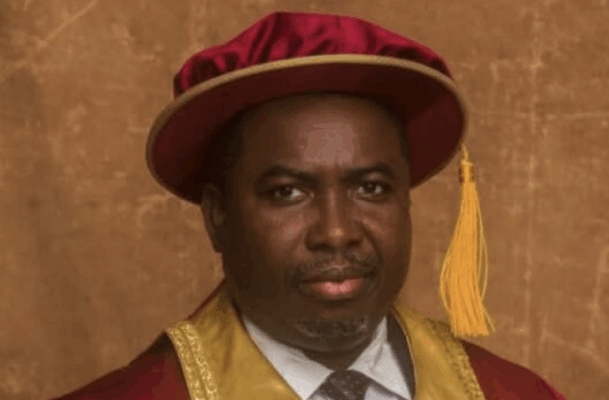
Joash Ojo Amupitan, Chairman of the Independent National Electoral Commission (INEC), has assured Nigerians that although perfect elections may not yet be attainable, the 2027 general election will be the most credible in the country’s history, as the commission intensifies efforts to strengthen logistics and rigorously test its technology ahead of the presidential poll.
Speaking at a citizens’ town hall meeting organised by the Civil Society Network on Election Integrity on Sunday in Abuja, Amupitan said the commission was determined to strengthen logistics, result management and technology deployment to enhance transparency and public trust in the electoral process.
He described elections as the lifeblood of democracy, stressing that the credibility of any democratic system rests largely on the integrity of its electoral body.
“I have noticed that what Nigerians desire is a perfect election. We will strive as much as possible to give this country the best election. However, we may not be able to achieve 100 per cent perfection for now. But by the grace of God, the 2027 election will be the best Nigerians will ever have,” he said.
The INEC chairman said the commission had the capacity to electronically transmit results, noting that the challenge was not the absence of a network but the adequacy and reliability of connectivity, particularly in remote areas.
Citing the recent Federal Capital Territory (FCT) Area Council elections, he explained that while results from five of the six area councils were transmitted on time, one ward in Abaji Area Council experienced delays due to poor internet connectivity and difficult terrain.
“Kambi Ward is about three and a half hours’ drive, and the internet is very poor. We could not reach our officials immediately after they arrived. The results had to be physically brought for collation before declaration. So when we talk about real-time transmission, we must be clear about what that means,” he said.
He compared the situation to electronic bank transfers, where funds may be debited instantly but alerts are sometimes delayed, stressing that delayed receipt does not necessarily indicate system failure.
Amupitan maintained that logistics remain central to the success of any election, noting that an election could only be as effective as the planning and operational systems supporting it.
“If the election starts as advertised, is peaceful, and we manage and declare results properly, then you can say it is successful. But once logistics fail, you are already beginning to fail,” he stated.
On technological deployment, the INEC boss said the commission would subject its systems to more rigorous testing ahead of the 2027 presidential election to prevent glitches experienced in previous polls.
He observed that while certain technologies performed well in off-cycle governorship elections, broader national deployment during the 2023 presidential election exposed gaps that had not been adequately stress-tested across states.
“One of the things we are going to do is to test the system more thoroughly before the next presidential election, so that transmission across states will not fail,” he assured.
Amupitan also welcomed the review of the Electoral Act, noting that INEC was part of the joint committee that worked with the National Assembly and civil society groups to produce the 2026 Electoral Act.
He advocated simpler legislative language to make electoral laws more accessible to ordinary Nigerians.
He added that increasing voter awareness and public confidence in the electoral system would strengthen governance and national development.
“When people begin to trust INEC and trust their leaders, then the country will move forward,” he said.
In his opening remarks, Samson Itodo, Executive Director of YIAGA Africa, said the Electoral Act 2026 would play a decisive role in determining the credibility of the 2027 general elections.
Itodo called on the National Assembly to begin the process of amendment to some of the provisions of the Electoral Act, noting particularly that the provision for the release of election funds to INEC six months before the election was a deviation from the 2022 Electoral Act, which provided for 12 months.
He argued that the release of funds to INEC six months before the election would create logistical challenges.
He emphasised that electoral laws only strengthen democracy when implemented with integrity, urging INEC, political parties, civil society groups and security agencies to work collaboratively to guarantee transparency, accountability and public confidence in the electoral process.

Join BusinessDay whatsapp Channel, to stay up to date
Open In Whatsapp