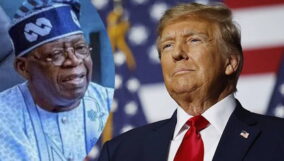
The battle for Nigeria’s 2027 presidential election is increasingly extending beyond the country’s borders, with political camps linked to President Bola Tinubu, former Vice President Atiku Abubakar, and Nasir El-Rufai, former Kaduna State governor, stepping up engagements in Washington, D.C., as they seek to shape international perceptions ahead of the next electoral cycle.
The growing activity in the U.S. capital reflects a broader shift in Nigerian politics, where influence is no longer pursued solely through domestic political structures, regional alliances, and grassroots mobilisation.
As Nigeria grapples with economic reforms, security challenges, and the need to attract foreign investment, political actors are becoming increasingly aware that perceptions among foreign governments, policymakers, and investors can have significant implications for the country’s political and economic trajectory.
Washington’s importance stems from Nigeria’s position as one of Africa’s largest economies, its most populous nation, and a key security partner for the United States in West Africa.
While elections are ultimately decided by Nigerian voters, stakeholders say political actors are increasingly seeking to influence conversations among lawmakers, think tanks, diplomatic circles, and foreign policy institutions that shape international engagement with Nigeria.
Atiku has emerged as one of the most active opposition figures in this regard. Reports from U.S. lobbying disclosures indicate that the former vice president engaged a Washington-based lobbying firm to strengthen his profile among policymakers and communicate his vision for Nigeria ahead of the 2027 election.
The outreach reportedly includes engagements with members of Congress and officials involved in African affairs.
His allies have also sought to draw international attention to concerns about governance, democratic accountability and electoral credibility under the Tinubu administration, adding a foreign policy dimension to the rivalry between the opposition and the ruling All Progressives Congress (APC).
El-Rufai, once regarded as a key ally of Tinubu, has also intensified political engagements since aligning himself with opposition coalition efforts.
The former Kaduna governor has become one of the administration’s most outspoken critics, using both domestic and international platforms to advocate for a broad opposition alliance capable of mounting a serious challenge to the APC in 2027.
The presidency, however, continues to project confidence in the administration’s political prospects.
Officials point to ongoing economic reforms, efforts to stabilise public finances, infrastructure investments and measures aimed at improving the business environment as evidence that the government is laying the foundation for long-term growth and stronger public support ahead of the next election.
Political analysts say the increasing focus on Washington reflects the growing intersection between politics, diplomacy and investment.
International perceptions of governance, policy consistency and democratic stability often influence investor sentiment, development financing and bilateral relations, making foreign engagement an increasingly important consideration for political actors.
For investors, the development underscores the extent to which political competition is becoming intertwined with economic confidence.
As Nigeria seeks to attract capital and deepen economic reforms, questions surrounding political stability and policy continuity are likely to remain central to international assessments of the country.
Yet some observers caution against placing excessive emphasis on foreign lobbying efforts. They argue that while international perception may influence diplomatic and investor sentiment, the outcome of the 2027 election will ultimately be determined by domestic realities, including inflation, unemployment, insecurity and living standards.
Still, with political manoeuvring already gathering momentum, one thing is becoming clear: the road to Aso Rock is no longer being contested solely in Abuja, Kano or Lagos. Increasingly, part of the struggle for influence is unfolding in Washington’s policy corridors, where rival camps are seeking to shape narratives that could affect how the world views Nigeria’s next political chapter.

Join BusinessDay whatsapp Channel, to stay up to date
Open In Whatsapp