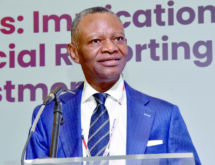
Nigeria’s current economic growth rate of 3.87 percent is below the level required to deliver shared prosperity, Tola Adeyemi, CEO of KPMG One Africa, has said.
Adeyemi, speaking at the 14th BusinessDay Annual CEO Forum in Lagos, said Nigeria needed to grow at least twice as fast as its population growth rate to ensure that economic expansion translates into improved living standards for its citizens.
He said with Nigeria’s population growing at about 2.09 percent annually, the economy would need to expand by around 4.2 percent to create the conditions for shared prosperity.
“GDP growth should be around 4.2 percent or higher. Nigeria is currently at 3.87 percent, although the trend is upwards,” Adeyemi said.
He said the growth rate was one of several indicators used in KPMG’s illustrative shared prosperity scorecard, which assessed Nigeria’s performance across inclusive economic growth, well-being and living standards, equity and inclusion, and access to opportunity.
Adeyemi said the scorecard showed that Nigeria remained below the average benchmark of selected comparator economies across the majority of the indicators assessed, despite improvements in some areas.
Read Also: BusinessDay CEO Forum charts path from stability to shared prosperity
For instance, he said the benchmark for the proportion of the population living in multidimensional poverty was about 16 percent, compared with approximately 33 percent for Nigeria.
He also said indicators relating to access to opportunity, including the proportion of children out of school, access to electricity, internet penetration and access to credit, remained below the selected benchmarks.
“The overriding message from the data is clear: for the majority of the indices, we are as a country below the benchmark, the average for the benchmark group that was selected,” Adeyemi said.
He said this showed that Nigeria needed to adjust and strengthen its current policies and actions to ensure that economic growth translated into broader prosperity.
Adeyemi said Nigeria had made significant progress in stabilising the economy following a period of unsustainable fuel subsidies, multiple exchange rates and runaway inflation.
He said reforms implemented across fiscal and monetary policy, financial-sector resilience, household support, trade and structural challenges had helped create the foundations for growth.
“Three years into the reforms, key macroeconomic indices have stabilised and are indeed providing the foundations for growth,” he said, citing rising GDP, improved external trade balances, greater foreign exchange stability and increased confidence in the economy.
However, he said the reforms had been implemented amid security challenges, external headwinds and continuing structural and institutional weaknesses.
Adeyemi compared the reform process to “flying a plane while attempting to fix the engine”, saying Nigeria needed to “aviate, navigate and communicate” as it addressed its economic challenges.
He said the reforms would only be sustainable if a large proportion of the population participated in and benefited from them.
“Shared prosperity is what helps to make reforms sustainable. Reforms are stronger and more resilient when a large proportion of the population participates in and benefits from them,” he said.
Adeyemi said achieving shared prosperity would require a collaborative effort involving government, the private sector, citizens and civil society.
He urged the government to accelerate the implementation of high-impact reforms, particularly in power, tax and trade, while reducing bottlenecks among ministries, departments and agencies.
He also called for stronger coordination among the federal, state and local governments and better prioritisation of scarce public resources towards areas capable of delivering the greatest impact.
Adeyemi further urged the government to strengthen accountability by regularly publishing measurable indicators and targets that would allow Nigerians to track progress on shared prosperity.
“This is not something that can be left to the government alone. It is something in which all stakeholders, public, private sector and civil society, have got to get involved,” he said.

Join BusinessDay whatsapp Channel, to stay up to date
Open In Whatsapp