Ahead of the official commencement of the 2027 election campaigns, scheduled to start on Wednesday, August 19, 2026, for national positions and Wednesday, September 9, 2026, for state-level positions, the early drumbeats of campaigns had begun to roll deftly in parts of the country, against the guidelines and provisions of the Electoral Act.
Following the enactment of the Electoral Act 2026, the Independent National Electoral Commission (INEC) revised its timeline to match updated statutory pre-election windows, leading to an adjusted election calendar.
Officially, public campaign windows for Presidential and National Assembly campaigns begin on August 19, 2026, and run until 24 hours before election day. While the Governorship and State Houses of Assembly campaigns begin on September 9, 2026, and run until 24 hours before election day.
General Election Dates
Presidential and National Assembly Elections: Saturday, January 16, 2027.
Governorship and State Houses of Assembly Elections: Saturday, February 6, 2027.
According to the legal frameworks managed by INEC, any public rallies, media advertisements, or aggressive grassroots party mobilisations conducted before these formal launch dates remain legally prohibited.
While the Independent National Electoral Commission’s (INEC) timetable has set August 19 as the start of electioneering campaigns for Presidential and National Assembly candidates, all the major parties have begun grassroots mobilisation and subtle campaigns across the states.
Consequently, political actors continue to exploit the ambiguity, effectively launching campaigns under different labels without attracting sanctions.
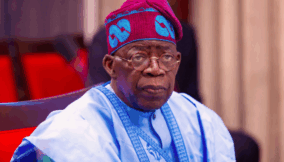
The situation is particularly significant in the Southwest, where political calculations have intensified following the emergence of three major presidential contenders from the region—President Tinubu of the APC, Governor Makinde of the APM, and Adewole Adebayo of the SDP.
The wave of endorsements has drawn criticism from civil society organisations, which have petitioned INEC to enforce the Electoral Act, arguing that the coordinated mobilisation and public declarations amount to campaigns outside the legally approved timetable.
Supporters of the President, however, insist they are merely expressing confidence in the administration and promoting its achievements rather than engaging in formal electioneering.
The Independent National Electoral Commission (INEC) is unable to sanction political actors engaging in early 2027 presidential election campaigns due to a critical lack of enforcement powers and structural loopholes within the Electoral Act
While Section 94(1) of the Act explicitly prohibits public campaigns earlier than 150 days before polling day, the legal framework contains no punitive clauses or fines specifically targeting premature campaigns.
The Electoral Act only penalises campaigns that occur within 24 hours of election day with a minor ₦500,000 fine. It completely fails to criminalise or penalise electioneering conducted years or months before the official window opens.
Regulatory watchdogs and civil society coalitions note that INEC lacks the constitutional power to disqualify candidates or political parties for jumping the gun on campaigns.
Across Nigeria, candidates are actively utilising cultural events, religious gatherings, billboards, and social media platforms to roll out disguised campaigns.
Politicians defend these early movements as constitutional expressions of opinion and local consultations rather than formal electioneering, effectively avoiding legal penalties.
Subtle 2027 mobilisation has already intensified in areas like the Southwest, where key regional figures, including President Bola Tinubu of the APC, are aggressively targeting the same political base.
These unregulated movements drastically drive up the overall cost of running elections and pollute the governance cycle by shifting focus toward premature politics.
To address this, electoral stakeholders, including former INEC heads, have repeatedly petitioned the National Assembly to pass legislative updates creating a dedicated Political Party Regulatory Agency or an Electoral Offences Commission to strictly penalise early campaign infractions.

Join BusinessDay whatsapp Channel, to stay up to date
Open In Whatsapp