The anticipated listing of Dangote Petroleum Refinery and Petrochemicals is shaping up to be the largest and most consequential capital market transaction in African history.
Beyond its size, however, the offering may become the defining test of whether Nigeria’s capital market has developed the infrastructure required to democratise ownership of transformational industrial assets at scale.
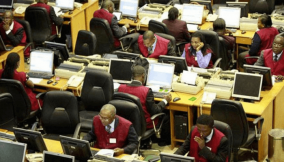
Golden stock of the local exchange….
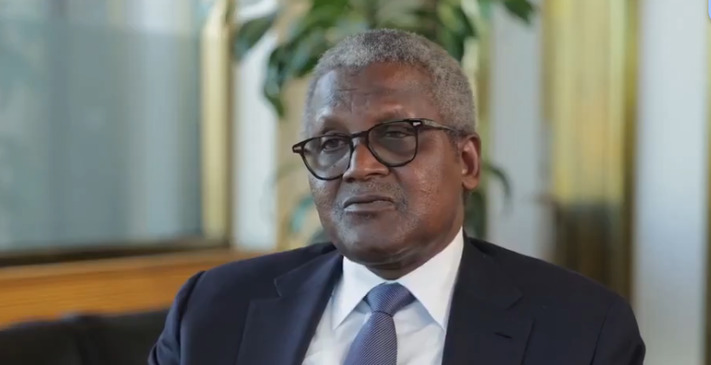
The absolute anchor of the IPO will be on the Exchange. Billionaire founder Aliko Dangote has repeatedly emphasised that the primary listing is intended to democratise wealth creation and ensure that Nigerian and African retail investors can directly own a stake in the continent’s largest industrial asset.
The refinery management has indicated that the public float, expected to represent between 5 and 10 percent of the company’s equity, may eventually extend to several other major African stock markets. This aligns with the refinery’s growing operational footprint as it exports refined petroleum products, jet fuel, and polypropylene across West, Central, and East Africa.
By combining a primary retail-driven listing on Nigerian Exchange with the possibility of a secondary listing in a global financial hub, the Dangote Group appears poised to balance massive foreign institutional capital with broad-based domestic ownership.
Over 10 million IPO subscribers is possible…
The more important question may not be whether the market can absorb an offering of this size, but whether the infrastructure already exists to democratise participation at such scale. Recent history suggests that it does. Between July 2024 and March 2026, Nigeria’s banking sector recapitalisation mobilised approximately N4.65 trillion through the capital market across 33 concurrent banking programmes. More than 70 percent of that capital came from domestic sources, while over 2 million investors participated through digital channels.
What this exercise proved was not the existence of new demand. Investor demand had always existed. What changed was the deliberate removal of barriers that historically separated investor intention from investor action.
Emomotimi Agama, director general of the Securities and Exchange Commission (SEC), offered a critical institutional assessment: “This is not a modest achievement. It is a structural proof of concept, and its significance extends far beyond the banking sector.”
The recapitalisation programme demonstrated a principle that is increasingly defining modern capital markets: institutional scale is not determined by the size of capital required, but by the quality of the infrastructure available to mobilise it.
For Dangote Refinery, this matters because the same infrastructure that successfully mobilised trillions of naira during the banking sector is still available to facilitate what could become Africa’s largest industrial IPO.
NGX Invest leverage…
To achieve an unprecedented milestone of over 10 million subscribers for the Dangote Refinery IPO, the Dangote Group must completely redefine the mechanics of public subscriptions in Nigeria.
The primary engine capable of delivering this mass-retail financial inclusion strategy is NGX Invest, the flagship end-to-end digital primary market platform launched by Nigerian Exchange Group (NGX Group) to digitise the distribution, subscription, payment, allotment, and settlement process for public offerings. The platform bridges traditional banking infrastructure, the Central Securities Clearing System (CSCS), and everyday retail investors through a single digital ecosystem.
Its significance extends beyond convenience. Temi Popoola, group managing director and CEO of NGX Group, explained the architectural achievement with precision: “We did not build the infrastructure. We did something harder: we architected the activation of what already existed and connected it into an efficient system that had never operated at this scale before.”
Beneath the user interface sits a fully integrated market infrastructure that enables real-time BVN verification through direct NIBSS integration, instant payment processing through banking gateways, seamless CSCS account linkage, and automated allotment crediting to investor accounts.
These capabilities were not designed in theory. They were validated during the banking recapitalisation exercise, where the platform successfully supported large-scale concurrent capital raises while maintaining settlement integrity and operational resilience.
The lesson from that experience is straightforward: market depth is designed, not discovered. For decades, retail participation in Nigerian public offerings was constrained by paperwork, lengthy verification processes, funding complexities, settlement uncertainty, and cumbersome manual procedures. By systematically removing these barriers, NGX Invest transformed latent investor interest into active market participation at scale.
From banking recapitalisation to Dangote Refinery IPO…
The banking recapitalisation programme established a new benchmark for primary market participation in Nigeria. The platform facilitated major capital raises by leading banking institutions including GTCO, Access Holdings, Zenith Bank, UBA, Fidelity Bank, FCMB Group, and others. The result was one of the largest capital mobilisation exercises in Nigerian financial history.
More importantly, it created a proven template for future mega-listings. Nigeria’s capital market is ready for the next chapter, and that chapter is now opening. Dangote Refinery now stands at the front of what could become the next wave of large-scale corporate issuances. Unlike the banking recapitalisation exercise, which was driven by regulatory capital requirements, the refinery IPO represents an opportunity for Nigerians to directly participate in one of Africa’s most strategic industrial assets.
The infrastructure has already been built and investor base has already been expanded. The operational capacity has already been demonstrated. What remains is applying the same proven framework to industrial capital formation.
The next activation: Industrial listings and national infrastructure…
The recapitalisation was phase one. It was about ensuring the banking sector had the capital to function as the nation’s financial intermediary. The challenge was regulatory, a capital adequacy mandate executed through the market. What comes next is structurally different.
The next phase is about financing the large-scale industrial assets that will drive Nigeria toward its $1 trillion economy ambition. These are not regulatory requirements. These are transformation opportunities, assets whose successful financing will reshape Nigeria’s competitive position in Africa and globally.
As Popoola has argued, the market has moved beyond the infrastructure of recapitalisation into the architecture of transformation. In that context, Dangote Refinery represents more than another listing. It represents the first truly transformational industrial offering to leverage the NGX Invest platform.
This distinction matters profoundly.
During the banking recapitalisation, the capital market was operating in a supporting role, mobilising capital to meet a regulatory directive. For Dangote, the capital market is the primary mechanism through which Nigeria signals to itself and to the continent that it has the capacity, the infrastructure, and the institutional will to finance transformational industrial assets at scale.
The platform that will execute that financing is the same one that successfully mobilised over N2.8 trillion during the banking exercise. But the narrative has shifted. NGX Invest is no longer a retail access channel for a regulatory exercise. It is now the primary distribution mechanism for industrial capital formation. Dangote Refinery will be the proof point. If the offering achieves 10 million subscribers, and if millions of ordinary Nigerians own shares in Africa’s largest industrial asset, then Nigeria will have demonstrated something unprecedented – that a capital market can simultaneously serve as a mechanism for regulatory compliance and as a platform for national transformation.
MTN public offer and the technical blueprint…
While NGX Invest emerged as the flagship platform during the banking recapitalisation era, its underlying digital architecture was validated much earlier through MTN Nigeria’s landmark public offer.
The MTN offer introduced more than hundreds of thousands first-time investors into the Nigerian capital market and demonstrated the effectiveness of a fully digital retail subscription model. Over 89 percent of retail participants subscribed through digital channels, while the offer became one of the most successful retail-driven capital market transactions in Nigeria’s history.
The transaction demonstrated that Nigerians were willing to participate in large public offerings when access barriers were removed and the subscription process became simple, transparent, and accessible. The banking recapitalisation exercise expanded that proof of concept from hundreds of thousands of investors to millions. The Dangote Refinery IPO presents the opportunity to expand it even further.
A dedicated retail tranche is essential…
Aliko Dangote’s assurance that investors will benefit from the refinery’s dollar-generating earnings provides a compelling investment proposition for retail participants. However, achieving participation levels measured in the millions will require a deliberate strategy.
A distinct retail tranche should be carved out specifically for NGX Invest and supported by an aggressive nationwide investor education and awareness campaign.
Institutional investors from the Middle East, Europe, Africa, and domestic pension funds will undoubtedly absorb significant portions of the offering. However, achieving the broader objective of wealth democratisation requires frictionless access for ordinary Nigerians.
The success of the IPO should not be measured solely by the amount of capital raised. It should also be measured by the number of Nigerians who become shareholders. The true measure of success will be whether ownership of Africa’s largest industrial asset extends beyond institutions and into the portfolios of ordinary Nigerians.
Why this matters beyond the IPO…
The significance of the Dangote Refinery IPO extends beyond a single transaction. For more than a decade, Nigeria’s capital market largely operated within a secondary-market paradigm characterised by limited large-scale issuances and constrained retail participation. The banking recapitalisation programme changed that narrative permanently. It demonstrated that Nigeria possesses the infrastructure, regulatory framework, settlement systems, and investor appetite necessary to support transformational capital raises at institutional scale.
When Dangote Refinery comes to market, it will do so with a platform that has already proven its ability to mobilise trillions of naira, onboard millions of investors, and process transactions with speed, transparency, and integrity.
The banking recapitalisation programme established the market’s capacity beyond question. The Dangote Refinery IPO now has the opportunity to demonstrate something even bigger, that Nigeria’s capital market is no longer merely a mechanism for trading securities, but a strategic platform capable of financing the industrial assets that will underpin the country’s journey toward a trillion-dollar economy.
Agama’s final reflection on what the recapitalisation means for what lies ahead captures the significance: “Completion is not triumph. It is a transition.”
If successfully executed, the Dangote Refinery IPO will not simply be Africa’s largest industrial listing. It will mark the moment Nigeria’s capital market graduates from recapitalising institutions to financing the infrastructure, industries and enterprises that will define the country’s next phase of economic development. The capital has been mobilised. The infrastructure has been proven. The next chapter is industrial transformation.

Join BusinessDay whatsapp Channel, to stay up to date
Open In Whatsapp