Nigeria is moving to refloat a national shipping line after nearly three decades without one.
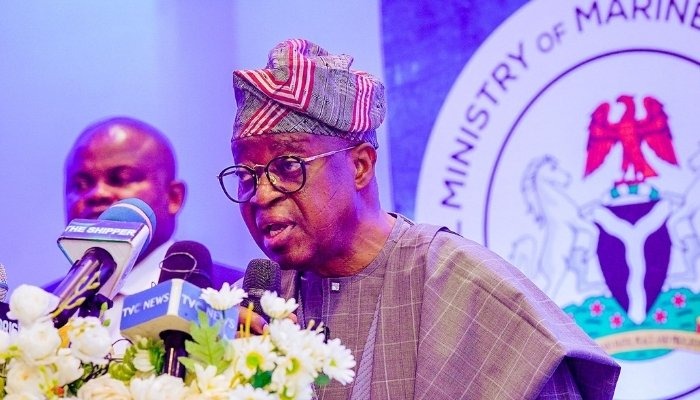
Adegboyega Oyetola, minister of marine and blue economy, during the Ministry’s first quarter stakeholders’ engagement in Lagos on Thursday, said that the government has “secured the interest” of foreign partners including AD Ports Group and DP World to collaborate on the project.
State-backed Abu Dhabi–based AD Ports Group runs ports, free zones and shipping across the Middle East, Europe and Africa, while Dubai’s DP World leads global port operations with expertise in terminals, cargo logistics and trade.
Both firms have, in recent years, expanded into Africa, positioning themselves as key partners in port modernisation and maritime trade infrastructure.
According to Oyetola, the new national carrier will play a critical role in reducing dependence on foreign shipping lines, retaining maritime value within the Nigerian economy, and creating employment opportunities.
Since the collapse of Nigeria’s National Shipping Line (NNSL) in 1995 after 36 years as a state-owned enterprise, due to struggles with mismanagement, corruption, and competition from more efficient foreign lines, the country loses freight earnings of about $9 billion annually.
Foreign liners like MSC, CMA CGM, Maersk Line and Hapag Lloyd swooped in to fill the gap and meet the growing demand of an exploding population.
Read also: Inside Nigeria’s $6bn freight market where local investors are missing
At its peak, NNSL operated a fleet of 30 oceangoing vessels and played a key role in training Nigerian seafarers and supporting national trade. Upon shutdown, all its vessels were sold off.
The country turned to private indigenous shipowners to plug the deficit but that lifeline failed. Until recently, the over $700 million Cabotage vessel Financing Fund (CVFF) created under the Coastal and Inland Shipping (Cabotage) Act of 2003 to finance shipbuilding and purchase was inaccessible to shipowners.
Since the government opened the CVFF portal for registration in January, up to 60 shipowners have applied, according to the Minister’s spokesperson. The model caps disbursement at $25 million per operator.
Read also: After two decades, Cabotage fund portal goes live to end shipowners financing freeze
At the same meeting, Oyetola said his ministry’s revenue rose 160 percent to N1.83 trillion by the end of 2025, attributing the surge to sweeping reforms and a renewed focus on accountability.
He further disclosed that procurement processes are underway for the modernisation of ports in Warri, Port Harcourt, Onne, and Calabar, alongside the planned upgrades for Apapa and Tin Can Island ports, though a timeline has not been set.
Approvals have been granted for the development of new deep seaports in Bayelsa, Cross River, Akwa Ibom, and Ondo States.

Join BusinessDay whatsapp Channel, to stay up to date
Open In Whatsapp