The continuing incidences of oil pollution on the environment and the health of residents of Bayelsa State has continued to generate debate following the report of the Bayelsa State Oil and Environmental Commission titled Environmental Genocide.
The report detailed several instances of the harmful impacts of oil pollution on the health of the people including cancer and breathing disorders among others, while a recent study warned of the presence of heavy metals such as magnesium and iron in fish caught in fresh water in the state.
Apart from the pollution of water courses, the amount of carbon in the atmosphere as a result of illegal mining activities and the burning of illegal oil facilities by the military, causes acid rain which makes the rain water sooty and slimy, and destroys roofing sheets.
Such is the level of pollution that it is becoming inescapable for the ordinary folks, those in the villages as well as those in the urban areas not to be affected in one way or the other by the dangerous outcomes of oil pollution.
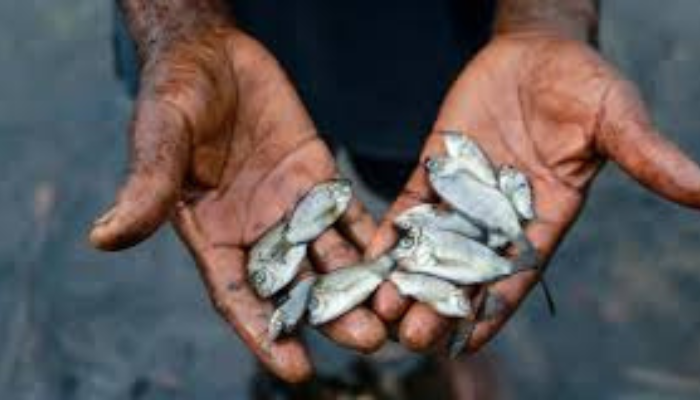
The scale of pollution is such that most rivers, streams and other water bodies have a permanent sheen of oil on their surfaces, which has adverse effects on aquatic life resulting in fewer and fewer fish catches.
Other plant and animal life in oil bearing communities are also affected by the ongoing environmental genocide which are quite glaring.
It is this level of environmental degradation due to oil pollution in Bayelsa State that drew the ire of the International Working Group on Petroleum Pollution and Just Transition in the Niger Delta, a non-governmental organisation.
It would be recalled that crude oil was first discovered in commercial quantity in the 1950s in Bayelsa State and has caused environmental and health hazards for the people, particularly those in oil bearing communities, which are affected by crude oil spills and gas flaring.
The International Working Group on Petroleum Pollution and Just Transition in the Niger Delta, has described the impact of oil pollution on the environment and health of the people of Bayelsa State as highly traumatising.
The NGO, which recently embarked on a sensitisation campaign on health hazards associated with oil pollution in the state, paid a courtesy visit to Governor Douye Diri, at the Government House, Yenagoa.
Engobo Emeseh, the team lead, expressed concern that the average life expectancy in Bayelsa State has been reduced significantly because the “people are forced to live on contaminated land, air and water.”
Emeseh, who is of the Law Faculty of Aberyswhyth University, United Kingdom, explained that the IWG was focusing advocacy on the health of the people in line with the recommendations of the Bayelsa State Oil and Environmental Commission Report, which was submitted in 2023.
She disclosed that laboratory analysis of blood samples taken from indigenes from across the eight local government areas of the state indicated very high levels of hydrocarbon pollution and carcinogenic metals, causing a sharp increase in mortality and morbid rates in the state.
Emeseh, who commended the Bayelsa State Government for being the first subnational government in Nigeria to set up a high-powered commission on oil and environment, said the IWG would continue to partner the state and other relevant organizations to mitigate the negative impact of oil pollution on the health of the people.
Her words: “Most of us here were constituted as members of the Bayelsa State Oil and Environment Commission. We gave our report in 2023; first presented at the House of Lords, and also presented to the Bayelsa State Government here in Creek Haven in October 2024, and then presented to the wider public in Abuja.
“In all of this, the Bayelsa State Government had given us the space and the support to provide our expertise and advice on how to deal with the challenge of the scourge of oil pollution in our state.
“When we presented our report based on the evidence that we gathered, having gone to all the LGAs in Bayelsa State, and spoken to indigenes and key stakeholders in Bayelsa, my colleagues and I, who were members of the expert working group, were quite traumatised at what we found in Bayelsa State. I think that is the right word, and we called our report an environmental genocide.
“Based on that, we committed that even though our commission was de- commissioned in November 2024, that we were going to carry on with this work.”
In his response, Governor Douye Diri, represented by Peter Akpe, his deputy, described the report of the Bayelsa State Oil and Environment Commission as one of the most important documents to guide concerted actions in the mitigation of environmental hazards from oil pollution in the state.
The governor thanked members of the International Working Group for partnering with the state government by making their expertise available to ongoing efforts towards mitigating the impact of oil pollution on the health of Bayelsans.
While calling on the Federal Government and international organisations to treat the issue of oil pollution in Bayelsa as a special case, he assured the IWG of his administration’s support towards environmental remediation and improved healthcare delivery in the state.
His words: “Your visit is very significant. It is to buttress and consolidate the partnership that began with the Bayelsa Oil and Environment Commission. We are happy that the relationship has matured to this kind of sustained international platform of advocacy.
“We recall the presentation His Excellency, the Governor made in New York. We travelled from Bayelsa to New York because of the importance we attached to the commission and all your activities.
“The commission’s report remains one of our important documents, especially concerning the environmental condition of our state and the wider Niger Delta. For us, it is not a closed chapter, it is a living document whose recommendations must continue to guide concrete actions.
“We can’t thank you enough for what you are doing already. We welcome your planned health research, interactions and engagements in the state. And we assure you that we are totally in support and we equally expect to see positive results from your work.”
Other members of the six-man IWG delegation are Kathryn Nwajiaku-Dahou, and Cautlin Strong, representing ODI Global, United Kingdom; Michael Watts of University of California; and Isaac Osuoka and Anna Zalik of York University, Canada.
Aside the advocacy, much remains to be done in the area of ensuring environmental remediation, and tackling the issue of public health in order to save the lives of the people.
It must be noted that the state has suffered some of the worst cases of oil pollution over the past six decades, but has received little or no attention from oil companies and regulatory agencies.
One of such recent cases was the Santa Barbara blowout in 2021 in Nembe Local Government Area of the state, which was at a point largely politicized, which so much adverse effects on the adjoining land and water, and took about a month before it was contained.
The other case was the explosion near the Apoi North platform operated by a multinational oil company in which two staff died; that fire also raged for over a month with onshore waves and wind bringing spilled crude oil to the host communities.
There were allegations that the company was using some chemical compound on the floating oil which made it to sink to kill the evidence and avoid scrutiny by anxious community folk who complained of the effect on fishing in the area.
Usually, the oil companies delay Joint Investigation Visits, and when they are at fault, they would still delay the provision of relief materials, remediation efforts and payment of compensation to the affected communities.
Studies show that the longer crude oil is left on the soil, the deeper it penetrates into the soil thereby rendering remediation efforts more difficult.
So, in places like Ikarama community in Yenagoa Local Government Area where one smells crude oil fumes in the air, the stream has a permanent film of oil and spill sites abound, one can only imagine how long remediation efforts would take before the land can be restored.
It is worth noting that Ikarama community has witnessed more cases of oil spillage than any other oil-bearing community in the entire Niger Delta region or elsewhere in Nigeria where oil is produced.
Already, it was estimated that about $12 billion was needed for cleanup of the Bayelsa State environment when the report was presented in 2024.
Apart from the presentation of the report of the Bayelsa State Oil and Environmental Commission in the United Kingdom and back here in Nigeria, no other steps have been taken to bring about environmental justice.
The real culprits have since divested their onshore assets and gone into the deep waters, whether to escape litigations for the environmental crimes they committed while the operated their land facilities, no one knows.
However, it is a norm that justice delayed is justice denied, and it must be pointed out that the longer the impasse continues, the worse it is for people and communities that live in the vicinity of spillage sites.
Morris Alagoa, Deputy Director of Environmental Defenders Network, a non-governmental organisation, dedicated to the monitoring of the environment, once said years of wading through oil pollution water was affecting his legs.
So, there’s the need to step up concerted efforts to address the outcome of years of crude oil spillage in Bayelsa State and not just remediate, but restore the land for the good of all.

Join BusinessDay whatsapp Channel, to stay up to date
Open In Whatsapp