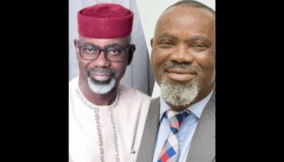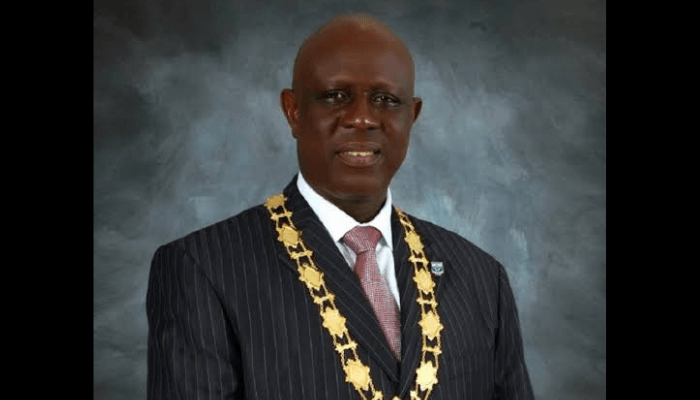
Audit committees must demonstrate informed oversight and ask tougher questions to reduce the risk of financial misstatements, Doyin Owolabi, former president of the Institute of Chartered Accountants of Nigeria (ICAN), has said.
Owolabi spoke at the Audit Committee Conference held recently in Lagos, where experts highlighted the roles of audit committees, internal auditors and regulators in strengthening corporate governance and preventing fraud.
Presenting a paper titled ‘Gate-Keeping: Detecting Error and Fraud in Financial Reporting,’ Owolabi said effective gatekeeping requires vigilance, knowledge and constant attention to emerging risks.
“Gate-keeping requires a posture that is informed, vigilant and attentive,” he said.
According to him, gatekeepers play a critical role in ensuring that financial statements accurately reflect the economic realities of organisations.
“Gatekeepers ensure that financial statements reflect economic reality,” Owolabi said, adding that their responsibilities require them to be “informed, vigilant and attending to inconsistencies, signals and emerging risks.”
He specifically urged audit committees to move beyond routine reviews and actively scrutinise management reports and assumptions.
“Audit Committees, in particular, must demonstrate informed oversight and vigilant questioning to reduce the likelihood of misstatement,” he said, noting that internal auditors must also “attend to the details of control operation and reporting processes.”
Corroborating Owolabi’s position, Williams Erimona, partner, Assurance Services at EY Nigeria, said audit committees must evolve from passive reviewers into active guardians of corporate integrity.
According to Erimona, audit committees should challenge management assumptions and base their oversight on evidence rather than accepting information at face value.
“The audit committee as guardian of truth must shift from passive reviewer to active navigator,” he said.
He added that effective oversight requires “interrogating management’s assumptions, challenging narratives, and grounding oversight in evidence.”
Erimona said audit committees must develop the capacity to anticipate risks and respond effectively to changing business realities.
“As navigator, the audit committee must see clearly, anticipate wisely and adapt resiliently,” he said.
The conference also examined the role of internal audit in preventing corporate failures.
Speaking on ‘Internal Audit: Guarding the Truth from Inside,’ Festus Ogunmokun, former Chief Audit Executive of the Nigerian Institute of Management and West African Portland Cement Company (WAPCO), warned that marginalising internal audit functions could expose organisations to significant risks.
“Internal audit marginalisation could lead to corporate failure,” he said.
Drawing from global corporate scandals, Ogunmokun said weak internal audit structures contributed to major financial losses.
According to him, the marginalisation of internal audit “cost Enron $60 billion in market capitalisation, led to the missing of 1.9 billion euros by Wirecard, and the concealing of $1.2 billion for years in Toshiba.”
He stressed that internal auditors have responsibilities beyond detecting fraud.
“Internal audit has the mandate of not just detecting irregularities in business organisations but to also prevent them,” he said.
To detect irregularities, Ogunmokun explained, internal auditors must possess “investigative acuity to see what has already gone wrong and what is going wrong,” requiring them to examine evidence objectively and pursue warning signs wherever they emerge.
Preventing irregularities, he added, requires strengthening controls before failures occur through “risk identification, control reinforcement, and ethical embedding.”
He further noted that internal auditors must identify “inconsistencies, early signs of misconduct, behavioural anomalies, and unexplained variances that contradict reasonable expectation in context,” while paying attention to repeated and undocumented control overrides.
Also speaking at the conference, Iheanyi Anyaghara, founder and chief executive officer of Regulatory Compliance Readiness Advisors Limited, underscored the importance of auditor independence in maintaining confidence in financial reporting.
“Independence transforms technical audit work into credible, trusted assurance,” Anyaghara said.
“Without independence, assurance collapses into affirmation and oversight becomes a ritual.”
According to him, independence remains the foundation of public confidence in financial reporting and governance systems.
“Independence anchors public trust in financial reporting, governance structures, and institutional integrity,” he said.
He added that independence enables auditors and audit committees “to speak truthfully when truth is contested or inconvenient.”
Participants at the conference agreed that stronger oversight by audit committees, empowered internal audit functions and greater independence among auditors are critical to improving corporate governance and reducing the risk of fraud and financial misstatements in organisations.

Join BusinessDay whatsapp Channel, to stay up to date
Open In Whatsapp